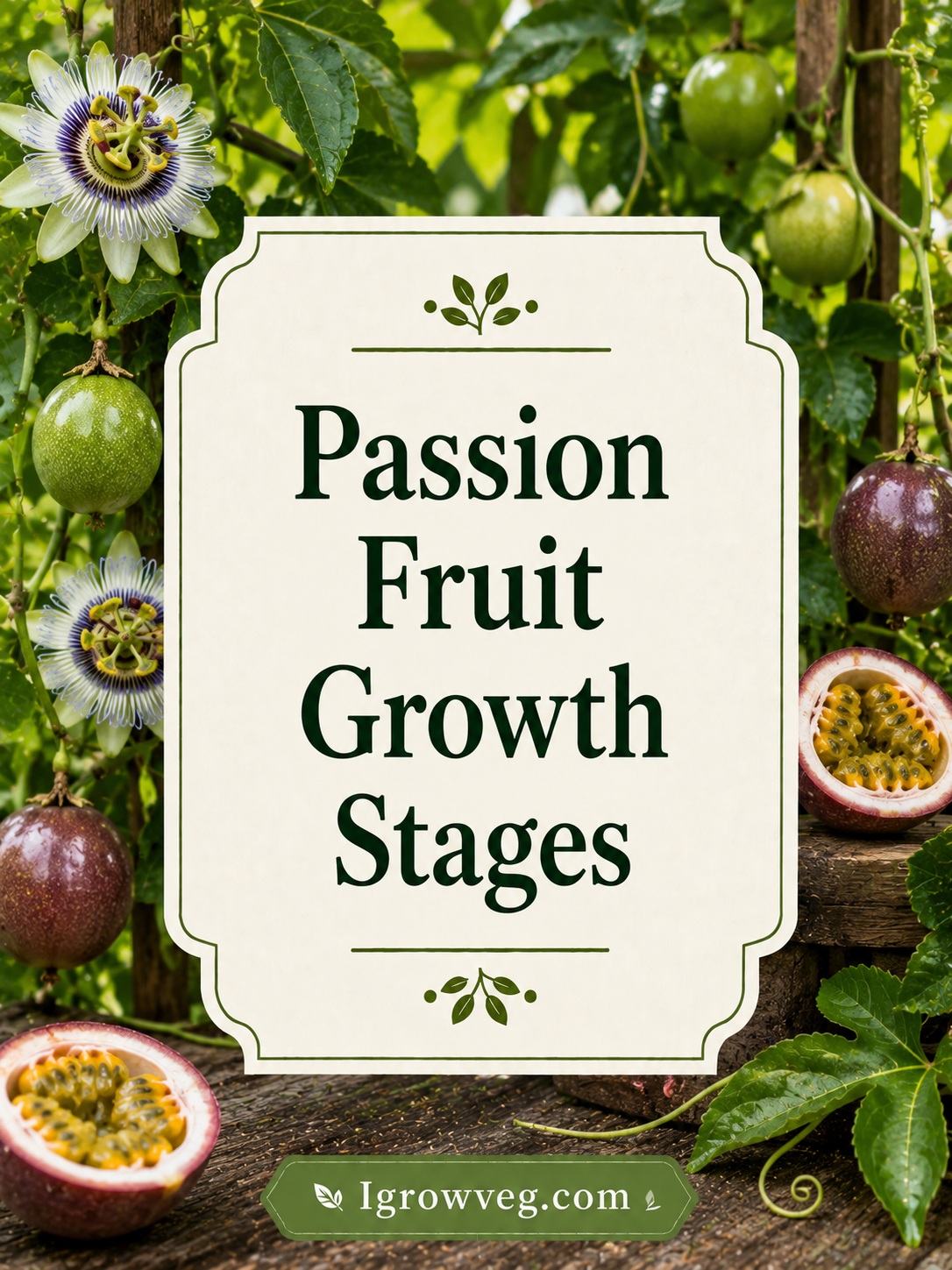
The passion fruit growth stages take a gardener on a thrilling journey from a dormant seed to a vigorous, fruit-bearing vine. This tropical climber, known scientifically as Passiflora edulis, fascinates growers with its rapid expansion and iconic, intricate flowers. Understanding the lifecycle of this plant helps you provide the right care at every milestone. Whether you want to grow the classic purple variety or the larger yellow fruit, mastering each developmental phase ensures a bountiful harvest. In this comprehensive guide, we will explore the timeline, requirements, and transitions of the vine’s life.
1. Germination: The Beginning of the Lifecycle
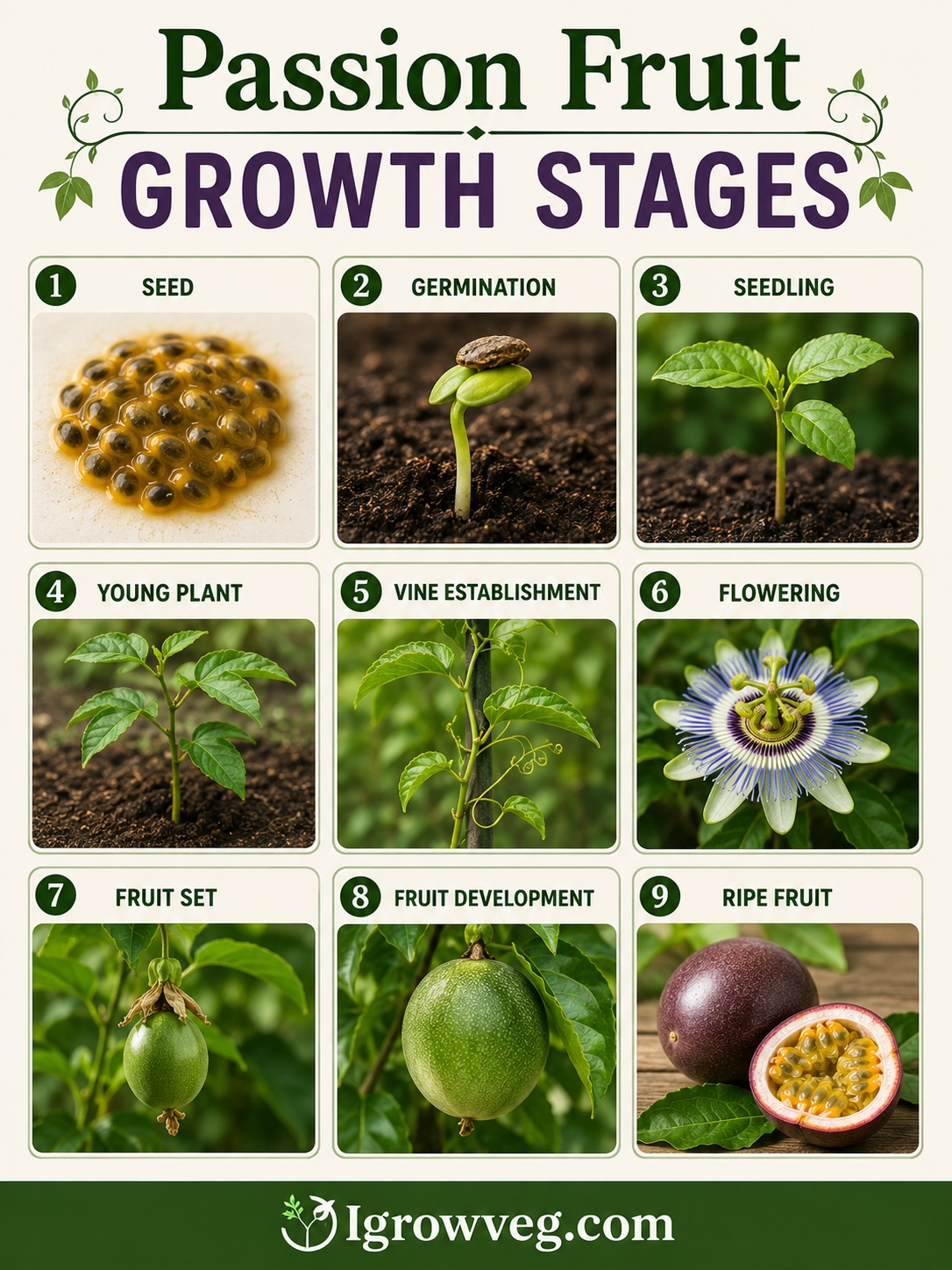
The first of the passion fruit growth stages begins with germination. You can start passion fruit from seeds or cuttings, but seeds offer a unique look at the plant’s biological start.
Seed Preparation and Sowing
Fresh seeds possess a higher germination rate than older, dried ones. If you use seeds from a store-bought fruit, clean off the pulp and soak them in warm water for 24 hours. This process softens the hard outer shell. Sow the seeds in a well-draining seed-starting mix, keeping the soil consistently moist and warm.
What to Expect
Typically, passion fruit seeds take anywhere from 10 to 20 days to sprout. However, some varieties might stay dormant for several weeks. During this period, the plant focuses on developing its primary root (radicle) and its first set of seed leaves (cotyledons).
2. Seedling Development and Initial Growth
Once the sprouts emerge, they enter the seedling phase. This is one of the most delicate passion fruit growth stages because the young plants lack the resilience of established vines.
True Leaf Formation
After the cotyledons appear, the plant soon produces its first “true leaves.” These leaves resemble the adult foliage and begin the vital process of photosynthesis. At this stage, the seedling requires bright, indirect sunlight. If the light is too dim, the stem will become “leggy” and weak.
Strengthening the Root System
While you watch the leaves grow, the plant is secretly building an extensive root network. Healthy roots are essential for the vine’s future ability to climb and support heavy fruit. Avoid overwatering during this stage to prevent “damping off,” a fungal disease that can kill young seedlings.
3. The Vegetative Phase: Rapid Vine Expansion
Among all passion fruit growth stages, the vegetative phase is the most visually dramatic. Passion fruit vines are notorious for their speed, sometimes growing up to 15 to 20 feet in a single year under ideal conditions.
The Role of Tendrils
As the vine grows, it develops specialized structures called tendrils. These spring-like coils reach out and wrap around supports, allowing the vine to climb toward the sunlight. Providing a sturdy trellis or fence is mandatory at this stage. Without support, the vine will crawl along the ground, making it susceptible to rot and pests.
Leaf and Stem Maturation
The leaves become larger and take on their characteristic lobed shape. During this high-growth period, the plant requires significant amounts of nitrogen. For detailed information on organic nitrogen sources, you can check out The Old Farmer’s Almanac for sustainable soil amendment tips.
4. Flowering: The Arrival of the Passion Flower
Transitioning from leaves to flowers marks a major shift in the passion fruit growth stages. The passion flower is arguably one of the most beautiful blooms in the botanical world.
Triggering the Bloom
Most vines begin to flower about 6 to 12 months after planting, depending on the climate. The plant requires plenty of phosphorus and potassium to fuel flower production. Furthermore, sunlight is the primary trigger; vines grown in deep shade may never produce flowers.
Anatomy of the Flower
The flower features a complex arrangement of petals, filaments, and reproductive organs. Each bloom usually lasts for only 12 to 24 hours. Consequently, the timing for pollination is extremely tight.
5. Pollination: Setting the Stage for Fruit
Successful pollination is the bridge between the flowering and fruiting passion fruit growth stages. Without it, the flowers will simply drop off.
Natural Pollinators
Bees, especially carpenter bees, serve as the primary pollinators for passion fruit. Their large bodies effectively transfer pollen from the anthers to the stigma. You can encourage these visitors by planting bee-friendly flowers like lavender or marigolds nearby.
Hand Pollination Techniques
If your garden lacks bees, you must intervene. Use a small paintbrush or a cotton swab to collect yellow pollen from the stamens and rub it onto the three stigmas in the center of the flower. Perform this task in the mid-morning when the flowers are fully open and the pollen is most viable. For more advanced horticultural techniques, University of Florida IFAS Extension offers excellent resources on tropical fruit management.
6. Fruit Set and Development
After successful pollination, the base of the flower swells, indicating the start of the fruit set phase. This is a rewarding part of the passion fruit growth stages as the “fruit” finally becomes visible.
The Green Berry Phase
Initially, the fruit looks like a small, hard green berry. During the next few months, it will expand significantly. At this stage, the fruit is inedible and lacks the sweet-tart flavor associated with passion fruit.
Internal Maturation
While the outside stays green, the inside develops the characteristic pulp and seeds. The vine needs consistent watering during fruit development. If the soil dries out completely, the vine may drop the fruit prematurely to conserve moisture.
7. Ripening: The Final Transformation
The final milestone in the passion fruit growth stages is ripening. This is when the fruit develops its aroma, color, and sugar content.
Color Changes
Depending on the variety, the fruit will turn either deep purple or bright yellow. As the skin changes color, it may also begin to wrinkle. While a wrinkled fruit might look unappealing to the uninitiated, it actually indicates a higher sugar concentration and peak ripeness.
The Natural Drop
Unlike many other fruits, you do not usually pick passion fruit from the vine. When the fruit reaches full maturity, it naturally detaches and falls to the ground. Harvesting involves simply picking the fruit up from the mulch. This “self-harvesting” mechanism ensures that the fruit has utilized all available nutrients from the parent vine.
Conclusion
Navigating the passion fruit growth stages requires patience, but the results are incredibly sweet. From the moment the first seed sprouts to the day you gather wrinkled, aromatic fruits from the ground, the lifecycle of the Passiflora is a masterclass in tropical vigor. By providing sturdy support, consistent water, and a bit of help with pollination, you can turn a small seedling into a sprawling, productive vine that provides beauty and flavor for years to come.
🍇 Passion Fruit Growth Stages
| Stage | Timeline | Key Features | Care Tips |
|---|---|---|---|
| Seed Germination | 2–4 weeks | Seeds sprout; cotyledons emerge; first true leaves form | Keep soil moist, warm (20–30°C), partial shade |
| Seedling Stage | 1–3 months | Rapid leaf growth; vine begins to elongate | Provide support stakes; protect from pests |
| Vegetative Growth | 3–12 months | Vigorous climbing vines; tendrils form; dense foliage | Train on trellis; prune for airflow; apply nitrogen fertilizer |
| Flowering Stage | 12–18 months (can vary) | Large purple/white flowers; pollination by bees | Ensure pollinators; hand-pollinate if needed; add phosphorus |
| Fruit Set | 2–3 weeks after flowering | Small green fruits develop | Maintain consistent watering; protect from fruit flies |
| Fruit Development | 2–3 months | Fruits enlarge, skin thickens, pulp matures | Apply potassium-rich fertilizer; avoid water stress |
| Ripening Stage | 70–80 days after fruit set | Fruits turn purple/yellow; aromatic pulp | Harvest when fruit drops naturally or skin wrinkles |
| Mature Vine | 2–5 years | Peak productivity; multiple harvests annually | Regular pruning; replace vines after 5–7 years |
🌿 Notes
- Passion fruit vines are perennial but most productive for 5–7 years.
- They require full sun, well-drained soil, and strong trellises for climbing.
- Pollination is critical—bees are the main pollinators.
FAQ: Frequently Asked Questions
1. How long does it take for passion fruit to grow?
Most vines reach maturity and produce fruit within 12 to 18 months of planting.
2. Why are my passion fruit flowers falling off without fruiting?
This usually happens due to poor pollination, extreme heat, or a lack of water.
3. Does passion fruit need a trellis?
Yes, passion fruit is a vigorous climber and requires a sturdy support structure to thrive.
4. How often should I water my passion fruit vine?
Water deeply 2-3 times a week, ensuring the soil remains moist but not waterlogged.
5. Can I grow passion fruit in a pot?
Yes, you can grow them in large containers, but they still require a trellis to climb.
6. Do I need two vines to get fruit?
While some varieties are self-fertile, planting two different vines often increases the fruit yield through cross-pollination.
7. When is the best time to prune the vine?
Prune in early spring before the new growth starts to keep the vine manageable and healthy.