The prickly pear cactus growth stages offer a fascinating look into the resilience and efficiency of the Opuntia genus. These cacti, famous for their flat green pads and vibrant fruits, have adapted to thrive in some of the harshest environments on Earth. Whether you are growing them for their edible “nopales” (pads), their sweet “tunas” (fruit), or simply for their architectural beauty, understanding their lifecycle is key. This guide explores how these plants transition from a single pad or seed into a massive, flowering colony. We will detail the specific needs of the plant at every milestone to ensure your cactus remains healthy and productive.
1. Germination and Early Establishment
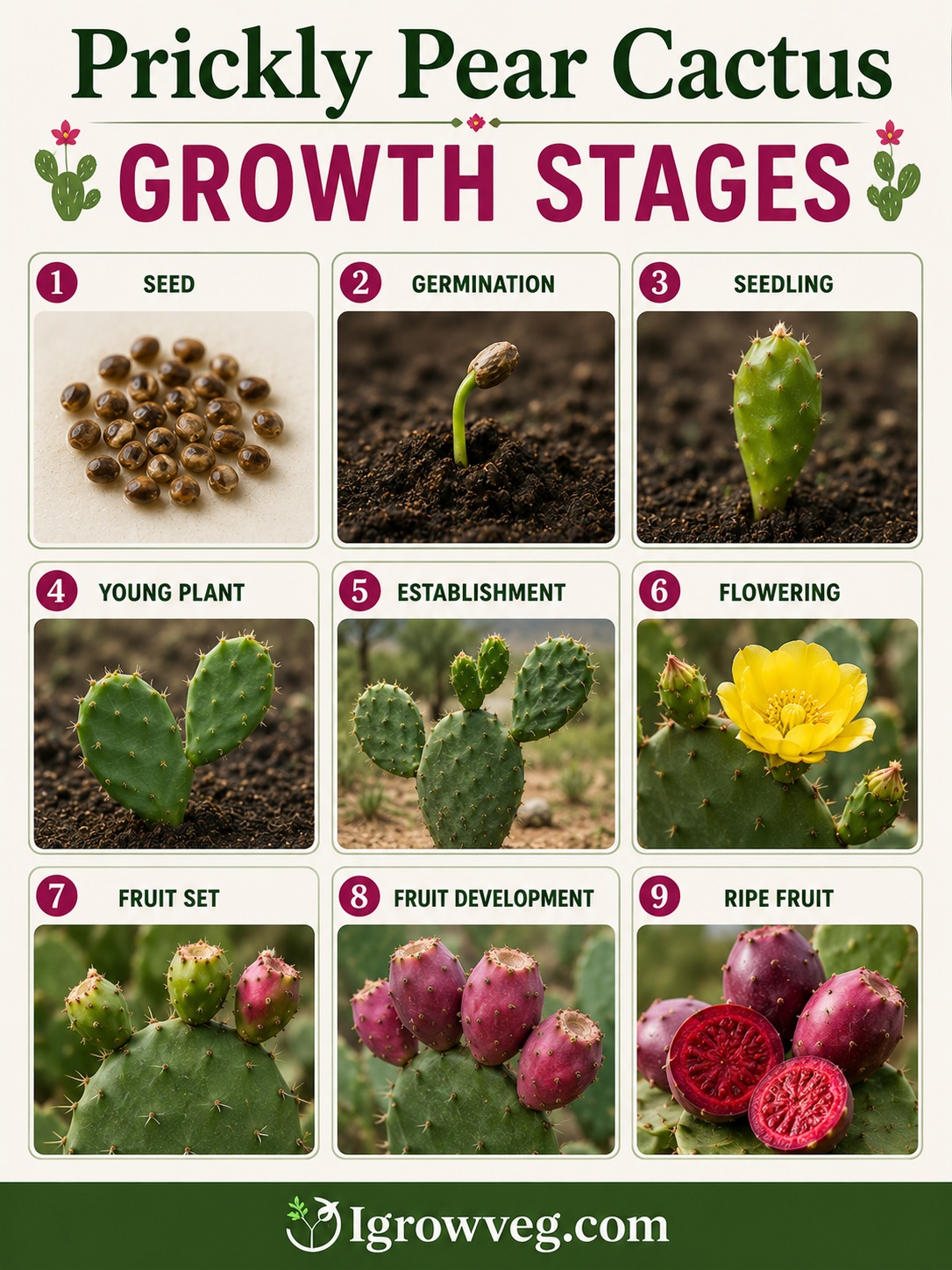
The first of the prickly pear cactus growth stages begins with either a seed or, more commonly, a vegetative cutting. While seeds take longer, they represent the true biological start of the plant.
Seed Germination
Prickly pear seeds possess a very hard outer coat. In nature, these seeds often pass through the digestive tracts of animals to soften. As a gardener, you can mimic this by scarring the seed coat with sandpaper or soaking them in warm water. Once sown in a sandy, well-draining cactus mix, they require consistent warmth.
Propagation via Pads
Most growers prefer starting with a pad, as it skips the fragile seedling phase. You must allow the cut end of a pad to “callus” or dry for several days before planting. This prevents rot and encourages the specialized cells at the base to transform into roots. For more on succulent propagation, check out Royal Horticultural Society for expert tips.
2. The Juvenile Stage: Rooting and Vertical Growth
Once the seed sprouts or the pad takes root, the cactus enters the juvenile phase. This is one of the most critical prickly pear cactus growth stages for long-term stability.
Establishing the Anchor
The cactus initially focuses all its energy underground. It develops a shallow but wide-reaching root system designed to catch even the slightest rainfall. Above ground, a pad-started cactus will begin to look “plump” as it stores water. If you started from seed, a tiny, cylindrical stem will emerge, eventually flattening into the iconic pad shape.
Sunlight and Water Balance
Juvenile cacti need intense light to prevent “etiolation,” which is when the plant stretches and becomes thin and weak. While they are drought-tolerant, young plants benefit from occasional deep watering. Always allow the soil to dry completely between sessions to maintain a healthy root environment.
3. Vegetative Expansion: The Branching Phase
During this part of the prickly pear cactus growth stages, the plant begins to expand its footprint. The “cladodes” (the scientific name for the pads) act as both leaves and stems.
New Pad Development
In spring, small “buds” appear on the edges of the existing pads. These buds quickly swell and flatten into new cladodes. These new pads are bright green and covered in “glochids”—tiny, hair-like prickles. Interestingly, these pads carry out photosynthesis while simultaneously acting as a reservoir for water storage.
Structural Maturation
As the cactus grows, the base pads begin to “cork.” This process turns the green tissue into a brown, woody bark-like substance. Corking provides the structural integrity needed to support the weight of dozens of heavy, water-filled pads above.
4. Reproductive Phase: The Arrival of Blooms
Transitioning to the flowering phase is a highlight of the prickly pear cactus growth stages. Depending on the species and conditions, a cactus usually takes 2 to 3 years to flower from a pad cutting.
The Flower Buds
Buds appear on the upper edges of the pads, usually in late spring or early summer. These flowers are typically brilliant yellow, orange, or hot pink. They provide a vital nectar source for desert pollinators.
Pollination Requirements
Bees and beetles are the primary pollinators for Opuntia. They crawl into the center of the bloom, which often contains sensitive stamens that curl inward when touched. Successful pollination is mandatory for the next stage: fruit production. For detailed species maps and pollination data, the Desert Botanical Garden provides extensive research on arid-land plants.
5. Fruiting: The Development of the “Tuna”
The most delicious of the prickly pear cactus growth stages is the fruiting phase. The base of the flower, known as the ovary, begins to swell after the petals fall away.
Green Fruit to Maturity
The fruit stays green and hard for several weeks. During this time, it is covered in glochids, so handle it with extreme caution. As the fruit matures, it expands and changes color to a deep red, purple, or lime green, depending on the variety.
Ripening Signs
You will know the fruit is ripe when it detaches easily from the pad with a gentle twist. The flesh becomes soft, and the flavor profile develops into something resembling a cross between a watermelon and a kiwi.
Conclusion
Mastering the prickly pear cactus growth stages allows you to appreciate the slow but steady rhythm of desert life. From the moment a pad touches the soil and begins to root, to the final harvest of its vibrant purple fruit, the Opuntia is a model of efficiency. By providing the right amount of light, ensuring excellent drainage, and respecting its dormant periods, you can enjoy this spectacular succulent for decades.
🌵 Prickly Pear Cactus Growth Stages
| Stage | Timeline | Key Features | Care Tips |
|---|---|---|---|
| Seed Germination | 2–6 weeks | Seeds sprout slowly; tiny pads emerge | Warm soil (20–30°C), keep lightly moist |
| Seedling Stage | 3–12 months | Small pads form; spines begin to develop | Protect from overwatering; provide bright light |
| Juvenile Growth | 1–3 years | Pads enlarge; plant develops multiple segments | Ensure good drainage; occasional watering |
| Mature Vegetative Stage | 3–5 years | Full pad structure; strong spines; height increases | Minimal watering; prune damaged pads |
| Flowering Stage | 3–8 years (varies) | Bright yellow/red flowers bloom on mature pads | Needs full sun; phosphorus-rich soil helps |
| Fruit Development | Weeks after flowering | Edible red/purple “tunas” form | Harvest when fruits soften and deepen in color |
| Established Plant | 10–30+ years | Large, woody cactus with many pads | Very drought-tolerant; occasional pruning |
🌿 Notes
- Prickly pear cacti are long-lived perennials, often surviving decades.
- They thrive in arid, well-drained soils and require minimal water once established.
- Fruits (“tunas”) and pads (“nopales”) are edible when properly prepared.
FAQ: Frequently Asked Questions
1. How fast do prickly pear cacti grow?
In ideal sunny conditions, they can grow several new pads each spring and summer season.
2. Can you eat the pads at any growth stage?
The young, tender pads (nopales) are best for eating when they are about the size of a hand.
3. Why is my prickly pear cactus turning brown at the bottom?
If the tissue is hard, it is likely “corking,” a natural process that strengthens the plant’s base.
4. How long does it take for a prickly pear to fruit?
Most plants grown from pads will produce flowers and fruit within 2 to 4 years.
5. Does a prickly pear cactus need a lot of fertilizer?
No, they thrive in poor soil, though a balanced fertilizer in spring can boost pad and fruit production.
6. Can prickly pear survive freezing temperatures?
Some species, like Opuntia humifusa, are very cold-hardy and can survive temperatures well below freezing.
7. How do I know if my cactus needs water?
The pads will begin to look slightly wrinkled or “deflated” when the plant’s water reserves are low.