For many gardeners, the first hard frost feels like a closing curtain—a signal to retreat indoors, hang up the trowel, and wait for the spring catalog to arrive. However, in the world of high-yield vegetable production and ecological land management, winter is not a void; it is a foundational phase.
Preparing a vegetable plot for winter is an act of “future-proofing.” The work you do between the autumn equinox and the winter solstice determines the health of your soil, the prevalence of pests in the spring, and the ultimate success of next year’s harvest. This guide explores the mechanical, biological, and strategic tasks required to transition your plot from a summer powerhouse to a winter sanctuary.
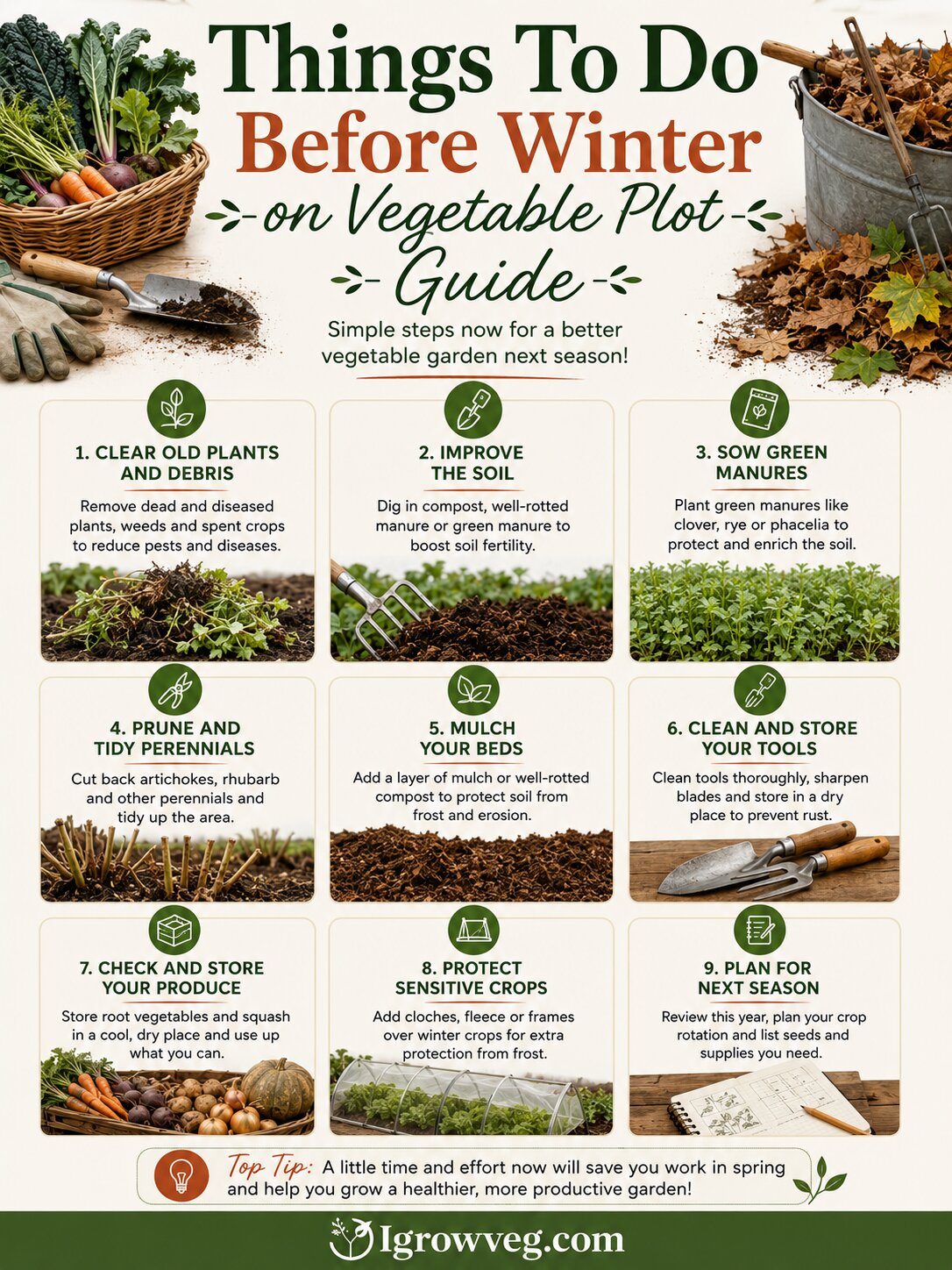
1. The Sanitation Phase: The Pathogen Purge
Neglected plant debris is the primary “nursery” for garden pests and diseases. Leaving spent tomato vines or mildew-ridden squash leaves on the ground is essentially providing a five-star hotel for pathogens to overwinter.
Clearing Spent Crops
Identify plants that have finished their lifecycle. Remove them entirely, including the root systems of any plants that showed signs of disease.
- The “Burn or Bin” Rule: Never compost plants afflicted with blight, clubroot, or white rot. Home compost piles rarely reach the sustained internal temperatures (approximately 55°C to 60°C) required to kill these hardy spores.
- Healthy Debris: If a plant was healthy, the stems and leaves can be shredded and added to the compost pile. Chopping them into smaller pieces increases the surface area for microbial action, speeding up decomposition during the cold months.
Managing Perennial Weeds
Winter is the time to win the war against “creeping” enemies like bindweed, couch grass, and ground elder. As the top growth dies back, focus on the roots.
Warning: Do not simply rotovate or dig over soil infested with perennial weeds. Breaking a couch grass root into ten pieces often results in ten new plants in the spring. Hand-forking these out is tedious but essential.
2. Soil Health: Feeding the “Engine Room”
Soil is not a static medium; it is a complex, living ecosystem. During winter, while the “above-ground” garden sleeps, the “below-ground” world remains active—provided it is protected.
The Case for “No-Dig”
Modern soil science increasingly favors a No-Dig (or No-Till) approach. Digging disrupts the delicate fungal networks (mycorrhizae) that help plant roots absorb nutrients. Instead of turning the soil, apply “top-dressings” and let the earthworms do the heavy lifting.
Mulching: The Winter Blanket
Exposed soil is vulnerable to leaching (where heavy winter rains wash away nutrients) and erosion. A thick mulch acts as a thermal and nutritional barrier.
| Mulch Type | Best For… | Pros | Cons |
| Well-Rotted Manure | Heavy feeders (Brassicas, Squash) | High nutrient content; improves structure. | Can be high in salts; potential for weed seeds. |
| Garden Compost | General beds | Improves microbial life; uses site waste. | Often limited supply. |
| Leaf Mold | Soil conditioning | Exceptional for moisture retention. | Low in primary nutrients (N-P-K). |
| Strulch (Straw) | Overwintering crops | Protects crowns of plants; suppresses weeds. | Can harbor slugs if too wet. |
Soil Testing
Autumn is the ideal time to test your soil’s chemical composition. Without the interference of active plant uptake, you get a “baseline” reading.
- pH Levels: Most vegetables thrive at a $pH$ of $6.5$. If your soil is too acidic, applying lime in the winter allows it several months to react with the soil before spring planting.
- Nutrient Deficiencies: If your summer crop was stunted, a test may reveal a lack of phosphorus or potassium, which can be addressed with slow-release organic amendments like bone meal or seaweed meal.
3. The Living Plot: Cover Crops and Green Manures
If you aren’t mulching with organic matter, you should be “mulching” with plants. Green manures are crops grown specifically to be incorporated back into the soil or to act as a placeholder.
Why Use Green Manures?
- Nitrogen Fixation: Legumes (like winter tares or field beans) have a symbiotic relationship with bacteria that “fix” nitrogen from the atmosphere into the soil.
- Scavenging: Fast-growing crops like Hungarian Rye or Mustard catch nutrients that would otherwise leach out with rainwater.
- Soil Structure: Deep-rooted crops like Tillage Radish can actually “drill” through compacted soil, improving aeration.
Top Winter Green Manures
- Winter Rye & Vetch Mix: A classic “overwintering” duo. The rye provides a massive root system, while the vetch adds nitrogen.
- Phacelia: Though it may be killed by a very hard frost, its roots are excellent for soil friability, and any early spring flowers are a lifeline for pollinators.
4. Hardware and Infrastructure: The “Spa Day” for Tools
The vegetable plot is only as efficient as the tools used to maintain it. Winter is the time for a “deep clean” of your mechanical assets.
Tool Maintenance
- Cleaning: Use a wire brush to remove dried soil from spades and hoes.
- Sharpening: A dull hoe is a recipe for back pain. Use a whetstone or a fine file to put a sharp edge back on your cutting tools.
- Oiling: Wipe metal surfaces with a rag soaked in linseed oil or a light machine oil to prevent rust. Sand down wooden handles and apply linseed oil to prevent splintering.
Irrigation Systems
Water expands as it freezes. If you leave water in your hoses, irrigation timers, or pumps, you risk catastrophic failure.
- Drain the Lines: Disconnect all hoses and allow water to run out.
- Insulate Taps: Use foam “jackets” for outdoor taps.
- Clean Water Butts: Winter is the best time to empty water butts, scrub out the algae and “sludge” at the bottom, and allow them to refill with clean winter rain.
5. Supporting the Ecosystem: The “Embassy” for Wildlife
A productive vegetable plot relies on a balance of predators and prey. By providing winter habitats for beneficial wildlife, you ensure a “standing army” is ready to protect your crops come spring.
Hibernacula and Habitats
- The “Messy Corner”: Leave a small pile of logs, stones, or hollow stems in a quiet corner. This provides vital overwintering sites for ladybugs and lacewings (aphid predators) and toads or hedgehogs (slug predators).
- Bird Feeding: Birds are essential for controlling the larvae of cabbage white butterflies and other pests. Establishing a consistent feeding routine in the winter keeps them patrolling your plot.
- Pond Care: If you have a small garden pond, ensure it doesn’t freeze over completely. A floating ball or a small heater keeps a hole open for gas exchange, protecting the frogs and newts that are your best allies in slug control.
6. Structure and Protection: Confronting the Elements
Winter weather can be physically destructive. High winds and heavy snow can snap supports and crush delicate structures.
Windbreaks and Ties
Check all permanent structures. Are your fruit cages secure? Do your perennial climbing supports (like those for runner beans or hops) need reinforcing?
- Mulch the Roots: For perennial vegetables like rhubarb or globe artichokes, apply a thick “crown” of straw or bark to prevent the roots from freezing solid.
- Tree Protection: If you have fruit trees within your plot, check for “wind rock.” If a tree is swaying significantly in the wind, it can create a funnel in the soil around the trunk, which then fills with water and causes root rot. Stake them securely.
The Greenhouse “Clean-Down”
The greenhouse is often a refuge for pests like red spider mites and whiteflies.
- Glass Cleaning: Scrape off any “summer shading” paint and wash the glass with a mild, eco-friendly detergent. Maximizing light levels is crucial for any winter salads you may be growing.
- Ventilation: Even in winter, greenhouses need airflow. Check that vents are working correctly to prevent the buildup of stagnant, humid air which leads to “grey mold” (Botrytis).
7. The Strategic Phase: Armchair Gardening
Once the physical work is done, the most important “winter” task begins: Planning.
The Inventory
Before ordering new seeds, go through your existing stock. Perform a simple germination test on older seeds by placing ten seeds on a damp paper towel in a warm spot. If fewer than five germinate, it’s time to buy fresh.
Crop Rotation Mapping
Never plant the same family of vegetables in the same spot two years in a running.
- The 4-Year Plan: Rotate between Legumes (Peas/Beans), Brassicas (Cabbage/Broccoli), Roots (Carrots/Potatoes), and Alliums (Onions/Garlic/Leeks). This breaks the lifecycle of soil-borne pests and prevents specific nutrient depletion.
Record Keeping
Review your garden diary (or start one).
- Which varieties thrived during the heat of last July?
- Which were decimated by pests?
- Which crops did your family actually eat, and which ended up as expensive compost?
- Use this data to refine your 2026/2027 planting list.
Summary Checklist
To ensure your plot is fully prepared before the “Big Freeze,” aim to tick off these tasks by mid-December:
- Clearance: All diseased plant material removed and binned.
- Soil: No-dig beds topped with 5-10cm of organic mulch.
- Planting: Garlic and overwintering onions in the ground.
- Water: Systems drained and taps insulated.
- Tools: Cleaned, sharpened, and oiled.
- Wildlife: Habitat piles created and bird feeders filled.
- Planning: Seed inventory complete and 2027 rotation mapped.
Winter is not a period of inactivity for the dedicated gardener; it is a period of quiet preparation. By investing the time now to sanitize the environment, nourish the soil, and maintain your equipment, you aren’t just putting the garden to bed—you are waking up the potential for your most successful growing season yet.
Are you planning to incorporate any specific “green manures” this season, or are you leaning more toward a heavy mulching strategy for your beds?