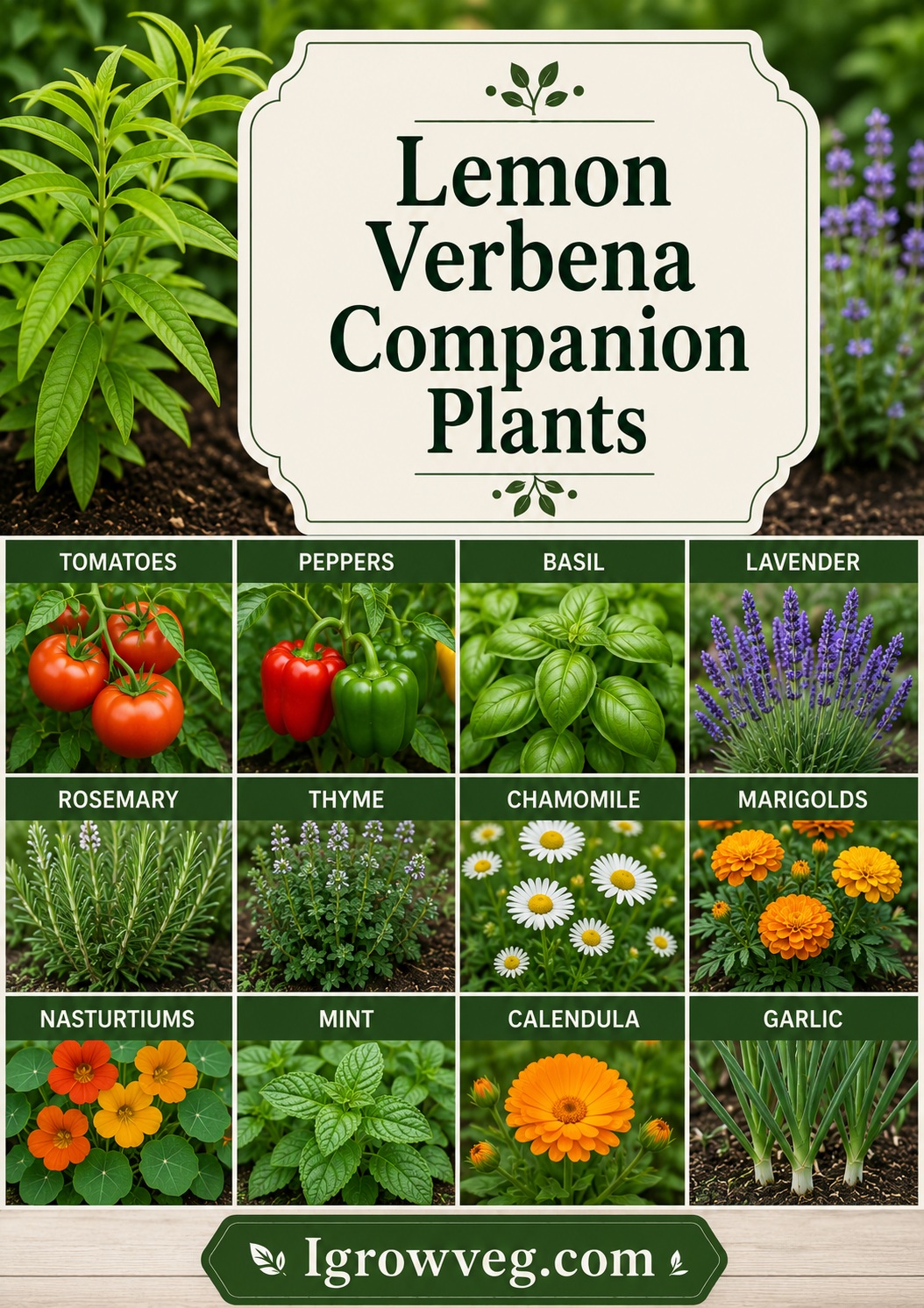
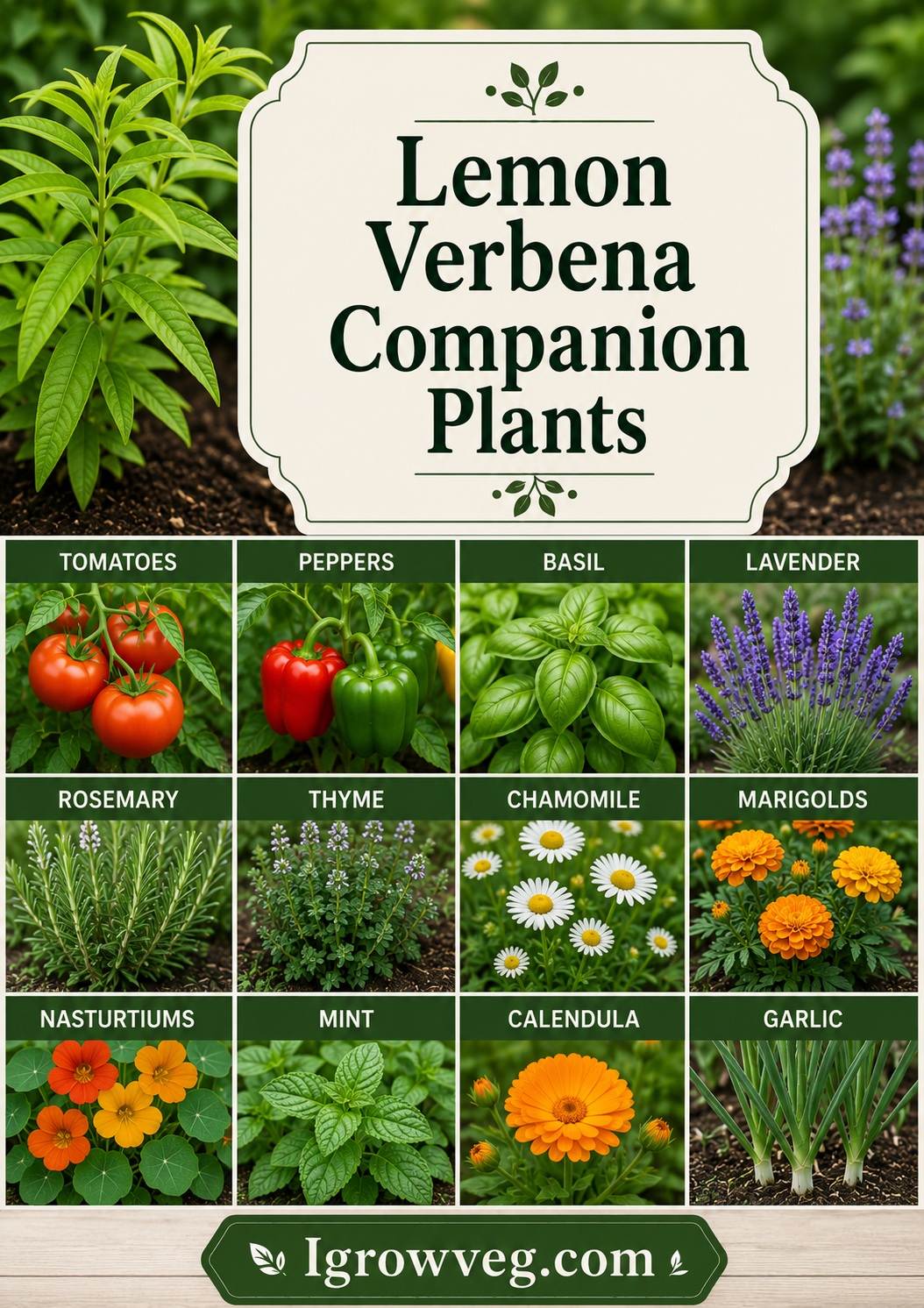
Selecting the right lemon verbena companion plants is key to managing this elegant, woody deciduous shrub. Known for its intense, sherbet-like citrus scent, Lemon Verbena (Aloysia citrodora) is a standout in any sensory garden. However, because it can be somewhat sensitive to cold and prone to spider mites in dry conditions, surrounding it with the right neighbors is essential for its longevity.
By pairing it with plants that share its love for Mediterranean-style drainage or those that offer natural pest protection, you create a resilient microclimate. This guide explores the most effective companions to help your lemon verbena thrive while adding aesthetic and functional value to your landscape.
🌿 Lemon Verbena Companion Planting
✅ Best Companions
- Lavender — Shares similar sun and soil needs; both are aromatic and attract pollinators.
- Rosemary — Drought‑tolerant, sun‑loving herb that complements lemon verbena in Mediterranean beds.
- Thyme — Low‑growing groundcover that conserves soil moisture and suppresses weeds.
- Basil — Adds culinary diversity; benefits from lemon verbena’s pest‑repelling aroma.
- Marigold — Repels nematodes and insects, protecting lemon verbena roots.
- Echinacea (Coneflower) — Attracts pollinators and adds height contrast in sunny borders.
- Chamomile — Companion herb that improves soil health and attracts beneficial insects.
❌ Plants to Avoid
- Moisture‑loving crops (e.g., lettuce, spinach) — Lemon verbena prefers drier soil; pairing can cause stress.
- Shade‑loving plants (e.g., hostas, ferns) — Verbena thrives in full sun, so shade companions will struggle.
- Heavy feeders (e.g., corn, squash) — Compete for nutrients and water, reducing verbena’s vigor.
🌱 Growing Tips
- Soil: Well‑drained, sandy or loamy, enriched with compost.
- Light: Full sun (6–8 hours daily) for best fragrance and leaf production.
- Water: Moderate; allow soil to dry slightly between waterings.
- Spacing: Plant companions with similar sun and water needs; keep 30–45 cm spacing for airflow.
1. The Pest-Defense Squadron
Lemon verbena is prized for its high concentration of citral, which naturally repels many insects. However, it can still fall victim to whiteflies or spider mites. These lemon verbena companion plants help bolster its defenses.
Garlic and Chives
Alliums are the “bodyguards” of the herb world. The sulfurous compounds in garlic and chives are highly effective at deterring aphids and mites that might otherwise target the tender new leaves of the verbena. Since alliums are relatively small, they can be tucked around the base of the lemon verbena shrub without competing for root space.
Dill and Fennel
These umbellifers are excellent for biodiversity. Their umbrella-shaped flower clusters attract predatory insects like lacewings and hoverflies, which feed on the larvae of pests. By inviting these “good bugs” to the garden, you reduce the likelihood of a mite infestation on your lemon verbena. For more on using beneficial insects for pest management, (UC IPM) offers comprehensive biological control strategies.
2. Mediterranean Heat-Lovers
Lemon verbena originates from South America and thrives in conditions similar to many Mediterranean herbs. These lemon verbena companion plants share its requirement for “wet feet, dry ankles”—plenty of water but excellent drainage.
Rosemary and Sage
Rosemary and sage are perfect structural companions. They share the same preference for full sun and gritty, well-drained soil. Because lemon verbena can become somewhat “leggy” or sparse at the bottom as it grows taller, planting lower-growing, evergreen herbs like sage at its base hides the woody stems and creates a lush, tiered look.
Lavender
Lavender and lemon verbena are a match made in sensory heaven. Both require high-drainage soil to prevent root rot, and their scents—one floral, one citrus—complement each other beautifully in both the garden and in dried sachets. To understand the soil pH and drainage requirements for these woody perennials, The Old Farmer’s Almanac provides excellent soil-preparation tips.
3. Pollinator Magnets and Growth Boosters
To ensure a vibrant garden, you should include lemon verbena companion plants that keep the ecosystem active and the soil healthy.
Bee Balm (Monarda):
This plant is a powerhouse for attracting bees and butterflies. Its presence ensures that your garden remains a hub of pollinator activity, which benefits the overall health of the garden bed.
Borage:
Often called the “magic” companion, borage is thought to improve the general vigor of plants grown near it. It also adds potassium and calcium to the soil when its leaves are mulched back into the ground.
Nasturtiums:
These act as a “trap crop,” drawing aphids away from the lemon verbena. Their vibrant flowers also provide a beautiful color contrast to the verbena’s light green, lance-shaped leaves. For botanical deep-dives on trap-cropping techniques, The Missouri Botanical Garden is a gold-standard resource.
Lemon Verbena Companion Relationships Table
| Companion Plant | Functional Role | Garden Benefit |
| Rosemary | Structural Partner | Shares soil needs; masks woody stems. |
| Garlic | Pest Deterrent | Repels mites and whiteflies with sulfur. |
| Borage | Soil Mineralizer | Adds potassium; increases plant vigor. |
| Dill | Predator Attractor | Brings in hoverflies to eat aphids. |
| Lavender | Sensory Companion | Identical drainage needs; aromatic pairing. |
Plants to Avoid
While lemon verbena is generally easygoing, avoid these pairings:
- Mint: Mint is highly invasive and prefers much damper soil than lemon verbena. Its aggressive runners can quickly choke out the verbena’s root system.
- Large Shade Trees: Lemon verbena requires 6-8 hours of direct sun to produce its aromatic oils. Planting it under the heavy canopy of an oak or maple will lead to a spindly, scentless plant.
Conclusion
Success with lemon verbena companion plants comes down to balancing drainage needs with pest protection. By surrounding your verbena with protective alliums, structural rosemary, and pollinator-friendly borage, you create an aromatic sanctuary that is as healthy as it is fragrant. These companion relationships not only make your garden more resilient but also provide a diverse harvest of herbs for teas, tinctures, and culinary uses.
FAQ: Frequently Asked Questions
1. Does lemon verbena need a lot of water?
It likes regular watering but cannot tolerate standing water. Ensure your companions also enjoy well-drained soil.
2. Is lemon verbena a perennial?
In zones 8-10, it is a perennial shrub. In colder climates, it is often grown as an annual or brought indoors for the winter.
3. Why is my lemon verbena losing its leaves?
It is a deciduous shrub, so it naturally drops its leaves in the winter. If it loses leaves in summer, it may be due to underwatering or a spider mite infestation.
4. Can I grow lemon verbena in a pot with other herbs?
Yes, it does very well in large containers. Pair it with trailing herbs like thyme or prostrate rosemary for a beautiful “thriller and spiller” effect.
5. How often should I prune my lemon verbena?
Frequent pruning (pinching back the tips) encourages the plant to become bushier rather than tall and leggy.
6. Does lemon verbena attract butterflies?
Its tiny lavender-white flowers are quite attractive to small pollinators, though it is primarily grown for its foliage.
7. Can I plant lemon verbena near my vegetable garden?
Yes! Its strong citrus scent can help mask the smell of vegetables from certain pests, making it a great “border” plant for a veggie patch.