A rock garden without plants can create a striking, low-maintenance landscape that looks modern, artistic, and peaceful year-round. Unlike traditional rock gardens filled with alpine plants or groundcovers, plant-free rock gardens rely entirely on stone, gravel, texture, shape, and layout to create visual interest.
These minimalist gardens work especially well in:
- Dry climates
- Small urban yards
- Modern landscapes
- Courtyards
- Zen-inspired spaces
- Low-maintenance gardens
- Areas with poor soil
Additionally, a rock-only garden eliminates many common gardening chores such as watering, pruning, fertilizing, and weed management.
Benefits of a Plant-Free Rock Garden
Extremely Low Maintenance
Without plants, you avoid:
- Watering
- Trimming
- Fertilizing
- Deadheading
- Seasonal replanting
As a result, upkeep becomes much simpler.
Year-Round Appearance
Plants change seasonally, but rocks maintain their structure and color all year long.
Even during winter, the garden still looks organized and attractive.
Water Conservation
A rock garden without plants uses almost no water after installation.
Therefore, it works perfectly in drought-prone regions and xeriscape landscapes.
Modern and Minimalist Design
Rock-only gardens create clean lines and calming visual simplicity.
Many homeowners prefer this style for:
- Contemporary homes
- Japanese-inspired landscapes
- Meditation spaces
- Minimalist architecture
Decide on Your Rock Garden Style
Before starting, choose an overall design theme.
Zen Rock Garden
Inspired by Japanese dry gardens, these use:
- Raked gravel
- Large feature stones
- Minimal decoration
- Simple geometric layouts
The design emphasizes calmness and balance.
Desert-Style Rock Garden
This style mimics natural arid landscapes using:
- Sand-colored gravel
- Large boulders
- Layered stone textures
- Natural irregular arrangements
Modern Geometric Garden
Modern rock gardens often feature:
- Straight edges
- Contrasting stone colors
- Clean symmetry
- Large decorative slabs
Naturalistic Stone Landscape
This style imitates rocky terrain found in nature.
It uses:
- Uneven groupings
- Mixed stone sizes
- Gravel pathways
- Organic layouts
Choose the Right Location
Best Areas for Rock Gardens
Rock gardens work especially well in:
- Front yards
- Sloped terrain
- Courtyards
- Patio borders
- Dry problem areas
- Areas with poor soil
Sunny open spaces typically highlight rock textures best.
Consider Drainage
Good drainage helps prevent:
- Mud accumulation
- Standing water
- Weed growth
- Gravel displacement
Avoid low areas where rainwater pools heavily.
Gather Materials for the Rock Garden
Main Rock Types
Popular options include:
- River rock
- Granite
- Slate
- Lava rock
- Limestone
- Sandstone
- Basalt
Mixing several textures often creates more visual depth.
Gravel or Ground Cover Stone
Smaller stone materials help cover exposed soil.
Common choices include:
- Pea gravel
- Crushed granite
- Decomposed granite
- White marble chips
- Black lava gravel
Landscape Fabric
Landscape fabric helps reduce weed growth beneath the stones.
Choose heavy-duty permeable fabric for best results.
Decorative Features
Optional additions include:
- Stone lanterns
- Driftwood
- Sculptures
- Dry creek beds
- Stepping stones
- Gravel patterns
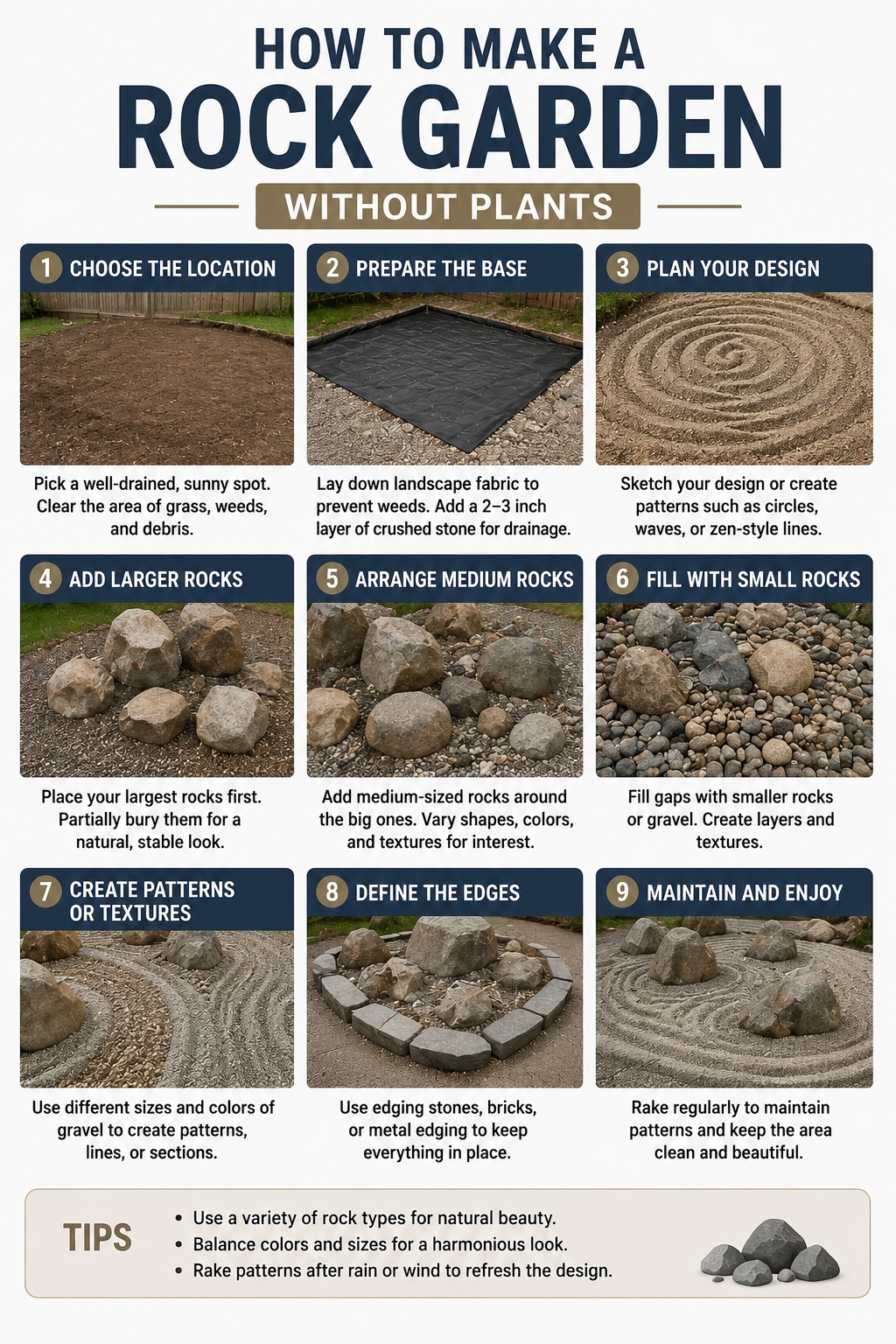
Prepare the Area Properly
Remove Existing Grass and Weeds
Clear the area completely before adding rock materials.
You can use:
- Sod cutters
- Shovels
- Cardboard sheet mulching
- Manual weed removal
Removing roots thoroughly reduces future weed problems.
Level or Shape the Ground
Depending on your design, you may want:
- Flat smooth surfaces
- Gentle mounds
- Slopes
- Terraced areas
Creating elevation changes adds visual interest even without plants.
Install Landscape Fabric
Landscape fabric helps:
- Suppress weeds
- Separate soil from gravel
- Improve long-term maintenance
Secure it firmly using landscape staples.
Overlap seams to prevent gaps.
Arrange Large Rocks First
Large rocks create the structure and focal points of the garden.
Use Odd Numbers
Natural-looking layouts often work best with:
- Groups of 3
- Groups of 5
- Asymmetrical spacing
Avoid overly perfect symmetry unless creating a formal modern design.
Partially Bury Large Stones
In nature, rocks rarely sit directly on top of the ground.
Partially burying stones creates a more realistic appearance and improves stability.
Vary Rock Sizes
Use a mix of:
- Large focal boulders
- Medium accent stones
- Smaller connecting rocks
This layering prevents the garden from looking flat or artificial.
Add Gravel or Decorative Stone
Once major rocks are placed, spread smaller stone materials across the surface.
Gravel Depth
Aim for approximately:
- 2–4 inches deep
This depth helps:
- Hide fabric
- Reduce weeds
- Improve appearance
Use Contrasting Colors
Contrasting stone colors create dramatic visual effects.
Examples:
| Main Stone | Accent Gravel |
|---|---|
| Dark basalt | White gravel |
| Sandstone | Red lava rock |
| Gray granite | Black gravel |
Create Patterns and Texture
Raked Gravel Designs
Zen gardens often use raked patterns that symbolize:
- Water ripples
- Waves
- Flowing movement
A simple landscape rake works well.
Dry Riverbeds
Use curved lines of smooth stones to imitate dry creek channels.
These features add movement and help break up flat spaces.
Stone Pathways
Stepping stones or gravel paths create:
- Visual direction
- Texture contrast
- Functional walking areas
Add Hardscape Features
Stone Benches
Stone seating creates meditation or relaxation spaces.
Sculptures
Modern sculptures pair especially well with minimalist rock gardens.
Lanterns and Lighting
Outdoor lighting highlights stone textures beautifully at night.
Popular options include:
- Solar lights
- Ground spotlights
- Japanese lanterns
- LED path lighting
How To Make a Zen Rock Garden Without Plants
Choose Simple Materials
Traditional Zen gardens emphasize restraint.
Use:
- Neutral gravel
- Large natural stones
- Minimal accessories
Focus on Empty Space
Negative space is important in Japanese design.
Avoid overcrowding the garden with too many elements.
Rake Gravel Regularly
Raking becomes part of the meditative process and keeps the garden looking fresh.
Best Rocks for Plant-Free Rock Gardens
Granite
Extremely durable and available in many colors.
Slate
Provides dramatic flat layered textures.
River Rock
Smooth rounded shapes create softer natural aesthetics.
Lava Rock
Adds bold texture and color contrast.
Limestone
Bright appearance works well in Mediterranean-style landscapes.
How To Prevent Weeds in a Rock Garden
Even plant-free gardens may eventually develop weeds.
Best Prevention Methods
- Install quality landscape fabric
- Use thick gravel layers
- Remove weeds early
- Avoid organic mulch
Cleaning and Maintaining a Rock Garden
Remove Leaves Regularly
Fallen leaves can eventually decompose into soil where weeds germinate.
A leaf blower works well for cleaning gravel surfaces.
Rinse Dust Occasionally
Rain usually cleans rocks naturally, but occasional rinsing refreshes stone color.
Re-Level Gravel
Heavy rain or foot traffic may shift smaller stones over time.
Periodic raking keeps surfaces neat.
Common Mistakes To Avoid
Using Too Many Rock Types
Too many textures or colors can make the garden look cluttered.
Choose a limited palette.
Placing Rocks Randomly
Intentional placement creates a more professional appearance.
Ignoring Scale
Tiny rocks may disappear visually in large spaces.
Balance stone size with garden size.
Skipping Weed Barriers
Without proper preparation, weeds quickly invade gravel surfaces.
Budget-Friendly Rock Garden Ideas
Use Local Stone
Locally sourced rocks usually cost less and look more natural.
Recycled Materials
Old stone, bricks, or reclaimed concrete can create attractive modern landscapes.
Start Small
Small courtyard or corner rock gardens still create strong visual impact.
Rock Garden Ideas for Small Spaces
Courtyard Zen Garden
Use:
- White gravel
- One feature boulder
- Minimal accessories
Modern Patio Border
Frame patios with contrasting stone bands.
Mini Dry Creek Bed
A narrow decorative stream effect works beautifully along fences or walkways.
Best Color Combinations for Rock Gardens
| Style | Stone Colors |
|---|---|
| Zen | White, gray, black |
| Desert | Tan, rust, brown |
| Modern | Black and white contrast |
| Naturalistic | Mixed earth tones |
Can You Add Plants Later?
Yes.
Many gardeners eventually incorporate:
- Moss
- Succulents
- Alpine plants
- Ornamental grasses
However, the rock garden can remain visually successful even without vegetation.
Frequently Asked Questions
Can a rock garden look good without plants?
Yes. Texture, layout, stone color, and spacing create visual interest even without vegetation.
What is the best gravel for a rock garden?
Crushed granite, pea gravel, lava rock, and decomposed granite are all popular choices.
Do rock gardens need landscape fabric?
Yes. Fabric significantly reduces weeds and improves long-term maintenance.
How deep should gravel be?
Usually 2–4 inches deep works best.
Are plant-free rock gardens low maintenance?
Very low maintenance compared to traditional gardens.
Can you make a Zen garden without plants?
Absolutely. Traditional Zen gardens often contain only rocks and gravel.
Conclusion
A rock garden without plants offers a clean, calming, and highly low-maintenance landscape option for modern homes, dry climates, and minimalist outdoor spaces. By carefully selecting rocks, gravel, textures, and layout patterns, you can create a visually striking garden that remains attractive year-round without the demands of traditional gardening.
Whether you design a Zen-inspired retreat, a modern geometric landscape, or a natural desert-style arrangement, the key lies in intentional stone placement, balanced textures, and thoughtful use of space. With proper preparation and simple maintenance, a plant-free rock garden can become one of the most durable and peaceful features in your outdoor landscape.