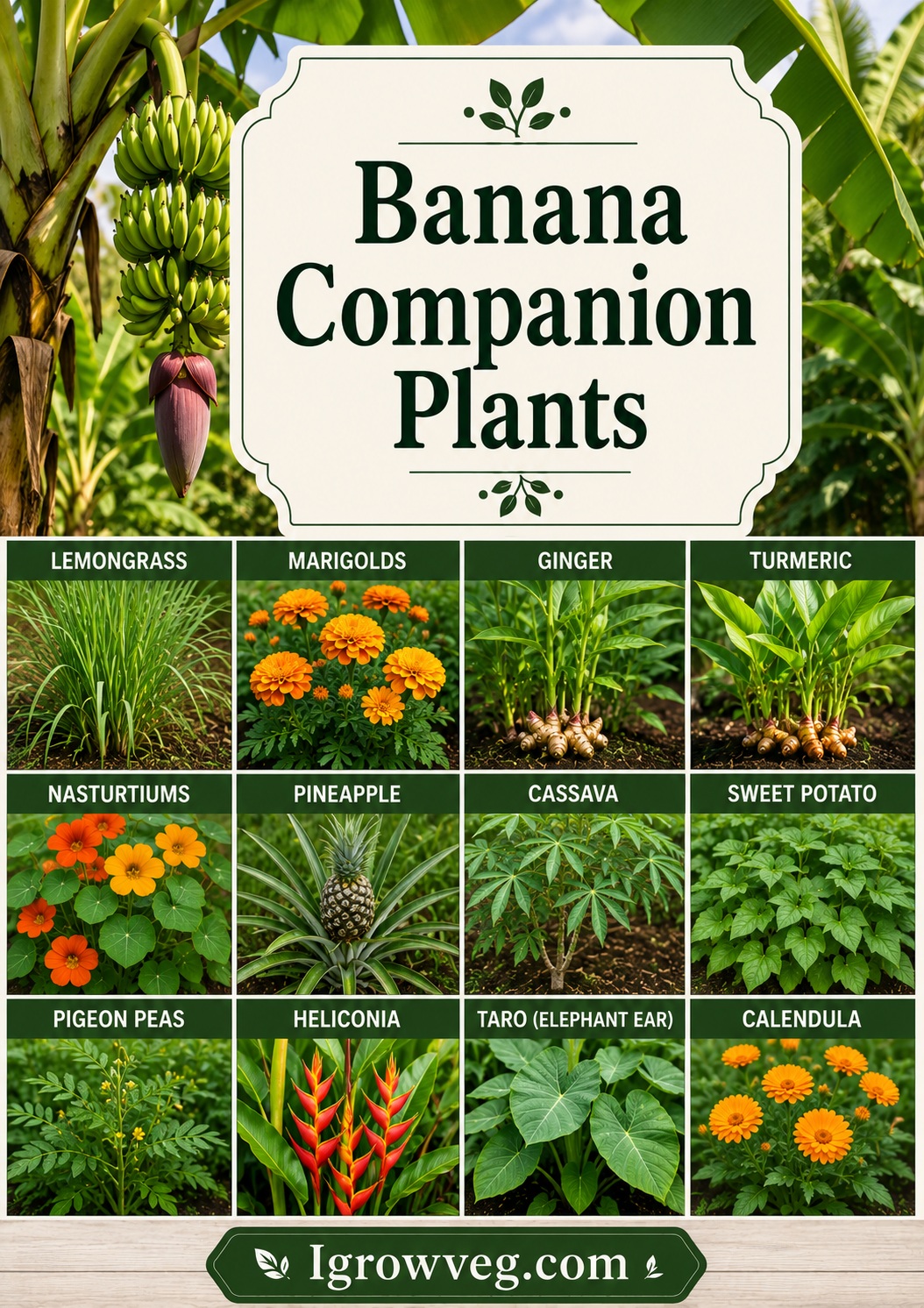
The concept of banana companion plants is rooted in the ancient agricultural wisdom of the tropics, where plants are rarely grown in isolation. In a natural rainforest ecosystem, the banana (Musa spp.) functions as a “pioneer species”—a fast-growing, nutrient-cycling giant that creates a protective microclimate for everything beneath it. Because bananas are technically giant herbaceous perennials (not trees), they have unique physiological needs: they are “heavy drinkers,” “heavy feeders,” and require high humidity.
Designing a “banana guild” involves selecting plants that fill specific ecological niches: nitrogen fixers to feed the banana’s hunger, living mulches to protect its shallow roots, and aromatic protectors to ward off borers and nematodes. This 1500-word guide provides a deep-dive analysis into the most effective companion plants for bananas, categorized by their functional role in the ecosystem.
1. The Heavy Feeders: Nitrogen-Fixing Companions
Bananas are among the hungriest plants in the garden. They require massive amounts of nitrogen to produce their enormous leaves and heavy fruit bunches. Nitrogen-fixing banana companion plants are the most critical members of the guild.
Pigeon Pea (Cajanus cajan)
Pigeon pea is the gold standard for banana companionship. As a perennial legume, it hosts Rhizobium bacteria in its root nodules, which convert atmospheric nitrogen into a soil-bound form that bananas can easily absorb. Furthermore, pigeon peas are often used in “chop-and-drop” systems. Growers prune the pigeon pea branches and lay them at the base of the banana; as the leaves decompose, they release a concentrated burst of nitrogen and organic matter. This mimicry of the forest floor is essential for long-term soil fertility.
Gliricidia (Gliricidia sepium)
Often called “Quickstick” or “Mother of Cocoa,” this fast-growing leguminous tree is frequently used as a living fence or a shade provider for young banana plants. Like the pigeon pea, it is a nitrogen-fixing powerhouse. In commercial organic banana plantations, Gliricidia is regularly lopped to provide nutrient-rich mulch. Its deep taproot also helps bring minerals from the lower soil strata up to the surface, where the banana’s shallow roots can reach them.
Beans and Cowpeas
For those with limited space, annual legumes like bush beans or cowpeas are excellent short-term banana companion plants. They can be grown in the sunny margins of a newly planted banana grove. They provide a quick harvest for the kitchen while simultaneously improving the soil for the banana’s future growth. For more on the science of nitrogen fixation in tropical soils, the International Institute of Tropical Agriculture (IITA) provides extensive research on legume-banana intercropping.
2. Living Mulches and Ground Covers
Bananas have a shallow, spreading root system that is highly sensitive to heat and evaporation. A “living mulch” is a low-growing plant that shades the soil, suppresses weeds, and maintains the high humidity levels that bananas crave.
Sweet Potato (Ipomoea batatas)
The sweet potato is perhaps the most popular ground cover for banana patches. Its vigorous vines spread rapidly, creating a dense green carpet that prevents the sun from baking the soil. Because sweet potatoes and bananas occupy different vertical layers—the banana reaching for the sky and the sweet potato hugging the earth—they do not compete for sunlight. Additionally, the sweet potato harvest provides a secondary calorie source from the same plot of land.
Comfrey (Symphytum officinale)
While more common in temperate zones, comfrey is a valuable addition to any banana guild. It acts as a “dynamic accumulator.” Its incredibly deep roots pull potassium—a vital nutrient for fruit development—from deep in the earth. Growers can harvest the large comfrey leaves several times a season to mulch around the banana pseudostems. This provides a “potassium boost” that directly supports the formation of large, healthy banana hands.
Pumpkins and Squash
Large-leafed cucurbits like pumpkins or squash act as excellent seasonal ground covers. Their broad leaves provide “instant shade” for the soil. In traditional “Three Sisters” style gardening variations in the tropics, squash is often used under bananas to reduce weed pressure. The only caveat is that squash are also heavy feeders, so ensure the soil is heavily composted to support both crops. To explore the botanical characteristics of tropical ground covers, The Missouri Botanical Garden offers a wealth of plant profiles.
3. Aromatic Protectors: Natural Pest Management
The banana plant is susceptible to several devastating pests, most notably the banana weevil borer and root-knot nematodes. Aromatic banana companion plants use volatile oils to confuse or repel these invaders.
Lemongrass (Cymbopogon citratus)
Lemongrass is a staple in the banana guild. Its strong citronella scent helps mask the smell of the banana plant from searching weevils. Furthermore, lemongrass is a “clumping” grass, meaning it won’t spread invasively into the banana’s root zone. It can also be harvested for tea and cooking, making it a highly functional border plant.
Marigolds (Tagetes spp.)
Nematodes are microscopic soil worms that attack banana roots, causing the plant to topple over under the weight of its fruit. Marigolds are famous for secreting a chemical called alpha-terthienyl into the soil, which is toxic to many species of nematodes. Planting a ring of marigolds around your banana mat creates a protective chemical barrier that keeps the root system healthy and anchored.
Ginger and Turmeric
As members of the Zingiberaceae family, ginger and turmeric are natural companions for bananas. They thrive in the dappled shade provided by the large banana leaves and enjoy the same high-moisture environment. Their pungent rhizomes are rarely bothered by soil pests, and they help create a diverse underground ecosystem that discourages the buildup of banana-specific pathogens. For expert advice on integrated pest management in tropical gardens, the University of Florida’s IFAS Extension is a premier resource.
4. The Vertical Layers: Shade and Support
In a permaculture “food forest,” we think in layers. Bananas occupy the “low canopy” or “shrub” layer. Pairing them with plants that occupy higher or lower tiers creates a stable, wind-resistant environment.
Papaya (Carica papaya)
Papayas and bananas are frequently grown together. Papayas are taller and have a narrower footprint, allowing them to grow alongside bananas without shading them out completely. They share similar water and fertilizer requirements, making them a low-maintenance duo. This pairing also provides a continuous harvest of tropical fruits throughout the year.
Coffee and Cacao
In their native habitats, coffee and cacao are understory plants. The massive leaves of a banana plant provide the “nursery” shade that young coffee and cacao trees need to prevent leaf scorch. Once the trees mature, they continue to benefit from the humidity trapped beneath the banana canopy. In return, the leaf litter from these trees adds diverse organic matter to the soil, benefiting the banana’s nutrient cycle.
Vanilla Orchids
For the advanced tropical gardener, the trunk (pseudostem) of a banana can serve as a temporary trellis for climbing plants. Vanilla orchids, which require high humidity and filtered light, can be trained to grow up the sturdy base of a banana plant. While the banana pseudostem eventually dies back after fruiting, the vanilla can be transitioned to the next “sucker” or pup in the mat.
5. Summary of the Banana Guild
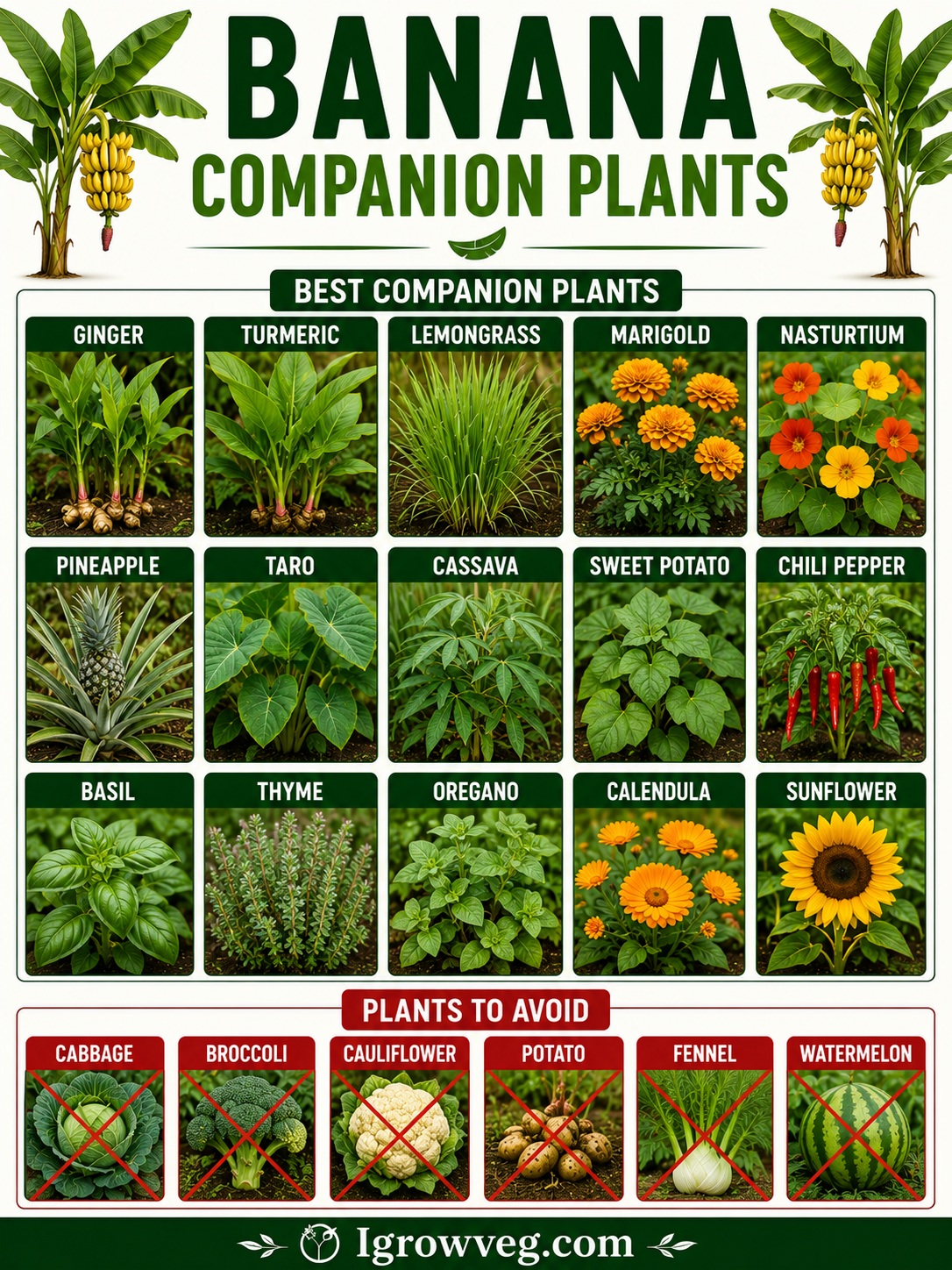
| Function | Recommended Companion Plants |
| Nitrogen Fixing | Pigeon Pea, Gliricidia, Cowpeas, Beans. |
| Soil Protection | Sweet Potato, Pumpkin, Comfrey, Nasturtium. |
| Pest Repellent | Lemongrass, Marigolds, Garlic, Chives. |
| Shade/Understory | Coffee, Cacao, Turmeric, Ginger, Taro. |
| Vertical Structure | Papaya, Vanilla Orchid, Cassava. |
6. Plants to Avoid
While bananas are generally gregarious, a few plants should be kept away from the “banana mat”:
- Eucalyptus: These trees are “water thieves” and produce allelopathic chemicals that can stunt the growth of nearby plants.
- Aggressive Bamboo: Certain running bamboo species can infiltrate the banana’s soft, fleshy corm (the underground base), making it difficult for the banana to produce new “pups” or suckers.
- Heavy Grasses (Lawns): Bermuda or St. Augustine grass will compete aggressively for nitrogen and water, often winning the battle against a young banana plant.
7. Management Tips for the Banana Guild
To make your banana companion plants work effectively, follow these management principles:
- The Circle Design: Plant your banana in the center of a “banana circle”—a 2-meter wide pit filled with organic debris (logs, leaves, kitchen scraps). Plant your companions on the mound of soil around the edge of the pit. This concentrates nutrients and water exactly where the guild needs them.
- Chop-and-Drop: Don’t be afraid to prune your nitrogen-fixers (like pigeon pea) and your “dynamic accumulators” (like comfrey). Laying the green material directly on the soil surface is the best way to feed the banana naturally.
- Succession: Plant your sweet potatoes and beans at the same time as the banana. This ensures the soil is covered before weeds have a chance to take hold.
Conclusion
Success in growing bananas is not just about the plant itself, but about the community of banana companion plants you cultivate around it. By integrating nitrogen-fixing legumes, moisture-retaining ground covers, and pest-repelling aromatics, you create a self-sustaining “food forest” that requires less water and fewer chemical inputs. Whether you are planting a single banana in a backyard pot or establishing a large-scale tropical grove, using these companion planting strategies will ensure a more resilient, productive, and flavorful harvest.
FAQ: Frequently Asked Questions
1. Does ginger compete with banana roots?
No. Ginger has a very different root structure and thrives in the shade provided by banana leaves. They are excellent partners.
2. Can I grow bananas and citrus together?
It is possible, but they have slightly different needs. Citrus prefers more sun than the understory of a banana grove usually provides, so plant them on the sunny southern side of the bananas.
3. Why is my banana plant falling over?
This is often due to nematode damage or a lack of potassium. Planting marigolds and comfrey can help address both of these issues.
4. How many companion plants can I fit around one banana?
In a standard 2-meter circle, you can comfortably fit one banana, 3-4 pigeon peas, a patch of sweet potatoes, and a border of lemongrass or marigolds.
5. Do bananas need full sun?
Yes, for the best fruit production, they need at least 6-8 hours of sun. However, their roots and the soil around them should remain shaded and cool.
6. Can I use wood chips as mulch for bananas?
Yes, but green mulch (like comfrey or bean leaves) is better because it breaks down faster and provides a more immediate nitrogen boost.
7. Can I plant mint with bananas?
Yes, mint loves the moisture in a banana patch and acts as a great ground cover, but be aware that it can be invasive and may need to be thinned out occasionally.