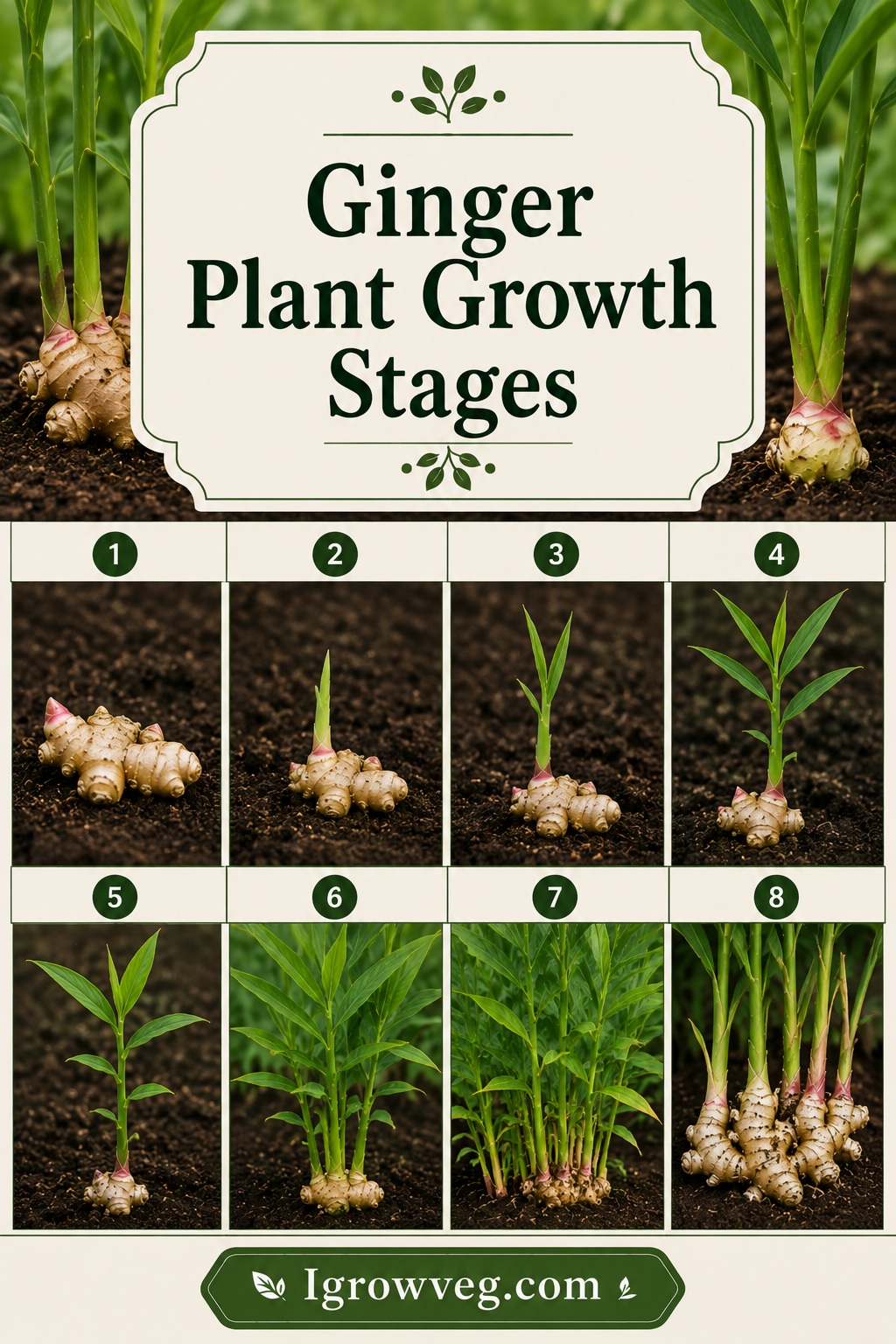
The ginger plant growth stages represent a fascinating journey of underground expansion. Known botanically as Zingiber officinale, ginger is a tropical perennial that is most commonly grown for its horizontal, fleshy subterranean stems called rhizomes. Unlike many garden vegetables that grow from tiny seeds, ginger is almost always propagated from “seed pieces” of an existing root.
Understanding the timeline of this plant is crucial because ginger is a slow-growing crop, often requiring eight to ten months of warmth and moisture to reach full maturity. From the first green “eye” breaking dormancy to the eventual yellowing of the stalks, each phase dictates how the plant should be watered and fed. This guide explores the biological milestones of the ginger plant, helping you navigate the long road to a successful harvest.
The Complete Lifecycle of Ginger: Understanding Growth Milestones
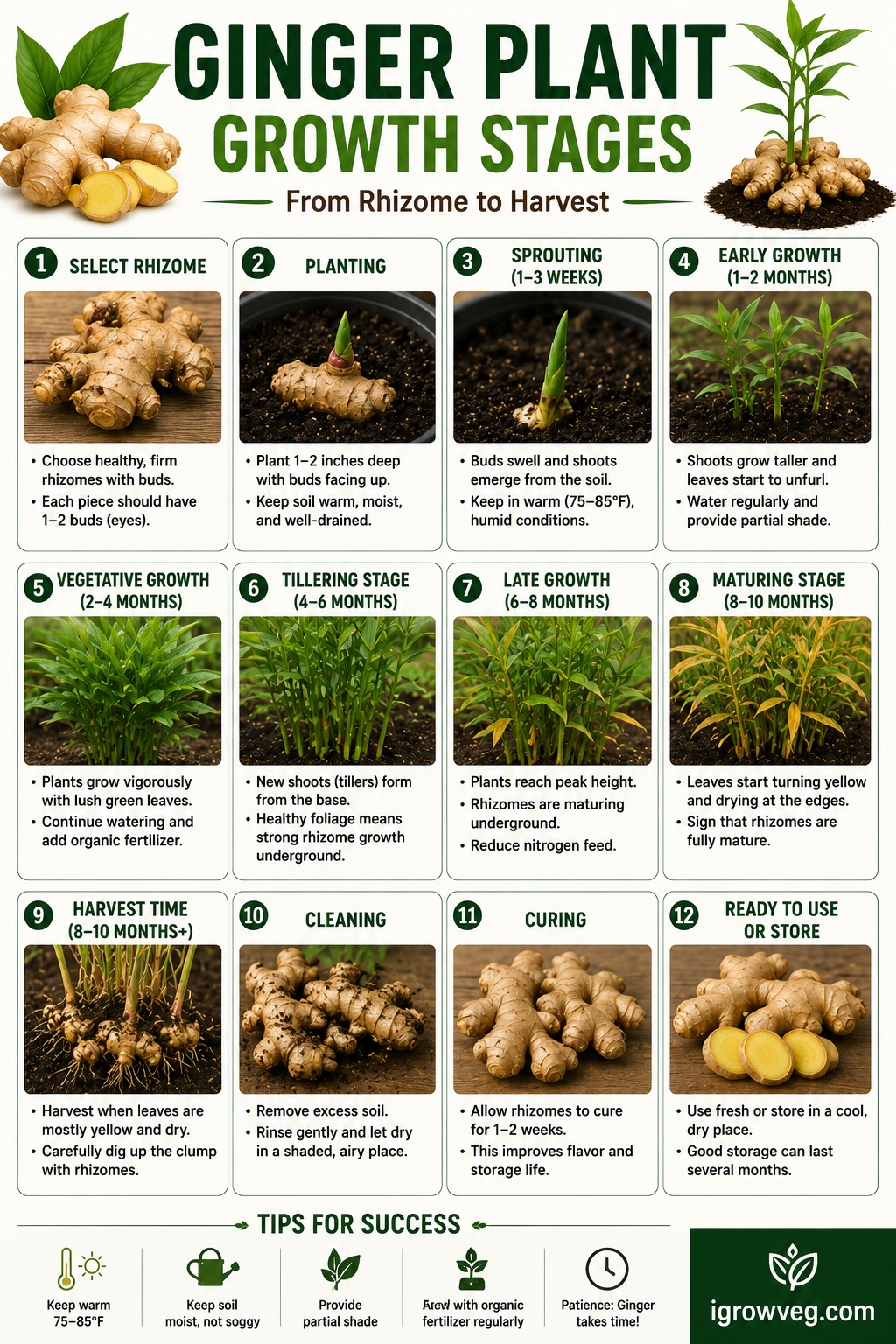
1. Dormancy and Sprouting: The Awakening
The first of the ginger plant growth stages begins with the selection of a “seed rhizome.” A healthy rhizome should be plump and feature several “eyes” or small, horn-like buds.
Breaking Dormancy
Ginger typically remains dormant until it is exposed to consistent warmth (above 20°C) and high humidity. Many growers “pre-sprout” ginger by placing it in a warm, dark place for several weeks. During this time, the “eyes” swell and turn a pale green or pinkish color. Once the sprouts are about an inch long, the rhizome is ready to be placed in the soil.
Initial Rooting
Once buried in shallow, well-draining soil, the rhizome begins to send out small, fibrous roots. These roots anchor the plant and begin absorbing the immense amount of moisture ginger requires. During this phase, it is vital to keep the soil moist but not waterlogged, as the rhizome is prone to rotting if it sits in stagnant water. To learn more about the drainage requirements of tropical rhizomes, The Royal Botanic Gardens, Kew offers extensive botanical data on the Zingiberaceae family.
2. Vegetative Growth: The Rise of the Pseudostems
After the rhizome establishes its roots, the plant enters the vegetative phase. This is one of the most visually distinctive ginger plant growth stages, as the plant begins to resemble a stand of bamboo or tall grass.
Pseudostem Expansion
The “stems” of the ginger plant are actually pseudostems—tightly wrapped leaf bases that grow vertically. These can reach heights of 2 to 4 feet. During this stage, the plant is building its “solar factory.” Each long, narrow leaf captures sunlight to produce the sugars that will eventually be stored back in the rhizome.
High Nutrient Demand
This is the stage where ginger is hungriest. It requires significant amounts of nitrogen and potassium to fuel its rapid vertical growth. Many organic growers use compost tea or seaweed extracts during this window. For expert advice on organic soil amendments for tropical herbs, The National Gardening Association is a fantastic resource.
3. Rhizome Multiplication: The Underground Expansion
As the vegetative canopy becomes lush, the third milestone of the ginger plant growth stages occurs out of sight: the “hands” of the ginger begin to multiply and thicken.
Branching Out
The original seed rhizome begins to sprout “fingers.” These new sections grow horizontally just beneath the soil surface. At this point, many gardeners “hill” their ginger, adding a fresh layer of compost or soil over the base of the stems. This provides the expanding rhizomes with more room to grow and prevents them from becoming “sunburned” or tough.
The “Baby Ginger” Phase
Approximately 5 to 6 months into the cycle, you can technically harvest what is known as “baby ginger.” At this stage, the rhizomes are bright white and pink with no tough outer skin. Baby ginger is mild and lacks the intense heat of mature ginger. While delicious, most growers wait for the final maturation stage for the full flavor profile.
4. Maturation and Senescence: The Final Drying
The final of the ginger plant growth stages is signaled by a change in the plant’s appearance above ground. This phase usually occurs 8 to 10 months after planting.
Yellowing and Die-Back
As the weather cools or the plant reaches the end of its natural cycle, the green leaves will begin to turn yellow and eventually brown. The pseudostems will start to tilt or collapse. This process, called senescence, indicates that the plant has finished its growth and is moving all its remaining energy into the rhizome for storage.
The Development of the Skin
During this final stage, the ginger develops its characteristic tan, papery skin. This skin is essential for the ginger’s “curing” process, allowing it to be stored for long periods. Once the foliage has died back by about 70-80%, the ginger is ready for its final harvest.
5. Summary of Ginger Growth Milestones
| Stage | Approximate Timeline | Physical Indicators |
| Sprouting | Weeks 0–4 | Buds (eyes) swell and turn pink/green. |
| Vegetative | Months 2–5 | Vertical pseudostems reach 2-4 feet. |
| Rhizome Expansion | Months 5–8 | New “fingers” grow; baby ginger is edible. |
| Maturation | Months 8–10 | Leaves turn yellow; skin thickens. |
| Harvest | Month 10+ | Foliage dies back; rhizomes are fully cured. |
Conclusion
The ginger plant growth stages require a unique combination of patience and environmental control. From the delicate first sprouts to the heavy, pungent rhizomes of autumn, the plant’s development is a masterclass in energy storage.
By understanding that ginger is a “long-haul” crop that needs constant warmth and high nutrition during its vegetative peak, you can ensure your harvest is both large and flavorful. Whether you are harvesting tender baby ginger for pickling or waiting for the fully cured roots of maturity, following these biological stages ensures you work in harmony with the plant’s tropical rhythm.
FAQ: Frequently Asked Questions
1. Can I grow ginger from a piece I bought at the grocery store?
Yes, provided the ginger is organic and has visible “eyes.” Many non-organic gingers are treated with growth inhibitors to prevent sprouting in the store.
2. Why is my ginger plant not growing any stems?
The most common cause is cold soil. Ginger will not sprout if the soil temperature is below 18°C.
3. Does ginger need direct sunlight?
Ginger prefers filtered or dappled sunlight. In its native rainforest home, it grows under the canopy of larger trees.
4. How often should I water my ginger plant?
Ginger loves moisture but hates “wet feet.” Water whenever the top inch of soil feels dry, but ensure the pot has excellent drainage.
5. Why are the tips of my ginger leaves turning brown?
This is often a sign of low humidity or underwatering. Ginger thrives in humid environments and may need occasional misting if grown indoors.
6. Can I grow ginger in a pot?
Absolutely. In fact, pots are easier to manage in non-tropical climates because you can bring them indoors when the temperature drops.
7. When is the best time to plant ginger?
In most climates, early spring is the best time to plant, as this gives the plant the longest possible warm season to mature.