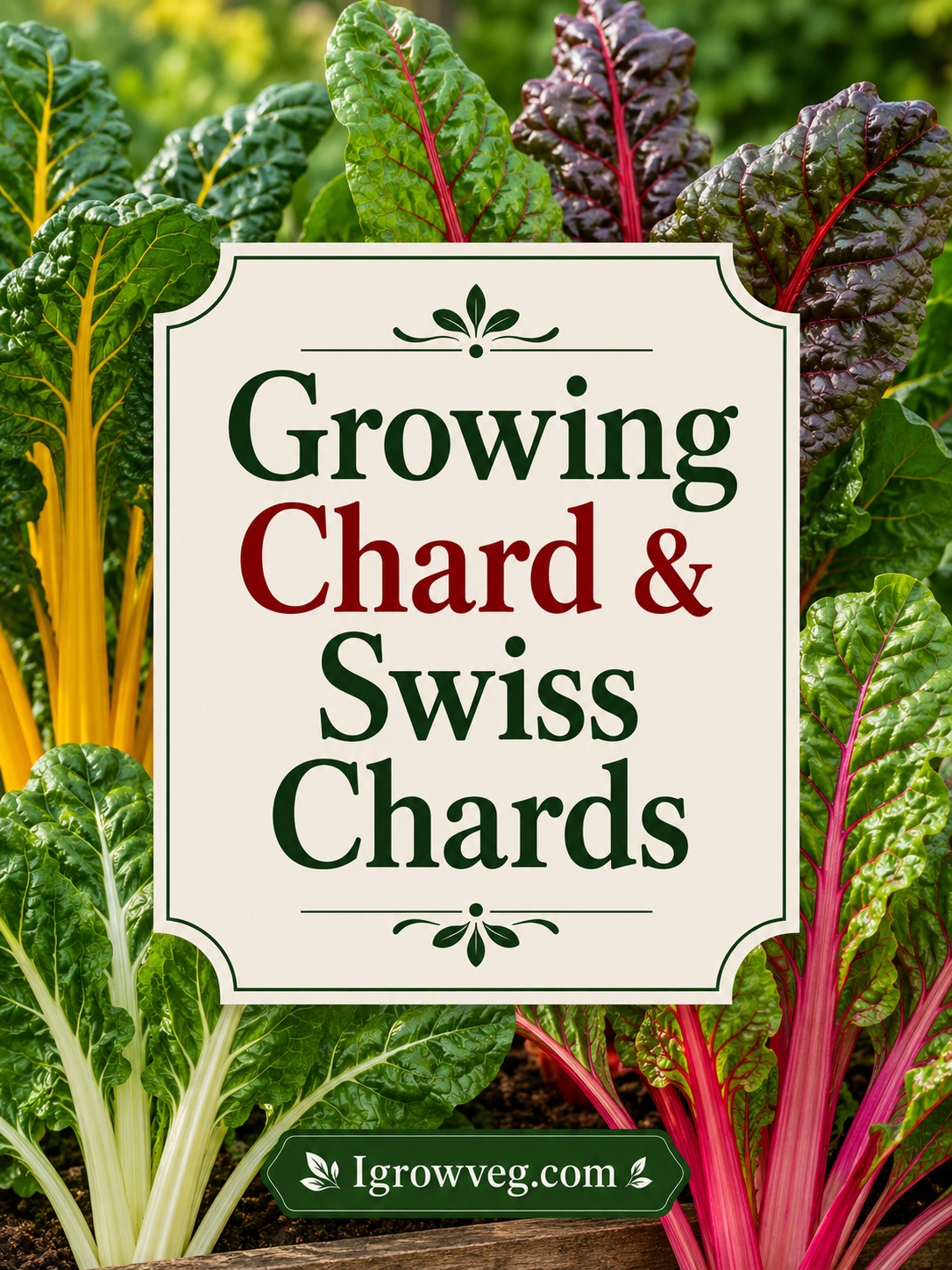
Swiss chard is one of the most versatile and productive leafy vegetables you can grow in a home garden. It produces colorful stems, large nutritious leaves, and continuous harvests over many months. Unlike many greens that quickly bolt in hot weather, chard tolerates both summer heat and light frosts, making it an excellent crop for beginner and experienced gardeners alike.
Whether you grow vegetables in raised beds, traditional gardens, containers, or small urban spaces, chard offers reliable harvests with relatively little maintenance. Its bright stems in shades of red, yellow, orange, pink, and white also make it ornamental enough to fit into flower borders and edible landscapes.
This complete guide explains everything you need to know about growing chard successfully, from seed sowing and soil preparation to harvesting and common problem solving.
What Is Chard?
Chard, often called Swiss chard, is a leafy green vegetable related to beets. Unlike beetroot varieties grown for their roots, chard is cultivated for its edible leaves and stems.
The plant forms large crinkled leaves attached to thick crunchy stalks. Both the leaves and stems are edible and highly nutritious. Chard has a mild earthy flavor somewhere between spinach and beet greens.
One of the biggest advantages of growing chard is its long harvest season. Instead of harvesting the whole plant at once, gardeners can continually pick outer leaves while the center keeps producing fresh growth.
Types of Chard
Green Stemmed Chard
Traditional green chard varieties have white or pale green stems with dark green leaves. These are often very productive and cold tolerant.
Popular varieties include:
- Fordhook Giant
- Lucullus
- Perpetual Spinach
Rainbow Chard
Rainbow chard is a colorful blend of varieties with stems in multiple bright shades.
Stem colors may include:
- Red
- Orange
- Yellow
- Pink
- White
Rainbow chard is especially popular in ornamental kitchen gardens because of its vibrant appearance.
Ruby Red Chard
This variety has deep red stems and veins with dark green leaves. It is one of the most attractive types for edible landscaping.
Benefits of Growing Chard
Swiss chard offers many advantages compared to other leafy vegetables.
Long Harvest Season
Unlike lettuce or spinach that may bolt quickly, chard can produce for months.
Heat Tolerance
Chard handles summer temperatures much better than many leafy greens.
Cold Resistance
It survives light frosts and may even overwinter in mild climates.
Nutrient Rich
Chard is packed with:
- Vitamin A
- Vitamin C
- Vitamin K
- Magnesium
- Potassium
- Iron
Easy to Grow
It is beginner friendly and adaptable to different growing conditions.
Attractive Appearance
The colorful stems make chard decorative as well as edible.
Best Climate for Growing Chard
Chard grows best in cool to mild weather but adapts surprisingly well to varying climates.
Ideal growing temperatures are:
- 50°F to 75°F (10°C to 24°C)
The plant tolerates:
- Summer heat better than spinach
- Light frost in winter
- Partial shade in warm climates
In hot regions, chard benefits from afternoon shade during peak summer temperatures.
Choosing the Right Growing Location
Sunlight Requirements
Chard grows best in:
- Full sun in cool climates
- Partial shade in hot climates
Aim for:
- 4 to 8 hours of sunlight daily
Too much shade reduces leaf production.
Soil Requirements
Swiss chard prefers:
- Rich fertile soil
- Well-draining conditions
- Plenty of organic matter
- Slightly acidic to neutral pH
Ideal pH range:
- 6.0 to 7.0
Heavy clay soil may cause slow growth and poor root development.
Preparing the Soil
Proper soil preparation helps produce vigorous leafy growth.
Add Organic Matter
Before planting, mix in:
- Compost
- Aged manure
- Leaf mold
This improves:
- Moisture retention
- Drainage
- Soil fertility
Remove Weeds and Rocks
Young chard seedlings compete poorly with weeds.
Clear the area thoroughly before planting.
Improve Drainage
If soil remains soggy after rain, create raised beds or amend with compost to improve drainage.
Growing Chard From Seed
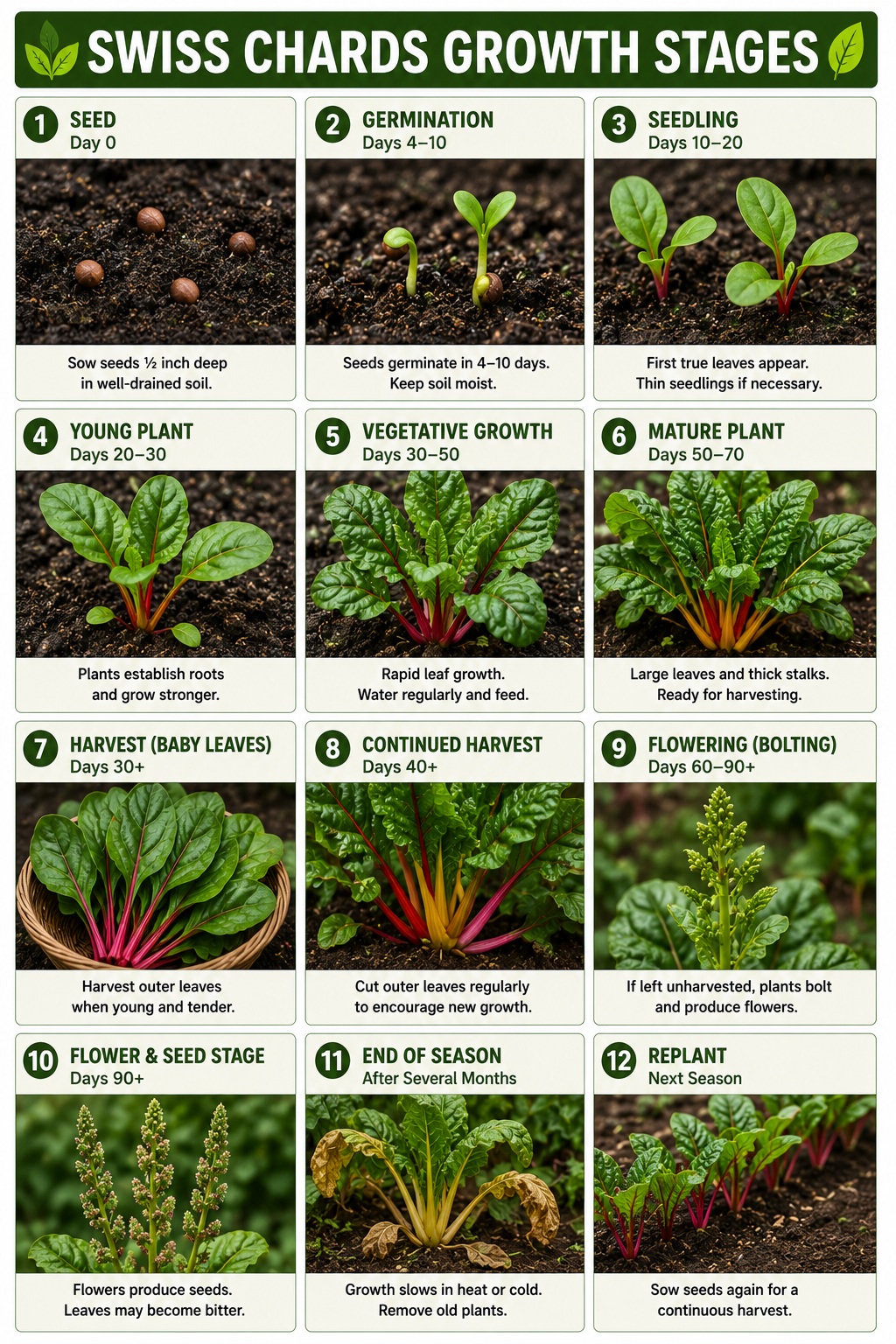
Most gardeners grow chard directly from seed because it germinates easily and grows quickly.
When to Sow Seeds
Spring Planting
Sow seeds:
- 2 to 4 weeks before the last frost
Summer Planting
For fall harvests, sow:
- 6 to 8 weeks before the first frost
Mild Winter Regions
In warm climates, chard can be grown nearly year round.
How to Plant Chard Seeds
Seed Depth
Plant seeds:
- About ½ inch deep
Spacing
Space seeds:
- 2 inches apart initially
Rows should be:
- 12 to 18 inches apart
Germination Time
Seeds usually sprout within:
- 5 to 10 days
Keep soil consistently moist during germination.
Thinning Seedlings
Once seedlings reach a few inches tall, thin them properly.
Final spacing should be:
- 8 to 12 inches apart
Crowded plants produce smaller leaves and poor airflow.
Do not discard thinnings. Young leaves are edible and delicious in salads.
Growing Chard in Containers
Swiss chard grows exceptionally well in pots and containers.
Best Container Size
Choose containers:
- At least 10 to 12 inches deep
Larger containers hold moisture better and support larger plants.
Potting Mix
Use:
- High quality vegetable potting mix
- Compost-enriched soil
Avoid heavy garden soil in containers.
Watering Containers
Container-grown chard dries out faster than garden beds, especially in summer.
Check moisture daily during hot weather.
Watering Chard Properly
Consistent watering is essential for tender leaves.
Water Needs
Chard generally requires:
- About 1 to 1.5 inches of water weekly
Signs of Underwatering
- Wilted leaves
- Tough stems
- Bitter flavor
- Slow growth
Avoid Overwatering
Waterlogged soil can cause:
- Root rot
- Yellowing leaves
- Fungal diseases
Always water deeply rather than shallow frequent sprinkling.
Mulching Around Chard
Mulch provides many benefits.
Good mulch materials include:
- Straw
- Shredded leaves
- Grass clippings
- Compost
Mulching helps:
- Retain moisture
- Suppress weeds
- Regulate soil temperature
- Reduce soil splashing
Keep mulch slightly away from stems to prevent rot.
Fertilizing Chard
Since chard produces abundant leafy growth, it benefits from regular feeding.
Best Fertilizers
Use:
- Compost
- Fish emulsion
- Balanced organic fertilizer
- Nitrogen-rich feeds
Feeding Schedule
Apply fertilizer:
- At planting time
- Every 4 to 6 weeks during growth
Avoid excessive nitrogen, which may produce huge leaves with weaker flavor.
Companion Plants for Chard
Companion planting can improve growth and reduce pest issues.
Good Companion Plants
Chard grows well near:
- Onions
- Garlic
- Lettuce
- Cabbage
- Beans
- Radishes
Plants to Avoid
Avoid planting near:
- Corn
- Potatoes
These may compete heavily for nutrients and space.
Common Problems When Growing Chard
Although chard is relatively easy to grow, several issues can affect the crop.
Bolting
Bolting occurs when plants send up flower stalks prematurely.
Causes
- Heat stress
- Sudden temperature changes
- Water stress
Prevention
- Keep soil moist
- Mulch plants
- Provide shade during extreme heat
- Choose bolt-resistant varieties
Once bolting begins, leaves often become bitter.
Yellowing Leaves
Yellow leaves may indicate several problems.
Possible Causes
- Overwatering
- Nutrient deficiency
- Poor drainage
- Old age
Solutions
- Improve drainage
- Feed plants with compost
- Remove damaged leaves
Small or Tough Leaves
Usually caused by:
- Lack of water
- Poor soil fertility
- Crowded plants
Regular feeding and correct spacing solve most issues.
Common Chard Pests
Several pests may attack Swiss chard.
Aphids
These tiny sap-sucking insects cluster under leaves and on stems.
Signs
- Curled leaves
- Sticky honeydew
- Distorted growth
Control Methods
- Spray with water
- Encourage ladybugs
- Use insecticidal soap
Leaf Miners
Leaf miner larvae tunnel inside leaves.
Signs
- White winding trails
- Damaged foliage
Solutions
- Remove affected leaves
- Use row covers
- Rotate crops
Slugs and Snails
These pests chew holes in leaves, especially in damp conditions.
Prevention
- Remove hiding places
- Use barriers
- Handpick at night
Common Chard Diseases
Chard is fairly disease resistant but not immune.
Downy Mildew
A fungal disease favored by damp humid conditions.
Symptoms
- Yellow patches
- Gray fuzzy growth beneath leaves
Prevention
- Improve airflow
- Water at soil level
- Avoid overcrowding
Cercospora Leaf Spot
Causes brown or gray spots on leaves.
Control
- Remove infected foliage
- Rotate crops
- Avoid overhead watering
Harvesting Chard
One of the best features of chard is continuous harvesting.
When to Harvest
Leaves are usually ready:
- 30 to 60 days after planting
Baby leaves can be harvested earlier.
Harvesting Method
Use the “cut-and-come-again” method.
- Remove outer leaves first
- Leave the center intact
This allows the plant to keep producing.
Harvesting Large Leaves
Pick leaves:
- 8 to 12 inches long
Large leaves remain tender if harvested regularly.
How Long Does Chard Produce?
Healthy plants can produce for:
- Several months
- Entire growing seasons
- Even over winter in mild climates
Regular harvesting encourages new growth.
Storing Fresh Chard
Freshly harvested chard stores well in the refrigerator.
Storage Tips
- Rinse lightly
- Dry thoroughly
- Store in plastic bags or containers
Chard usually remains fresh for:
- 5 to 7 days
Can You Freeze Chard?
Yes, chard freezes very well.
Freezing Steps
- Wash leaves
- Remove thick stems if desired
- Blanch briefly
- Cool in ice water
- Drain and freeze
Frozen chard works well in soups and cooked dishes.
Cooking With Chard
Swiss chard is highly versatile in the kitchen.
Leaves
Use leaves:
- Raw in salads
- Sautéed
- Added to soups
- Mixed into pasta dishes
Stems
The crunchy stems can be:
- Roasted
- Stir-fried
- Pickled
Many people cook stems separately because they take longer to soften.
Nutritional Benefits of Chard
Chard is considered one of the healthiest leafy greens.
Rich in Antioxidants
It contains compounds that help reduce oxidative stress.
Excellent Vitamin Source
Especially high in:
- Vitamin K
- Vitamin A
- Vitamin C
Supports Bone Health
Its mineral content supports strong bones and muscles.
Low Calorie Crop
Perfect for healthy diets and homegrown nutrition.
Saving Chard Seeds
Chard is biennial, meaning it produces seeds in its second year.
How Seed Saving Works
- Leave healthy plants overwinter
- Plants flower the following year
- Allow seed stalks to dry
- Collect mature seeds
Isolation Concerns
Chard cross-pollinates easily with beets, so keep seed crops separated if maintaining pure varieties.
Growing Chard Year Round
In many regions, gardeners can extend harvests significantly.
Spring and Summer
Plant successive sowings every few weeks for continuous production.
Fall Gardening
Late summer sowings often provide excellent autumn harvests.
Winter Growing
In mild climates or protected gardens, chard may continue producing through winter.
Use:
- Cold frames
- Row covers
- Greenhouses
for extended harvests.
Best Chard Varieties to Grow
Fordhook Giant
Known for:
- Large green leaves
- Thick white stems
- Excellent productivity
Bright Lights
Popular rainbow variety with colorful stems.
Ruby Red
Deep red stems and attractive foliage.
Perpetual Spinach
Smaller leaves with spinach-like flavor and strong heat tolerance.
Orange Fantasia
Features vivid orange stems and tender leaves.
Tips for Growing Better Chard
Harvest Frequently
Regular picking stimulates fresh growth.
Water Consistently
Avoid stress that causes bitterness.
Feed Plants Regularly
Leafy vegetables benefit from fertile soil.
Remove Damaged Leaves
This improves airflow and plant appearance.
Succession Sow
Plant new seeds every few weeks for nonstop harvests.
Growing Chard Organically
Organic growing methods work especially well with chard.
Improve Soil Naturally
Use:
- Compost
- Worm castings
- Mulch
Encourage Beneficial Insects
Flowers like alyssum and calendula attract natural predators that eat aphids.
Rotate Crops
Avoid planting chard in the same area yearly to reduce disease buildup.
Is Chard Better Than Spinach?
Both are nutritious greens, but chard offers some advantages.
Advantages Over Spinach
- Better heat tolerance
- Longer harvest season
- Larger plants
- More colorful appearance
Spinach Advantages
- Milder flavor
- Faster maturity
Many gardeners grow both for year-round greens.
Frequently Asked Questions About Growing Chard
How long does chard take to grow?
Most varieties mature in about 50 to 60 days, though baby leaves can be harvested earlier.
Can chard survive frost?
Yes, Swiss chard tolerates light frost and often becomes sweeter afterward.
Does chard regrow after cutting?
Yes, if the growing center remains intact, plants continue producing new leaves.
Why is my chard bitter?
Bitterness usually develops from heat stress, underwatering, or overmature leaves.
Can you eat chard stems?
Absolutely. The stems are edible and delicious when cooked.
Is Swiss chard perennial?
Chard is technically biennial but is usually grown as an annual vegetable.
Final Thoughts
Swiss chard is one of the most dependable vegetables for home gardens. Its colorful appearance, continuous harvests, heat tolerance, and nutritional value make it an excellent choice for gardeners of all skill levels.
With proper watering, fertile soil, and regular harvesting, a small planting of chard can provide fresh greens for many months. Whether grown in containers, raised beds, or traditional gardens, this versatile crop rewards gardeners with beauty and abundant harvests throughout the season.
By understanding the basics of planting, care, pest management, and harvesting, you can enjoy healthy and productive chard plants almost year round.