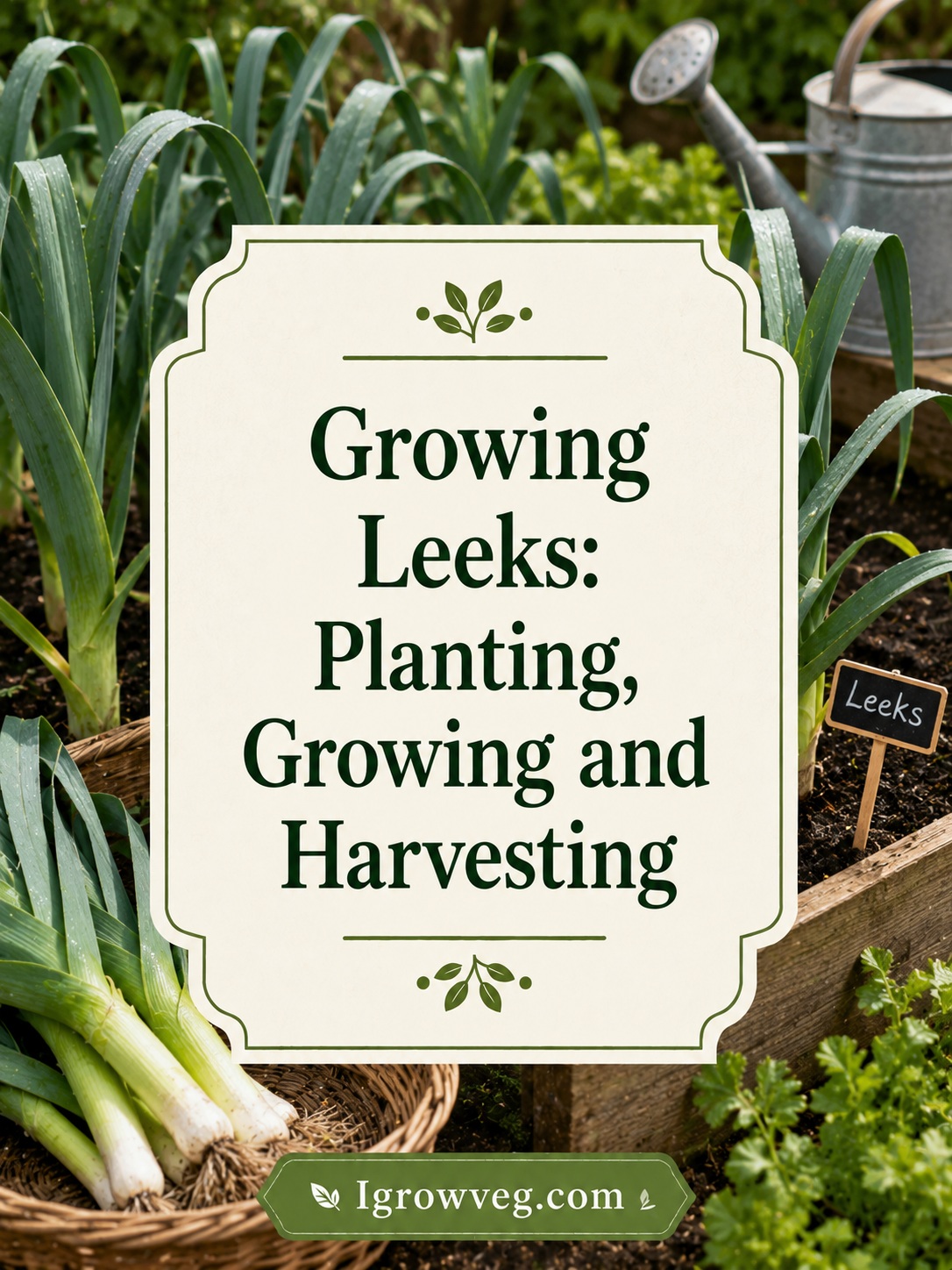
Leeks (Allium ampeloprasum var. porrum) are a versatile, hardy vegetable belonging to the onion family. Known for their mild, sweet flavor, they are a staple in soups, stews, and winter dishes. While leeks are relatively easy to grow, they require patience, as they spend at least five months in the ground before harvest. Their resilience to cold weather makes them an excellent crop for autumn, winter, and early spring harvests.
📖 Understanding Leeks
- Family: Alliaceae (Onion family)
- Growth habit: Biennial grown as an annual
- Edible part: Long white stem (blanched shank) and tender green leaves
- Climate: Cool-season crop, frost-hardy, thrives in 15–25°C
Leeks are less prone to pests and diseases compared to onions and garlic, making them a reliable crop for home gardeners.
Main Categories of Leek Varieties
Leeks come in many varieties, grouped by season (summer, autumn, winter), each with unique traits in flavor, stem size, and cold tolerance. Popular types include King Richard (early, mild), Musselburgh (mid-season, robust), and Bandit (late, hardy).
Leeks are generally classified into four seasonal groups depending on maturity and harvest time:
| Category | Harvest Season | Key Traits | Example Varieties |
|---|---|---|---|
| Summer Leeks | July–Sept | Fast-growing, tender, mild flavor, shorter stems | Varna, King Richard, Pancho, Columbus, Rival |
| Autumn Leeks | Sept–Nov | Medium growth, balanced flavor, moderate cold tolerance | Lyon, Hannibal, Pandora, Splendid |
| Autumn–Winter Leeks | Nov–Feb | Stronger stems, good frost resistance, creamy flavor | Musselburgh, Argenta, Goliath |
| Winter Leeks | Dec–Apr | Very hardy, thick stems, withstand severe frost | Bandit, Titan, American Flag, Siegfried, St Victor, Giant Musselburgh, Laura |
Notable Varieties
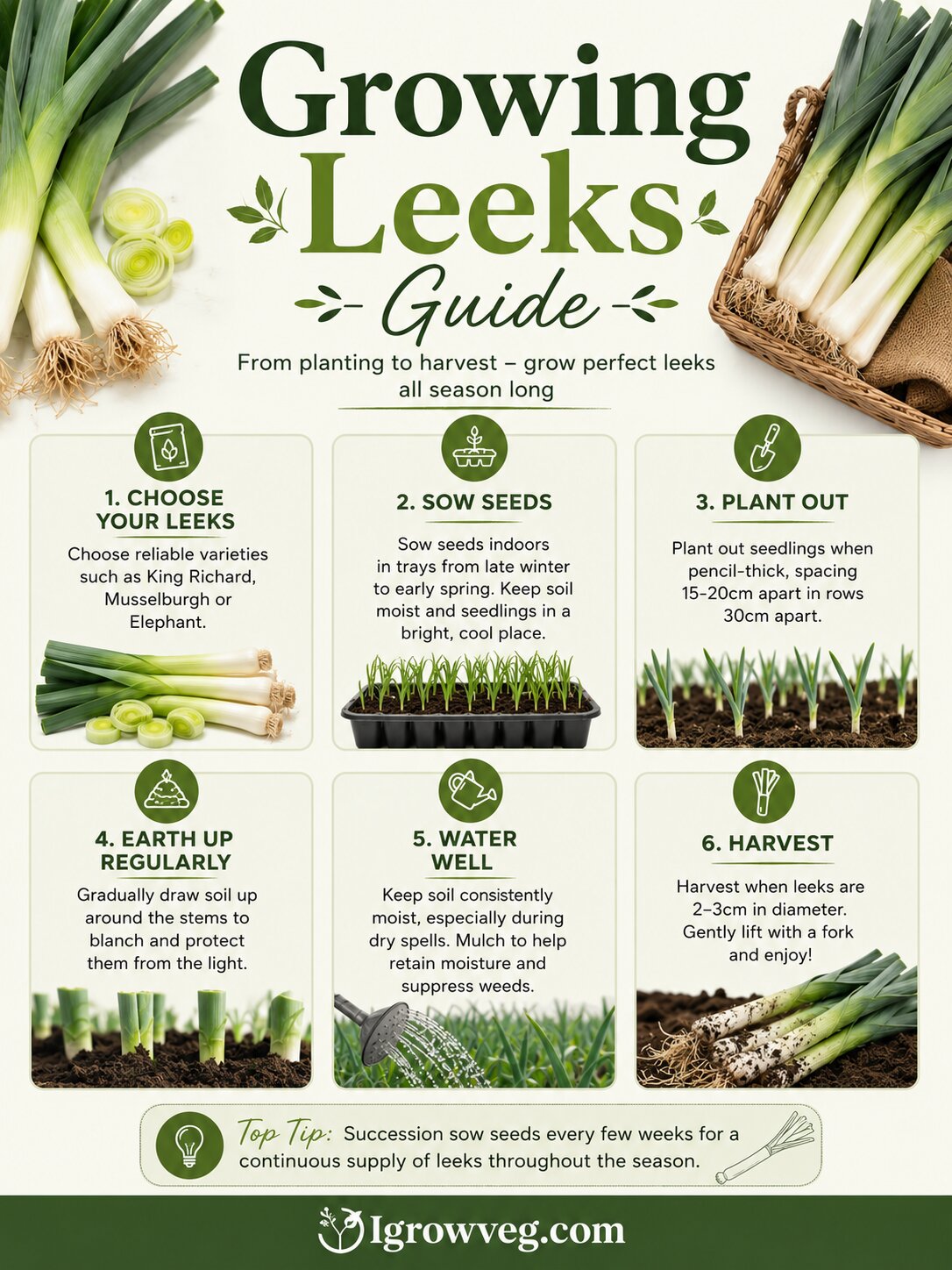
- King Richard – Early, slender stems, mild sweet flavor, ready in 75–90 days.
- Musselburgh – Scottish favorite, thick stems, robust flavor, withstands cold.
- Blue Solaise – Striking blue-green leaves, sweet taste, winter hardy.
- Giant Winter – Large, tender stems, ideal for late harvest.
- Porretta – Italian variety, long slender stalks, mild flavor.
- Bandit – Late-season, very hardy, excellent for overwintering.
- American Flag – Traditional winter leek, thick stems, strong flavor.
Choosing the Right Variety
- For quick harvests: Early types like King Richard.
- For winter supply: Musselburgh, Bandit, Giant Winter.
- For ornamental appeal: Blue Solaise (blue foliage).
- For mild flavor: Porretta, King Richard.
- For heavy cooking use: Musselburgh, Giant Musselburgh.
Risks & Tips
- Early leeks are less frost-hardy—best for mild climates.
- Winter leeks take longer to mature but survive harsh cold.
- Flavor intensity varies—choose based on culinary use (soups vs. fresh salads).
🪴 How to Sow Leeks
When to Sow
- Indoors: March–April in pots or modules.
- Outdoors: Direct sowing in April once soil warms.
Where to Sow
- In pots, root trainers, or seed trays in a greenhouse or sunny windowsill.
- Directly into well-prepared garden soil for later transplanting.
Materials Needed
- Pots or modules
- Multi-purpose compost
- Watering can
- Plant labels
- Leek seed packets
Sowing Instructions
- Fill pots/modules with compost.
- Water lightly.
- Sow 2–3 seeds per pot/module.
- Cover with a thin layer of compost.
- Water gently.
- Label with date and variety.
- Place in greenhouse or sunny spot.
🌍 Soil Preparation
Leeks thrive in fertile, well-drained soil enriched with organic matter.
- pH: 6.5–7.5 (neutral to slightly alkaline).
- Texture: Loamy or sandy soil.
- Preparation:
- Dig soil deeply to remove stones.
- Add compost or well-rotted manure.
- Avoid fresh manure (causes splitting).
- Fertilization: Balanced nutrients, especially nitrogen for leaf growth.
🌱 Transplanting Leeks
Leeks are transplanted once seedlings reach pencil thickness (about 15–20 cm tall).
Steps:
- Harden off seedlings outdoors for a week.
- Make deep holes (15 cm) with a dibber.
- Drop seedlings into holes without backfilling.
- Water well—soil will naturally fill around roots.
- Space plants 15–20 cm apart, rows 30–40 cm apart.
Tip: Planting deeply encourages long, white stems.
🌿 Caring for Leeks
Watering
- Keep soil moist, especially during dry spells.
- Avoid waterlogging.
Mulching
- Retains moisture and suppresses weeds.
Feeding
- Apply liquid fertilizer every 3–4 weeks.
- Nitrogen-rich feeds promote healthy growth.
Earthing Up
- Gradually mound soil around stems to blanch them.
- Repeat every few weeks for longer white shanks.
Pest & Disease Management
- Pests: Onion fly, thrips, leek moth caterpillars, slugs/snails.
- Diseases: Rust, white rot, fusarium wilt.
- Prevention:
- Rotate crops.
- Remove infected plants.
- Use fine mesh netting against moths.
🌾 Harvesting Leeks
- Timing: 5–7 months after sowing.
- Method:
- Loosen soil with a fork.
- Pull gently to avoid damage.
- Trim roots and leaves, leaving 10–15 cm foliage.
- Yield: 200–300 g per leek, stems 2–5 cm thick.
🧊 Storing Leeks
- Fresh storage:
- Keep in fridge for 1–2 weeks.
- Long-term storage:
- Store at 0–2°C, 90–95% humidity.
- Lasts up to 3 months.
- Freezing:
- Slice, blanch for 2–3 minutes, freeze in bags.
🍲 Culinary Uses
Leeks are versatile in cooking:
- Soups (classic leek & potato soup).
- Stews and casseroles.
- Stir-fries and sautés.
- Roasted or grilled as side dishes.
FAQs on Growing Leeks
Q1: Can leeks be grown in pots?
Yes, but choose deep containers (at least 25 cm) to allow long stems.
Q2: How do I get long white stems?
Plant deeply and earth up regularly to blanch stems.
Q3: Do leeks need full sun?
Yes, they grow best in full sun but tolerate partial shade.
Q4: How long do leeks take to grow?
Around 21–30 weeks depending on variety.
Q5: Can leeks survive frost?
Yes, they are hardy and withstand freezing temperatures.
Q6: What crops should I rotate with leeks?
Avoid planting after onions/garlic. Rotate with legumes, brassicas, or leafy greens.
Q7: Why are my leeks splitting?
Caused by uneven watering or fresh manure. Maintain consistent moisture.
Q8: Can I grow leeks year-round?
In temperate climates, stagger sowings of early, mid, and late varieties for continuous harvest.
📊 Quick Reference Table
| Factor | Best Practice |
|---|---|
| Soil pH | 6.5–7.5 |
| Planting Depth | 10–15 cm |
| Spacing | 15–20 cm plants, 30–40 cm rows |
| Growing Duration | 21–30 weeks |
| Harvest Size | 200–300 g per leek |
| Storage Conditions | 0–2°C, 90–95% humidity |
Conclusion
Leeks are a rewarding crop for patient gardeners. With careful sowing, transplanting, and maintenance, you can enjoy a steady supply of this versatile vegetable throughout autumn, winter, and spring. Their resilience to frost and minimal pest issues make them a reliable addition to any vegetable garden.