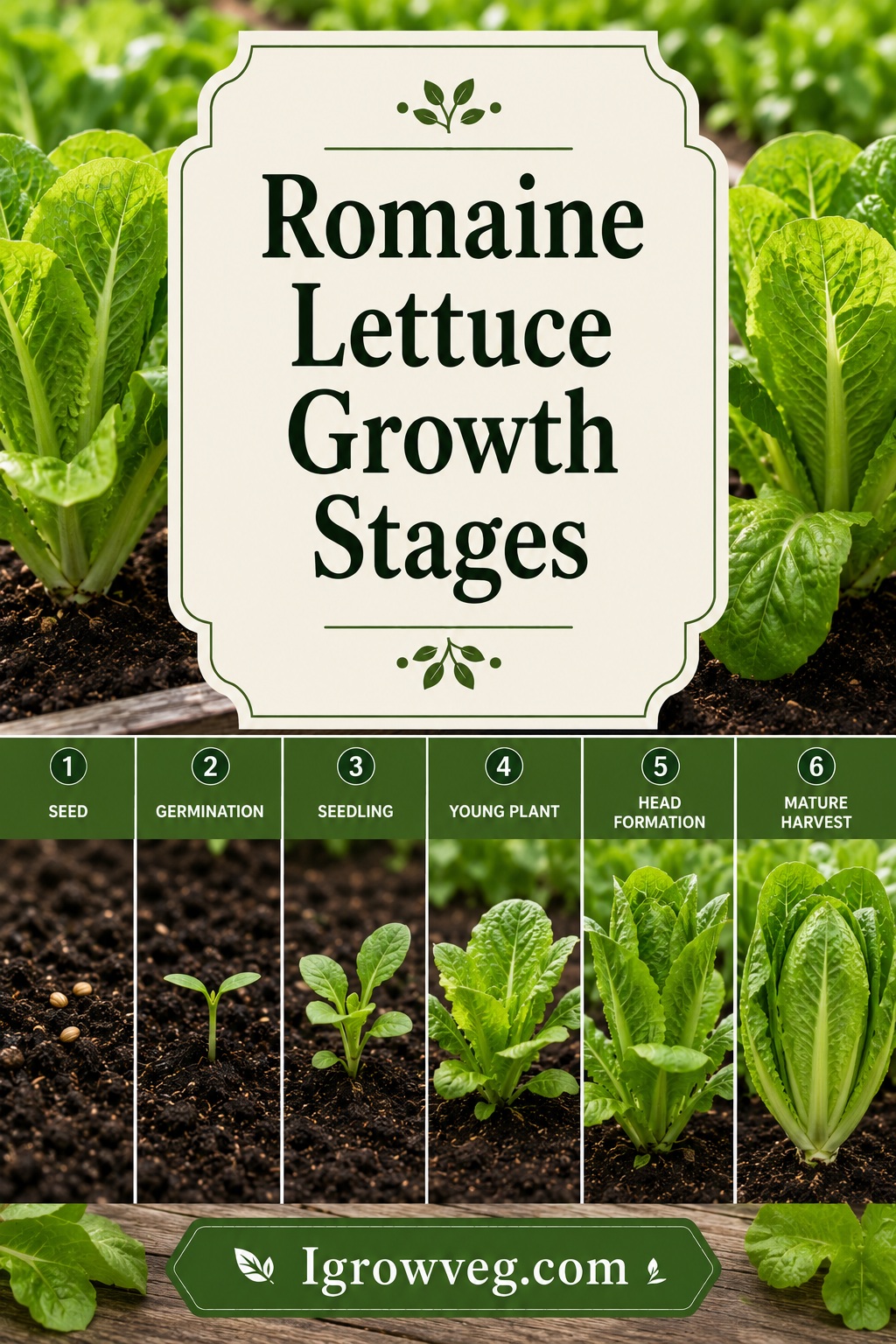
Growing your own food provides immense satisfaction, especially when you master the Romaine lettuce growth stages to ensure a crisp and healthy harvest. Romaine lettuce (Lactuca sativa L. var. longifolia), often called Cos lettuce, stands out in the garden due to its upright growth habit and sturdy, succulent ribs. Unlike loose-leaf varieties, Romaine develops a dense “heart” that chefs and home cooks prize for its crunch and ability to withstand heat in dishes like Caesar salad.
However, achieving that perfect crunch requires more than just scattering seeds in the dirt. You must understand the physiological transitions of the plant to provide the right balance of water, light, and nutrients at every turn. In this comprehensive guide, we will explore the six primary milestones of Romaine development, from the first sprout to the final harvest.
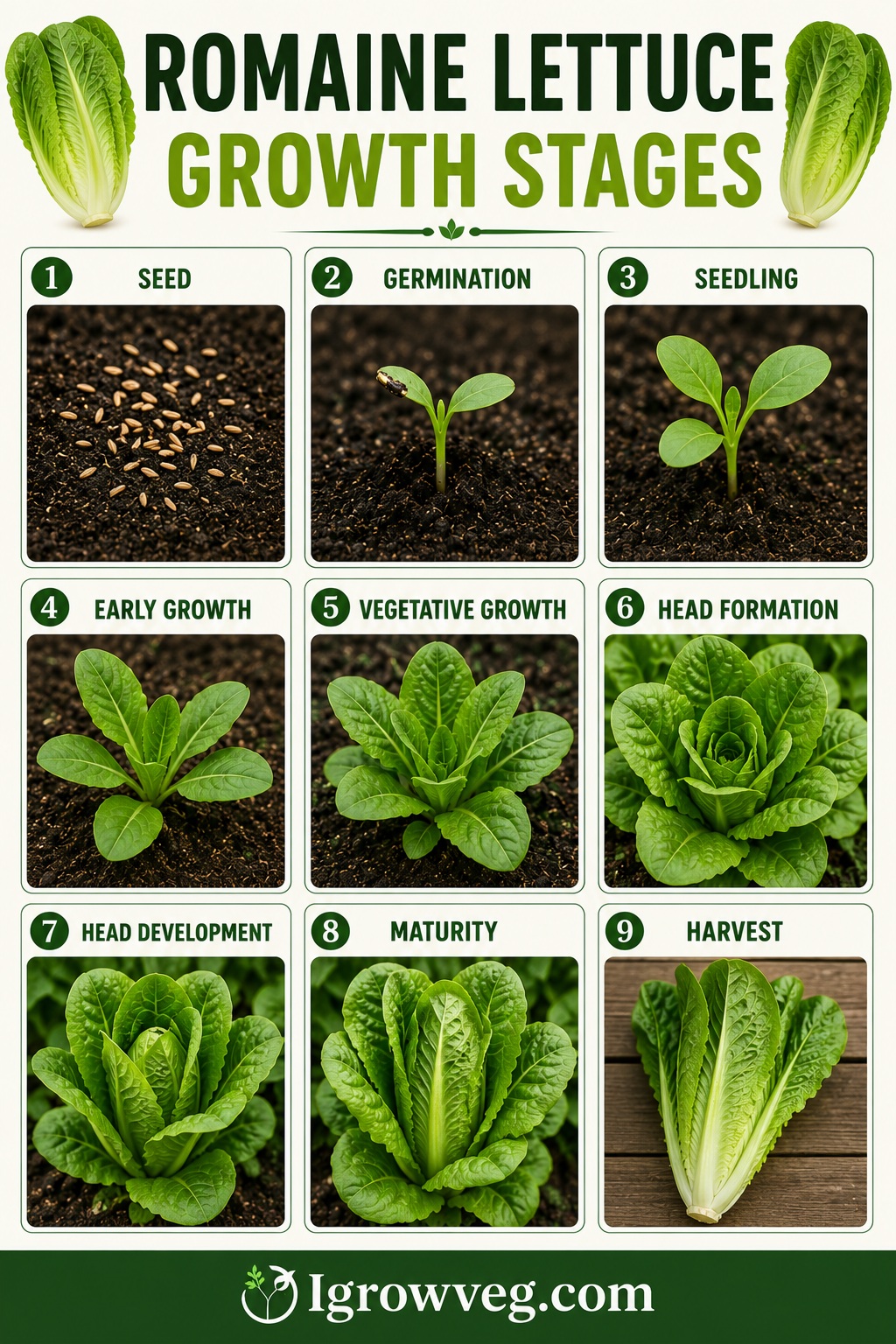
🥬 Romaine Lettuce Growth Stages
- Seed Germination (5–10 days) Seeds sprout; cotyledons emerge; first true leaves appear.
- Seedling Stage (2–4 weeks) Small rosette of leaves develops; roots establish; plant remains compact.
- Juvenile Growth (4–6 weeks) Leaves elongate and form upright clusters; plant begins to resemble romaine’s tall shape.
- Vegetative Growth (6–8 weeks) Rapid leaf expansion; outer leaves spread while inner leaves form dense upright heads.
- Heading Stage (8–10 weeks) Romaine forms its characteristic elongated head; leaves overlap tightly.
- Mature Stage (10–12 weeks) Heads reach harvest size (20–30 cm tall); crisp texture and full flavor develop.
- Bolting Stage (after maturity, if not harvested) Plant sends up a flower stalk; leaves turn bitter; seeds form for reproduction.
🌿 Notes:
- Romaine lettuce is a cool-season crop, best grown at 15–20°C.
- Harvest before bolting to ensure tender, sweet leaves.
- Succession planting every 2–3 weeks ensures continuous harvests.
1. Germination: The Cool Season Awakening
The first of the Romaine lettuce growth stages begins with the “awakening” of the seed. Because lettuce is a cool-season crop, it thrives in temperatures that would stun a tomato or a pepper.
Temperature and Light Requirements
Romaine seeds require a specific environment to break dormancy. Unlike many other vegetables, lettuce seeds are photoblastic, meaning they need light to germinate. Consequently, you should never bury them deeply; instead, simply press them into the surface of the soil or cover them with a very fine layer of vermiculite. The ideal soil temperature for Romaine germination ranges between 13°C and 21°C. If the soil exceeds 27°C, the seeds may enter a state of “thermal dormancy” and refuse to sprout until the weather cools.
The Appearance of the “Crook”
Within 7 to 10 days, you will see a tiny green loop emerge from the soil, often called the “crook.” Soon after, the two seed leaves (cotyledons) unfurl. These leaves don’t look like Romaine at all; they are simple, rounded, and smooth. Their only job is to jumpstart photosynthesis and fuel the development of the primary root system. During this window, maintaining consistent surface moisture is vital, as the tiny roots are too shallow to reach deep water reserves.
2. Seedling Phase: Establishing the Foundation
As the plant moves into the seedling phase, the Romaine lettuce growth stages become more recognizable. This is when the plant builds the root structure that will support its future heavy foliage.
True Leaf Development
After the cotyledons appear, the plant soon produces its first set of “true leaves.” These leaves possess the characteristic serrated edges and slightly bumpy texture of mature Romaine. At this stage, the plant is incredibly vulnerable to competition. Weeds can easily outgrow a young lettuce plant, stealing the nitrogen and light it needs to thrive. Therefore, meticulous weeding is a priority during these early weeks.
The Necessity of Thinning
To grow a full, upright head of Romaine, each plant needs space. If you sowed seeds too thickly, you must thin the seedlings to about 10 to 12 inches apart. Crowded plants will compete for moisture, which often results in stunted growth or a bitter flavor. For high-quality organic gardening advice and tips on the best tools for delicate thinning, The Old Farmer’s Almanac provides excellent resources for seasonal planting.
3. Vegetative Growth: Building the Rosette
The vegetative stage is the most rapid of the Romaine lettuce growth stages. During this period, the plant focuses entirely on leaf production, creating a “rosette” of foliage that fans out from the center.
Nitrogen and Photosynthesis
Romaine is a “heavy feeder” when it comes to nitrogen. Nitrogen fuels the vibrant green color and the rapid expansion of the leaf surface. However, you must balance this with consistent watering. Lettuce leaves are over 90% water; consequently, even a single afternoon of wilting can damage the cell structure of the leaves, leading to “tipburn,” a condition where the edges of the inner leaves turn brown and crispy.
Photosynthetic Efficiency
As the leaves grow larger, they capture more sunlight, which the plant converts into the sugars that give Romaine its mild, sweet flavor. During this phase, ensure your plants receive at least 6 to 8 hours of sunlight. If you live in a particularly warm climate, providing afternoon shade can prevent the leaves from becoming tough or bitter as the day heats up.
4. Head Formation: The Development of the Heart
Transitioning from a loose rosette to a dense head is a signature part of the Romaine lettuce growth stages. This is when the leaves begin to grow upward rather than outward.
The Upright Habit
Unlike iceberg lettuce, which forms a round ball, Romaine grows in a tall, cylindrical shape. The outer leaves wrap around the inner leaves, protecting the “heart.” This shielding prevents the sun from reaching the innermost foliage, which is why the heart of a Romaine head is often pale green or creamy white. This internal foliage is the most tender and sweet part of the plant.
Consistent Moisture and Calcium
During head formation, the plant’s demand for water reaches its peak. Inconsistent watering during this stage can cause the plant to produce a “milky” sap containing lactucarium, which makes the lettuce taste unpleasantly bitter. Furthermore, calcium mobility is crucial now. If the plant cannot move calcium to the fast-growing leaf tips, they will die, resulting in the dreaded internal tipburn. For detailed technical data on calcium management and soil science for leafy greens, the University of California Agriculture and Natural Resources offers extensive research into commercial and home-scale vegetable physiology.
5. Maturity and Harvest: Reaching Peak Quality
The final of the edible Romaine lettuce growth stages is maturity. Knowing exactly when to harvest determines whether your salad will be crisp and sweet or tough and inedible.
Indicators of Ripeness
A mature head of Romaine will feel firm to the touch. When you gently squeeze the head, it should have a “tight” feel, indicating that the inner leaves have packed closely together. Usually, Romaine is ready for harvest 65 to 75 days after sowing. The ribs should be thick and succulent, snapping easily when bent.
The Harvesting Technique
To harvest, use a sharp knife to cut the head off at the soil line. Alternatively, you can pull the entire plant, roots and all, if you plan to store it in the refrigerator for a longer period. Many gardeners also practice “cut and come again” harvesting during the vegetative stage, but for a true Romaine heart, you must wait for full head maturation. Harvest in the early morning when the leaves are most hydrated to ensure maximum crispness.
6. Bolting: The Reproductive Final Stage
If you do not harvest the plant at maturity, it enters the final of the Romaine lettuce growth stages: bolting. This is the plant’s attempt to reproduce by producing seeds.
The “Stretching” Stem
When the days get longer and temperatures rise above 24°C, the plant receives a signal to stop growing leaves and start growing a flower stalk. The center of the lettuce head will begin to elongate and stretch upward. This “bolt” can reach 2 to 3 feet in height.
Bitterness and Seed Production
As soon as the plant begins to bolt, the leaves become extremely bitter and woody. The plant diverts all its sugars and energy into the flower stalk, which eventually produces clusters of small yellow flowers. If you want to save seeds for next year, let one or two plants bolt. However, for culinary purposes, bolting marks the absolute end of the harvest.
Summary of Romaine Development Milestones
| Stage | Approximate Timeline | Key Growth Indicator |
| Germination | 7–10 Days | Emergence of the “crook” and cotyledons. |
| Seedling | Weeks 2–4 | First true leaves with serrated edges. |
| Vegetative | Weeks 4–7 | Rapid expansion of the leaf rosette. |
| Head Formation | Weeks 7–9 | Leaves begin to grow upright and wrap. |
| Maturity | Weeks 9–11 | Firm, dense heart; ready for harvest. |
| Bolting | Week 12+ | Stem elongates; leaves become bitter. |
Conclusion
Understanding the Romaine lettuce growth stages empowers you to grow salon-quality greens in your own backyard. From the delicate, light-sensitive germination phase to the nitrogen-demanding vegetative period and the final firming of the heart, Romaine requires a steady hand and consistent environment. By managing soil temperature, providing ample moisture, and harvesting before the summer heat triggers bolting, you can enjoy the unparalleled crunch of homegrown Romaine. Whether you are a novice gardener or a seasoned pro, following these milestones ensures that every head of lettuce you grow is a masterpiece of flavor and texture.
FAQ: Frequently Asked Questions
1. Why did my Romaine lettuce seeds fail to sprout?
They likely were buried too deep or the soil was too hot. They need light and cool temperatures to germinate.
2. How often should I water Romaine lettuce?
Water frequently enough to keep the soil consistently moist; lettuce has shallow roots and dries out quickly.
3. Why does my Romaine lettuce taste bitter?
Bitterness usually results from heat stress, lack of water, or the plant starting to bolt (go to seed).
4. Can I grow Romaine lettuce in a container?
Yes, Romaine thrives in pots at least 6-8 inches deep as long as you provide plenty of water and light.
5. What is “tipburn” and how do I prevent it?
Tipburn is the browning of leaf edges caused by a calcium deficiency; prevent it by ensuring consistent soil moisture.
6. Can I harvest individual leaves instead of the whole head?
Yes, you can harvest outer leaves during the vegetative stage, but you won’t get a dense “heart” that way.
7. How do I know if my lettuce is bolting?
The center of the plant will start to grow vertically into a tall stalk, and the leaves will quickly turn bitter.
8. Does Romaine lettuce need fertilizer?
Yes, it benefits from a nitrogen-rich fertilizer during the vegetative stage to promote lush, green leaf growth.
9. Can Romaine lettuce survive a frost?
Yes, Romaine is quite cold-hardy and can often survive light frosts, which can actually improve its sweetness.
10. What is the best time of day to harvest?
Harvest in the early morning when the leaves are turgid and full of water for the crispiest texture.