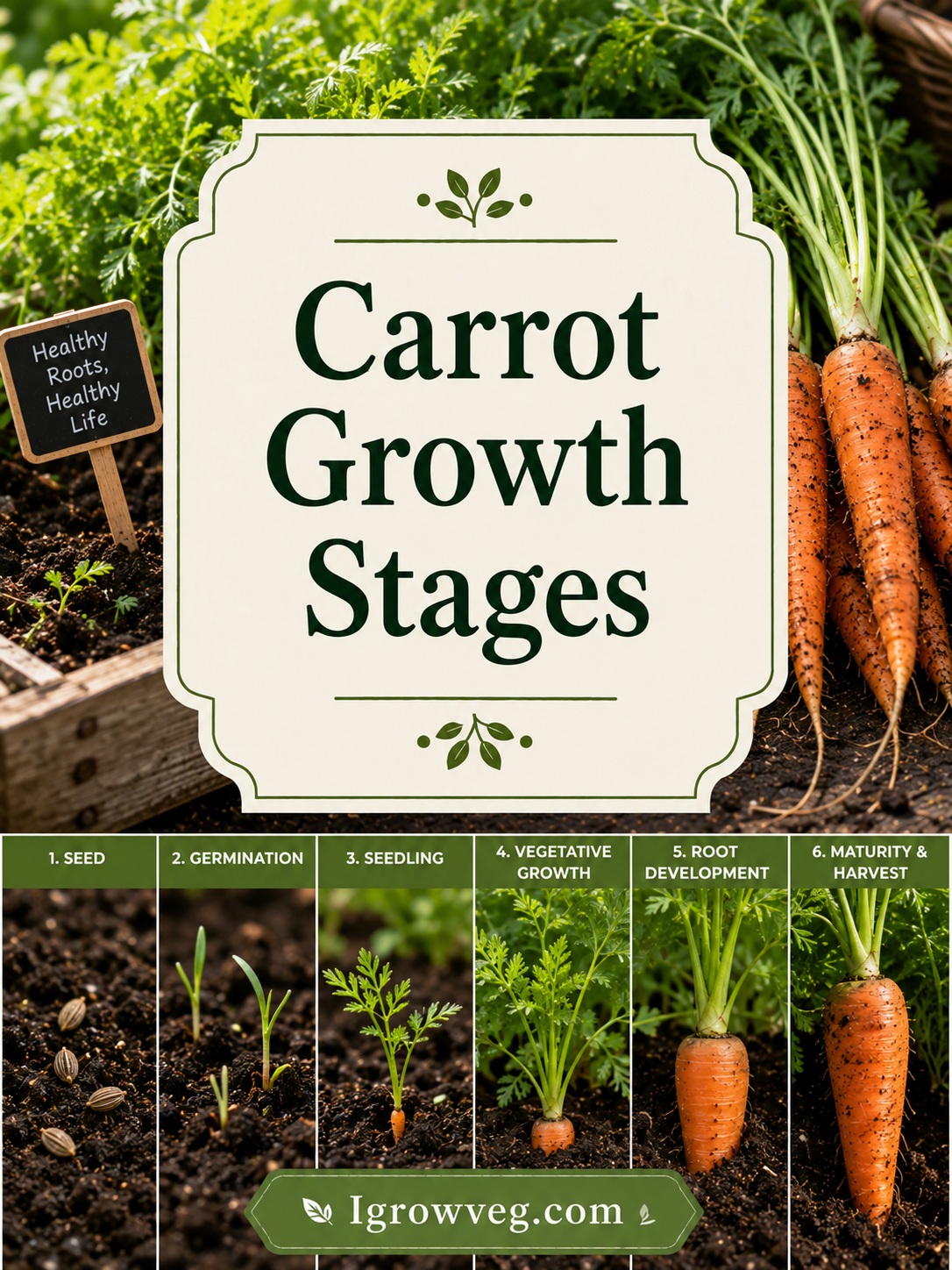
The carrot growth stages represent a fascinating biological process where a plant transforms simple sunlight and soil nutrients into a sugary, crisp taproot. While most gardeners focus on the orange root hidden beneath the surface, the life of a carrot (Daucus carota subsp. sativus) involves complex transitions above and below the ground.
Understanding these milestones allows you to intervene at the right time, ensuring your carrots don’t become woody, cracked, or stunted. In this guide, we will walk through the entire lifecycle of this biennial vegetable, providing the essential tips needed to navigate each phase successfully.
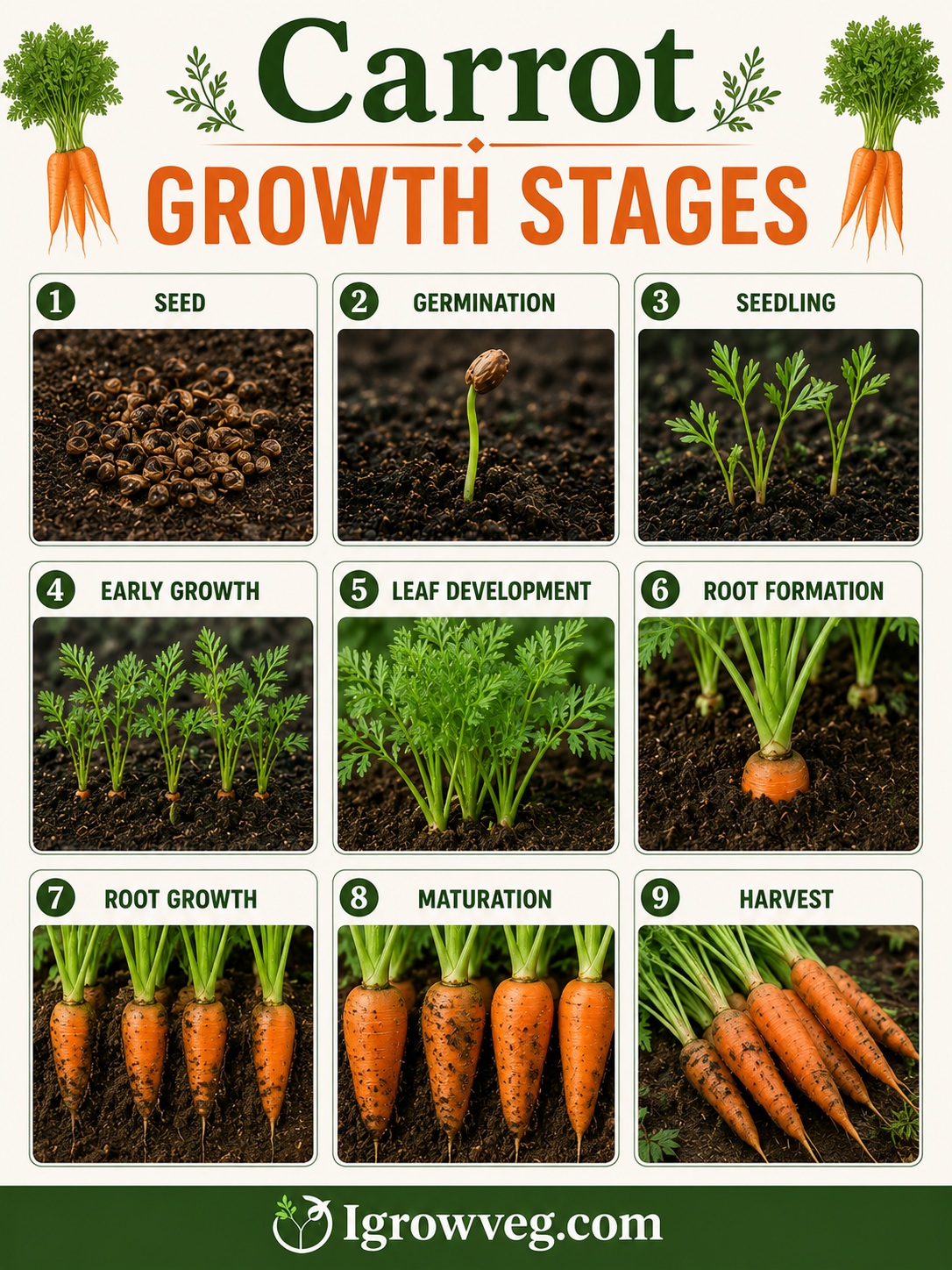
1. Germination: The Slow Awakening
The first of the carrot growth stages is notorious for testing a gardener’s patience. Carrot seeds are tiny and contain limited energy reserves, making this a delicate period.
Sowing and Moisture
Carrot seeds require consistent moisture to break dormancy. Because they are sown shallowly—usually only a quarter-inch deep—the top layer of soil can dry out rapidly. Many experienced growers cover their seedbeds with damp burlap or a thin board to lock in moisture until the first green shoots appear.
Timeframe
Depending on soil temperature, germination typically takes between 10 to 21 days. During this window, the seed absorbs water, and the primary root (radicle) pushes downward while the first two narrow seed leaves (cotyledons) reach for the light.
2. Seedling Stage: Establishing the Taproot
Once the green “threads” emerge from the soil, the plant enters the seedling phase. This is one of the most critical carrot growth stages because the plant is establishing its future shape.
True Leaf Development
Shortly after the cotyledons appear, the carrot produces its first “true leaves,” which look feathery and fern-like. At this point, the plant is incredibly vulnerable to weeds. Because carrot seedlings grow slowly, faster-moving weeds can easily shade them out and steal vital nutrients.
The Thinning Process
To grow straight, thick carrots, you must provide space. Thinning your seedlings to about 3 inches apart ensures that roots do not twist around one another. For advice on specialized garden tools that help with delicate thinning, Gardener’s World offers excellent reviews on ergonomic hand-weeders.
3. Vegetative Growth: Building the Energy Factory
During the vegetative phase of the carrot growth stages, the plant focuses on expanding its “foliage canopy.” The lush green tops act as solar panels, collecting energy to be stored in the root.
Leaf Expansion
As the fern-like tops grow taller, the plant’s nutritional needs shift. While nitrogen helps the leaves grow, too much nitrogen at this stage can cause the root to become hairy or “forked.” Carrots prefer a balanced environment with plenty of potassium to encourage root expansion.
Below-Ground Swelling
While the tops flourish, the taproot begins to thicken. It starts as a thin white filament and gradually takes on its characteristic orange (or purple, red, or yellow) pigment as it accumulates carotene. You can monitor progress by gently brushing away the soil at the “shoulder” of the carrot to see the diameter of the root.
4. Root Maturation: Sugars and Texture
The final milestone in the carrot growth stages for most gardeners is root maturation. This is the period when the carrot reaches its peak culinary quality.
Flavor Development
As the carrot reaches its full size, it begins to store complex sugars. If you leave carrots in the ground during a light frost, the plant converts starches into sugars as a natural antifreeze, making the roots exceptionally sweet. However, if you wait too long, the root may become “woody” and lose its crisp texture.
Pests and Protection
During this stage, the carrot fly becomes a primary concern. The larvae of these flies tunnel into the maturing roots, leaving rusty brown scars. Using fine insect netting can protect your crop during these final weeks. For more technical data on managing carrot pathogens, the University of California Agriculture and Natural Resources provides comprehensive pest management guidelines.
Summary of Development Milestones
| Stage | Approximate Timeline | Key Focus |
| Germination | Days 1–21 | Consistent moisture and soil warmth. |
| Seedling | Weeks 3–5 | Weeding and initial thinning. |
| Vegetative | Weeks 6–10 | Foliage growth and root lengthening. |
| Maturation | Weeks 10–14 | Sugar accumulation and diameter expansion. |
| Harvest | Varies | Lifting roots when shoulders are 1/2 to 1 inch wide. |
Conclusion
Understanding the carrot growth stages transforms a difficult crop into a manageable and rewarding harvest. From the patient wait of germination to the careful thinning of seedlings and the final sweetening of the roots, each phase requires specific attention. By focusing on soil texture, moisture consistency, and proper spacing, you ensure that the energy produced by those feathery green tops translates into the highest-quality roots possible.
FAQ: Frequently Asked Questions
1. Why are my carrots short and stunted?
This usually occurs due to heavy, clay-rich soil or rocks that physically obstruct the root’s downward growth.
2. How often should I water maturing carrots?
Provide about one inch of water per week, ensuring the moisture reaches deep into the soil to encourage long roots.
3. Why do my carrots have multiple legs (forking)?
Forking often results from transplanting seedlings, root-knot nematodes, or using fresh manure high in nitrogen.
4. Can I eat carrots at the seedling stage?
Yes, these are often called “baby carrots,” though they lack the full sweetness of mature roots.
5. How do I know when my carrots are ready to harvest?
Look for “shoulders” that are about half an inch to one inch in diameter popping out of the soil.
6. Why are my carrot tops huge but the roots are tiny?
Excessive nitrogen fertilizer promotes lush leaf growth at the expense of root development.
7. Do carrots grow back every year?
Carrots are biennials; they grow a root the first year and produce seeds the second year if left in the ground.