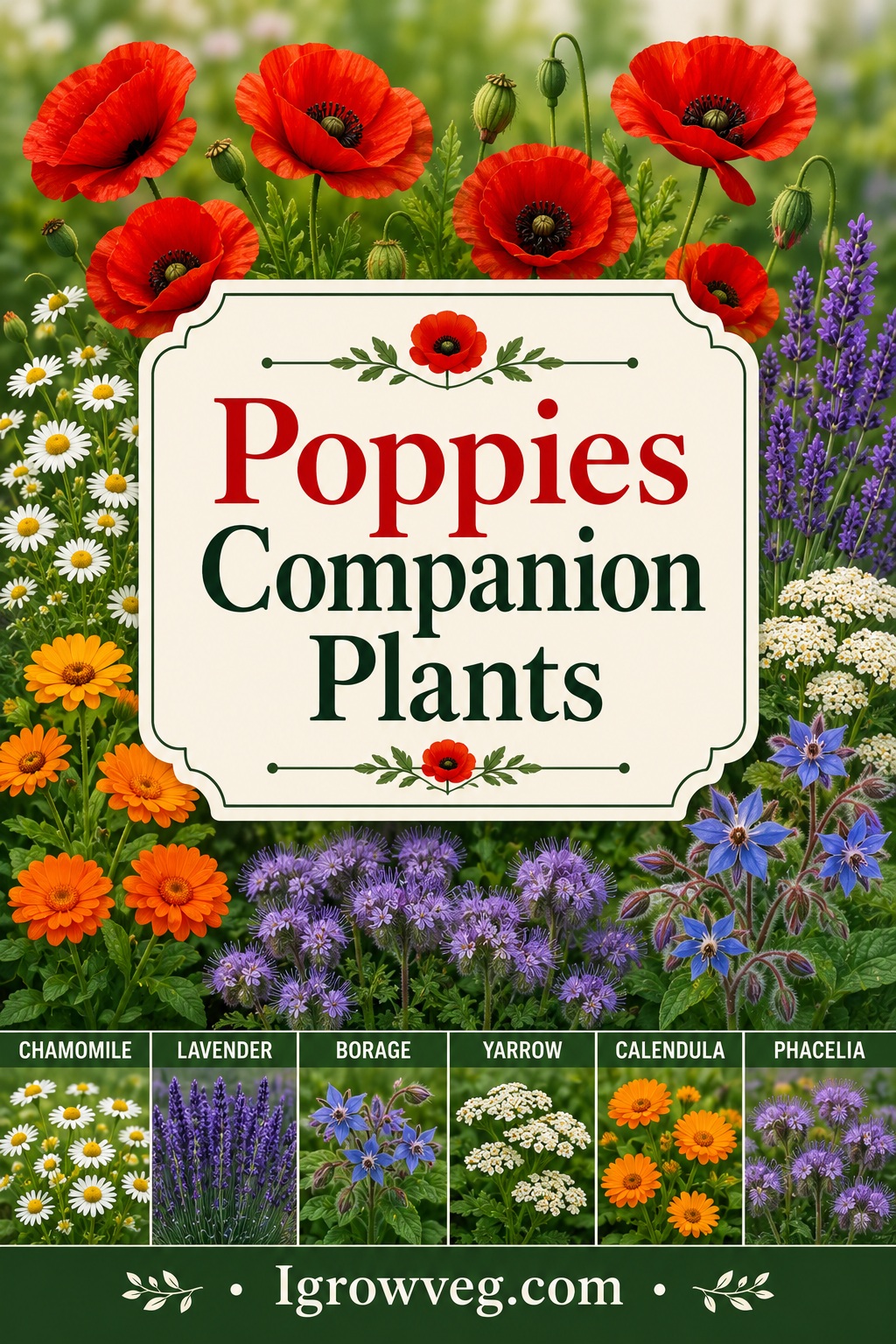
Designing a landscape with poppies companion plants is an essential skill for any gardener who loves the ethereal beauty of Papaver species but wants to avoid the “mid-summer gap.” Poppies—whether they are the colossal, perennial Oriental varieties (Papaver orientale) or the delicate annual Shirley and California poppies—are famous for their fleeting, high-impact bloom cycles.
Once the flowers fade, the foliage of many poppies becomes ragged and goes dormant. By strategically selecting companions that “step up” just as the poppies “step down,” you can maintain a lush, continuous display. This guide explores the most effective pairings based on growth habit, soil needs, and seasonal timing.
1. The “Succession Stars”: Masking Dormant Foliage
Perennial poppies often go completely dormant in July and August, leaving a hole in the garden. These poppies companion plants are chosen specifically for their ability to grow large and cover the retreating poppy foliage.
Baby’s Breath (Gypsophila)
Baby’s breath is the classic partner for Oriental poppies. While the poppy provides the bold, heavy-headed drama in late spring, the airy, cloud-like stems of Baby’s Breath expand in summer to fill the void. The fine texture of Gypsophila acts as a perfect visual foil to the coarse, hairy leaves of the poppy.
Russian Sage (Perovskia)
As poppies prefer the well-drained, lean soil typical of cottage gardens, Russian Sage makes an excellent neighbor. It begins its silver-leaved, lavender-flowered ascent just as the poppies are finishing. Its upright, airy habit provides structure to the garden bed while the poppies take their summer nap. To learn more about the drought-tolerant characteristics of these perennials, The Royal Horticultural Society provides extensive cultivation notes.
2. Textural and Color Contrasts
Using poppies companion plants with contrasting shapes can make the “saucer” shape of the poppy bloom pop.
Bearded Iris
Bearded Irises bloom at the same time as many poppies, and their sword-like foliage provides a sharp vertical contrast to the mounded poppy rosettes. Choosing a deep purple iris to pair with a flaming orange poppy creates a high-energy, complementary color scheme that is a staple of traditional English borders.
Ornamental Grasses
Grasses like Pennisetum (Fountain Grass) or Stipa tenuissima (Mexican Feather Grass) bring movement to the garden. The fine, shimmering blades of grass soften the look of the poppy’s sturdy stems. In autumn, the dried poppy pods standing among golden grasses create a stunning architectural silhouette. For botanical details on ornamental grass varieties, The Missouri Botanical Garden is a premier resource for plant identification.
3. Annual Pairings for Pollinators
If you are growing annual poppies, like the Breadseed or California varieties, you want companions that share their “wild” spirit and attract a diverse range of beneficial insects.
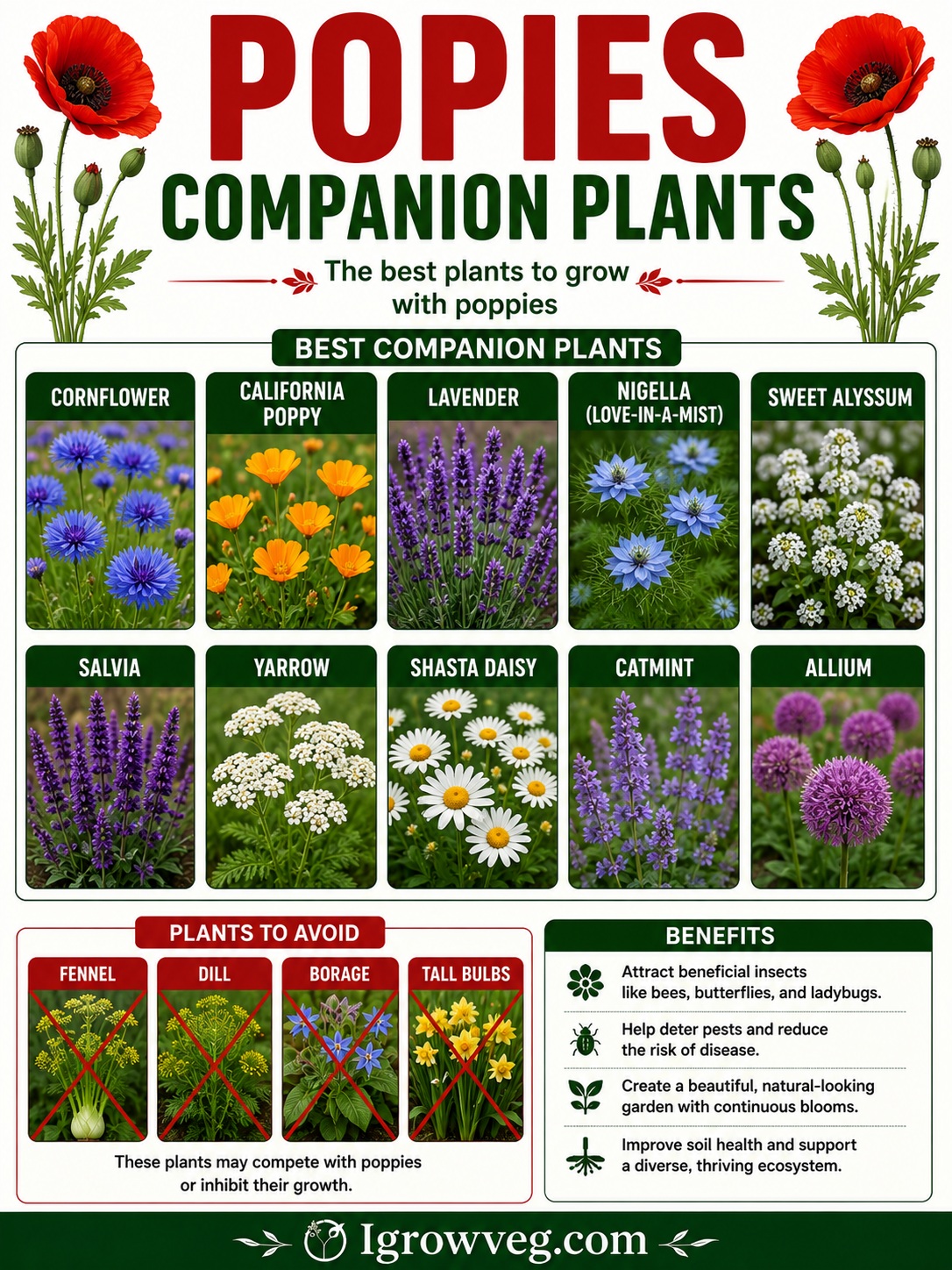
- Cornflowers (Centaurea cyanus): Often found together in wildflower meadows, the brilliant blue of cornflowers is the natural color-wheel opposite of the classic red poppy. They share identical sowing times and soil requirements.
- Larkspur: For a vertical “spire” look, larkspur is an ideal companion. Its tall, flowering stalks provide height behind the mid-level poppy blooms, creating a layered effect in the border.
- Love-in-a-Mist (Nigella): With its misty, feathery foliage and jewel-like blue or white flowers, Nigella thrives in the same cool-season conditions as poppies. Their decorative seed pods also look beautiful when harvested together for dried arrangements. For expert tips on starting wildflower companions from seed, The Old Farmer’s Almanac offers comprehensive sowing charts.
4. Summary of Poppy Companion Relationships
| Companion Plant | Functional Role | Design Benefit |
| Baby’s Breath | Succession Filler | Hides yellowing poppy foliage in summer. |
| Bearded Iris | Structural Contrast | Sword-like leaves offset rounded poppy mounds. |
| Russian Sage | Late-Season Color | Provides interest after poppies go dormant. |
| Cornflowers | Color Contrast | Provides the “classic meadow” look with blue/red. |
| Fountain Grass | Movement | Softens the architectural look of poppy pods. |
5. Plants to Avoid
To ensure your poppies remain healthy, avoid these types of plants:
- Aggressive Groundcovers: Plants like Vinca or heavy Ivy can smother the base of the poppy and trap too much moisture, leading to crown rot.
- Shade-Dominant Species: Poppies are sun-worshippers. Avoid planting them under large, heavy-canopied trees or next to tall, dense evergreens that will block the 6-8 hours of direct light they require.
- Heavy Feeders in Soggy Soil: Avoid plants that require “boggy” conditions. Poppies have a deep taproot that will rot quickly if the soil does not drain freely.
Conclusion
The art of choosing poppies companion plants lies in understanding the poppy’s lifecycle. By pairing them with “fillers” like Baby’s Breath to cover their summer dormancy and “thrillers” like Bearded Iris or Larkspur for color contrast, you can create a garden that remains vibrant long after the poppy petals have fallen. Whether you are aiming for a structured perennial border or a whimsical wildflower meadow, these companion relationships ensure that your poppies are supported, highlighted, and allowed to shine in their best light.
FAQ: Frequently Asked Questions
1. Do poppies come back every year?
It depends on the variety. Oriental poppies are perennials and return annually. California and Shirley poppies are annuals, though they often “self-seed” so aggressively that they appear to be perennials.
2. Can I plant poppies with lavender?
Yes! They both love full sun and very well-drained soil. They are excellent companions for a Mediterranean-style or drought-tolerant garden.
3. What should I do when my poppy leaves turn brown?
This is a natural part of their cycle. Do not cut the leaves off until they are completely yellow or brown, as the plant is pulling energy back into the root. This is why having “succession” companions nearby is so important!
4. Will poppies grow in pots with other plants?
They can, but they need deep pots for their taproots. Pair them with shallow-rooted annuals like Lobelia or Alyssum so they don’t compete for space at the bottom of the pot.
5. Are poppies deer resistant?
Yes, most poppies are highly deer-resistant due to the sap in their stems, which is bitter and unpalatable to most wildlife.
6. When is the best time to plant poppy companions?
Spring is generally best for most perennials, while annual companions like cornflowers should be sown at the same time as your poppy seeds in early spring or late autumn.