The bell pepper growth stages offer a rewarding experience for any gardener, taking a tiny, flat seed and transforming it into a productive, bushy plant laden with crisp fruit. Known scientifically as Capsicum annuum, bell peppers are warm-season perennials usually grown as annuals in temperate climates.
Understanding each milestone in their development is the secret to avoiding common pitfalls like blossom end rot or stunted growth. From the initial “crook” of a seedling to the final color transition of a ripening fruit, each phase requires specific environmental conditions to thrive. This guide explores the biological transitions of the pepper plant, ensuring you provide the right support at every step of the journey.
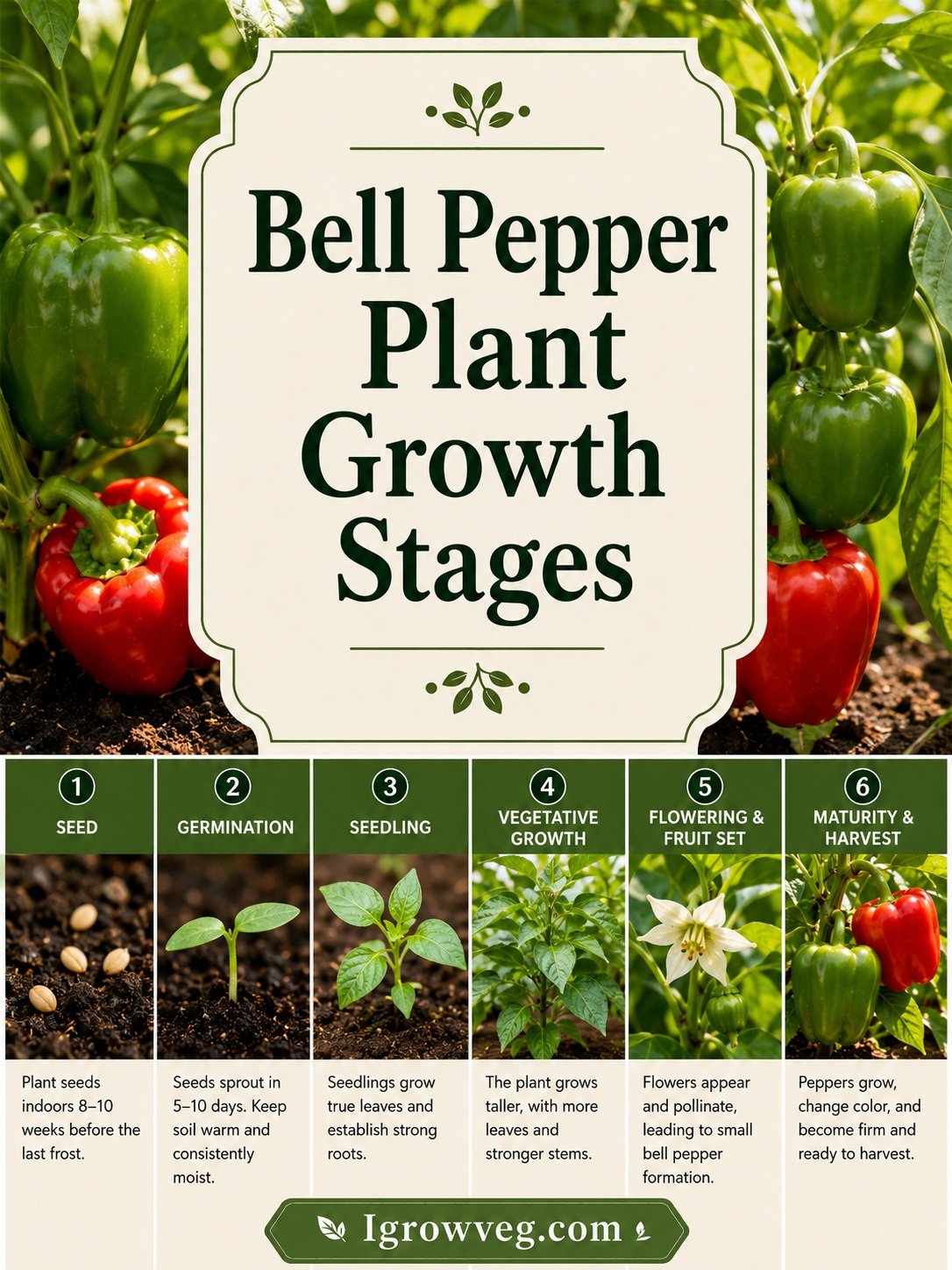
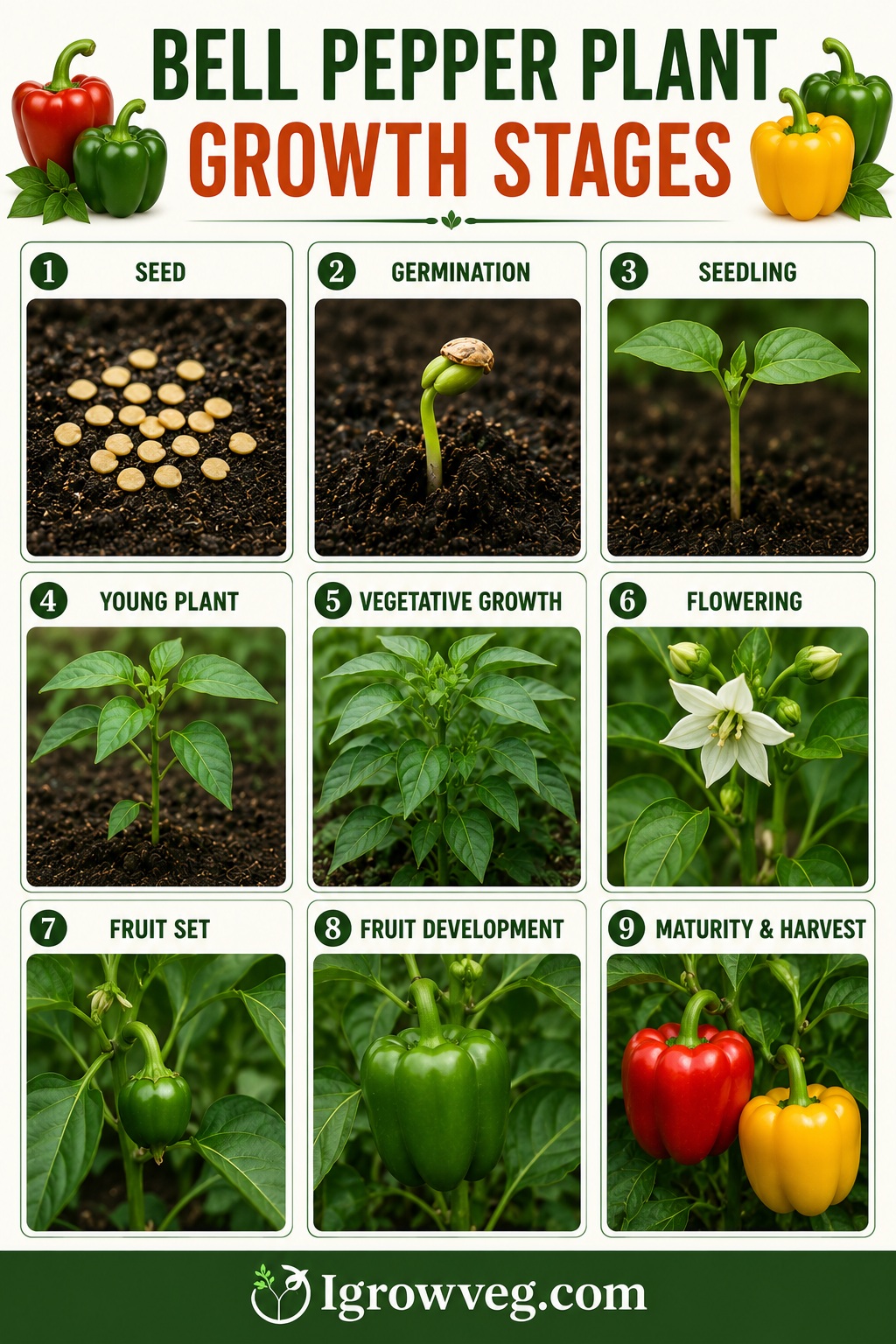
Here’s a stage-by-stage outline of Bell Pepper (Capsicum annuum) growth in points — simple, clear, and infographic-ready:
🌶️ Bell Pepper Plant Growth Stages
- Seed Germination (7–14 days)
Seeds sprout, cotyledons emerge, first true leaves appear. - Seedling Stage (2–8 weeks)
True leaves expand, stems strengthen, roots establish. - Vegetative Growth (8–12 weeks)
Rapid leaf expansion, branching begins, plant develops canopy. - Flowering Stage (12–16 weeks)
White/pale flowers bloom; pollination occurs via insects or hand-pollination. - Fruit Set (2–3 weeks after flowering)
Small green peppers form as fertilized flowers develop into fruit. - Fruit Development (4–8 weeks)
Peppers enlarge, skin thickens, flavor matures. - Ripening Stage (60–90 days after fruit set)
Fruits change color (green → red/yellow/orange), sweetness increases. - Mature Plant (4–6 months)
Continuous cycle of flowering and fruiting; plant reaches peak productivity.
🌿 Note: Bell peppers are frost-sensitive, thrive in warm climates, and require consistent watering plus balanced fertilization for healthy fruiting.
1. Germination: The Warm Awakening
The first of the bell pepper growth stages is often the most challenging. Pepper seeds are tropical by nature and require significant warmth to break their dormancy.
Soil Temperature and Moisture
Unlike cool-season crops, bell peppers rarely sprout in cold soil. They prefer a consistent temperature between 24°C and 30°C. If you start seeds indoors, using a heat mat is highly recommended. Keep the starting mix moist but never soggy, as the seeds are prone to rotting before they can emerge.
What to Expect
Typically, you will see the first signs of life within 7 to 14 days, though some “super-hot” varieties (cousins to the bell pepper) can take up to three weeks. The plant emerges with two narrow, pointed seed leaves called cotyledons, which provide the initial energy for the plant to begin photosynthesis.
2. Seedling Phase: Establishing the Frame
Once the cotyledons unfurl, the plant enters the seedling stage. This is a critical period for the bell pepper growth stages, as the plant builds the structural foundation for future fruit.
True Leaf Development
After about two weeks, the “true leaves” begin to appear. These leaves are broader and heart-shaped, resembling the adult foliage. During this phase, the plant requires intense light for at least 12 to 16 hours a day. Without sufficient light, the seedlings will become “leggy,” meaning they grow tall and spindly with weak stems that cannot support heavy peppers later.
Root Strengthening
While the top grows, the root system is expanding rapidly. Many gardeners “pot up” their seedlings into larger containers during this stage to prevent them from becoming root-bound. For high-quality organic fertilizers that support root health without burning young plants, The Royal Horticultural Society provides excellent guidelines on early-stage plant nutrition.
3. Vegetative Growth: The Bushing Phase
Before the plant can produce fruit, it must build a “factory” of green leaves. During this of the bell pepper growth stages, the plant focuses on height and branch development.
Branching and Foliage
Bell peppers naturally grow in a “Y” shape, branching out from the main stem. The leaves act as a protective canopy for the future fruit, preventing a condition known as “sunscald,” where the peppers literally bake in the sun.
Nutritional Shifts
During vegetative growth, the plant has a high demand for nitrogen. However, you must transition to a more balanced fertilizer as the plant nears the end of this stage. Excessive nitrogen late in the vegetative phase will result in a massive, beautiful green bush with absolutely no flowers.
4. Flowering and Pollination: Setting the Fruit
The arrival of the first white, star-shaped flowers marks a significant transition in the bell pepper growth stages.
The Bloom Cycle
Peppers are self-pollinating, meaning each flower contains both male and female parts. Usually, the wind or a slight vibration is enough to move pollen from the anthers to the stigma. However, if the temperature exceeds 32°C or drops below 15°C, the pollen can become sterile, causing the flowers to drop off (blossom drop).
Encouraging Fruit Set
To ensure a high yield, you can gently shake the plants in the morning or use a small brush to assist with pollination. Ensuring the plant has adequate calcium during this phase is vital to prevent blossom end rot later. For technical data on managing calcium mobility in Capsicum species, University of California Agriculture and Natural Resources offers deep-dive research into vegetable physiology.
5. Fruit Development and Ripening: The Final Wait
The final milestone in the bell pepper growth stages involves the swelling and color transition of the fruit.
The Green Phase
All bell peppers start green. During this stage, the fruit reaches its full size and the “walls” of the pepper thicken. While you can harvest green peppers, they lack the sweetness and high vitamin C content of fully ripened fruit.
The Color Transition
As the fruit matures, it stops producing chlorophyll and begins to develop pigments like carotene or anthocyanin. This turns the pepper red, orange, yellow, or even purple. This process requires significant energy from the plant; consequently, leaving fruit to ripen fully on the vine often reduces the total number of peppers the plant will produce over the season.
Summary of Bell Pepper Development Milestones
| Stage | Approximate Timeline | Key Care Requirement |
| Germination | 7–21 Days | Heat mat and constant moisture. |
| Seedling | Weeks 3–6 | Intense light and initial fertilization. |
| Vegetative | Weeks 7–10 | Nitrogen-rich soil and sturdy staking. |
| Flowering | Weeks 10–12 | Phosphorus/Potassium and temperature control. |
| Ripening | Weeks 12–16+ | Calcium for fruit walls and patient harvesting. |
🌿 Notes
- Bell peppers are warm-season crops, sensitive to frost.
- Productivity peaks in the first year; plants can live longer in tropical climates.
- Color change indicates ripeness—green peppers are immature but edible, while red/yellow/orange are sweeter and fully ripe.
Conclusion
Navigating the bell pepper growth stages is a journey of precision and patience. From the high-heat requirements of germination to the careful nutrient balancing during flowering, each phase plays a role in the final quality of your harvest. By understanding that peppers are light-hungry and temperature-sensitive, you can provide the ideal environment for a prolific season. Whether you prefer the sharp bite of a green pepper or the sugary crunch of a sun-ripened red one, following these growth stages ensures a successful and flavorful garden.
FAQ: Frequently Asked Questions
1. Why are my bell pepper seeds taking so long to sprout?
Pepper seeds require warm soil (at least 24°C). If the soil is too cold, they will stay dormant or rot.
2. Should I pinch off the first flowers on my pepper plant?
Many gardeners pinch off the first flowers to encourage the plant to put more energy into growing a stronger root system and larger frame.
3. Why is my pepper plant dropping its flowers?
This is usually caused by “blossom drop,” triggered by extreme temperatures (above 32°C or below 15°C) or inconsistent watering.
4. How can I tell when a bell pepper is ready to harvest?
The pepper should feel firm and have a glossy sheen. If it is soft or dull, it may be overripe or stressed.
5. Why do my peppers have soft, black spots on the bottom?
This is blossom end rot, caused by a calcium deficiency often linked to irregular watering patterns.
6. Do bell peppers need a lot of sun?
Yes, they require at least 6 to 8 hours of direct sunlight daily to produce a healthy crop.
7. Can bell peppers grow in pots?
Absolutely. They thrive in 5-gallon containers as long as they have excellent drainage and consistent water.