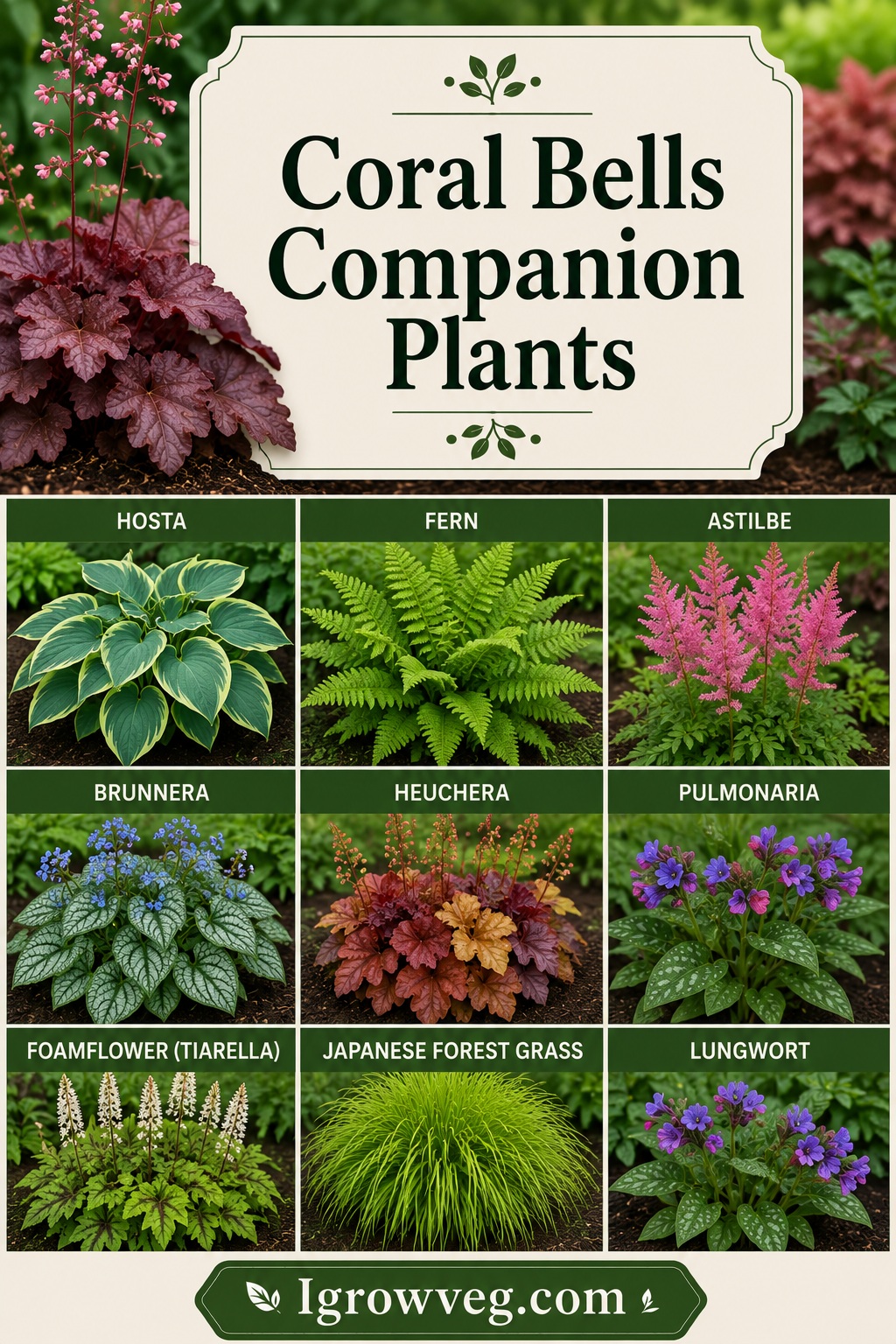
Designing a garden around coral bells companion plants is one of the most effective ways to bring lasting color to the more shadowed corners of your landscape. Heuchera, commonly known as coral bells, are prized for their mounding habit and an almost infinite palette of leaf colors—from deep obsidian and royal purple to lime green and burnished copper.
Because they are compact and “polite” growers, they serve as the perfect front-of-border anchors. By choosing companions that offer contrasting leaf shapes or airy textures, you can elevate coral bells from a simple groundcover to a high-impact design feature. This guide explores the best plants to grow alongside coral bells to ensure a healthy, aesthetically balanced garden.
Best Companion Plants for Coral Bells
Shade-Loving Companions
- Hosta
- Astilbe
- Ferns
- Brunnera
- Lungwort
- Japanese Forest Grass
- Foamflower
- Bleeding Heart
- Hellebore
- Caladium
Color Contrast Companions
- Coleus
- Begonia
- Impatiens
- Coral Fern
- Ajuga
- Lamium
- Torenia
- Browallia
Sun-Tolerant Companions
- Salvia
- Daylily
- Coneflower
- Black-Eyed Susan
- Sedum
- Lavender
- Catmint
- Coreopsis
Ground Cover Pairings
- Creeping Jenny
- Sweet Woodruff
- Irish Moss
- Mazus
- Vinca Minor
- Pachysandra
Woodland Garden Pairings
- Trillium
- Columbine
- Jacob’s Ladder
- Virginia Bluebells
- Solomon’s Seal
- Wild Ginger
Best Companion Plants for Coral Bells
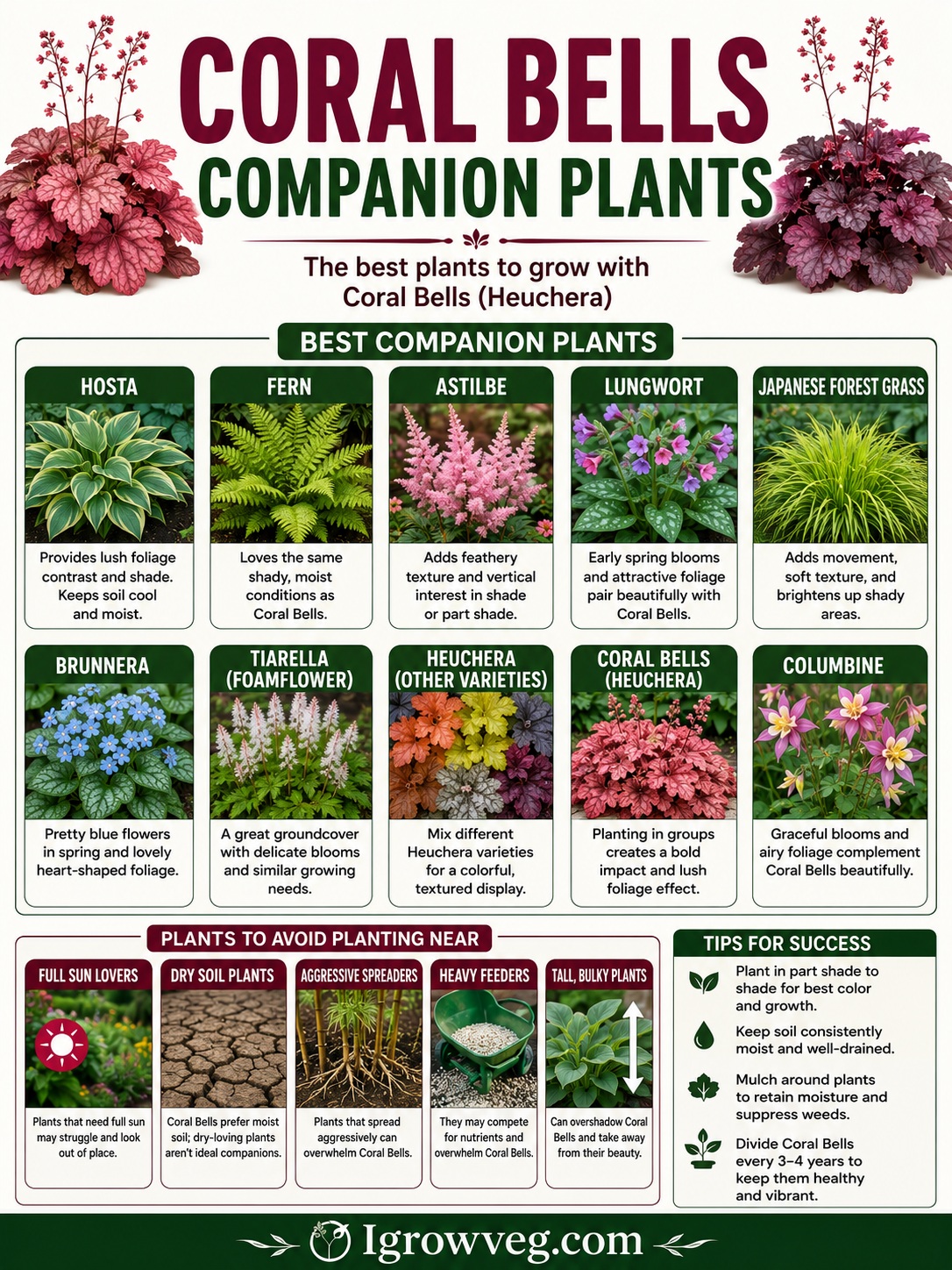
Coral bells pair best with plants that enjoy partial shade, rich well-drained soil, and consistent moisture. The list below removes duplicates, organizes plants by garden function, and adds a few commonly overlooked companions that work exceptionally well with Heuchera.
1. Classic Shade Garden Companions
Hosta
Hostas are one of the most reliable companion plants for coral bells because their broad, dramatic leaves contrast beautifully with Heuchera’s smaller scalloped foliage. Variegated hostas brighten dark corners, while blue-green varieties create a cool woodland effect. Both plants thrive in moist, organic-rich soil and partial shade. Coral bells add colorful foliage beneath the larger hosta leaves, creating layered texture and year-round interest in shaded garden beds and borders.
Fern
Ferns bring graceful, feathery texture that softens the bold mounded form of coral bells. Japanese painted ferns are especially attractive because their silvery fronds highlight purple, burgundy, or lime-green Heuchera varieties. Both plants naturally grow in woodland conditions with filtered light and moist soil. Ferns also help create a lush, layered appearance that mimics a natural forest floor, making them excellent companions for shade gardens and underplantings beneath trees.
Astilbe
Astilbe adds vertical color and soft plume-like flowers that contrast beautifully with coral bells’ dense foliage. Since both plants enjoy moist, humus-rich soil and partial shade, they naturally thrive together. Astilbe blooms in shades of pink, white, red, and lavender during summer, adding height and movement to shade borders. The combination works especially well in cottage gardens and woodland landscapes where layered textures and long-lasting seasonal color are desired.
Brunnera
Brunnera features large silver-patterned leaves and delicate blue flowers that resemble forget-me-nots. Its bright reflective foliage helps illuminate shady areas and pairs particularly well with dark-leaved coral bells. Both plants prefer cool, moist soil and filtered sunlight. Brunnera’s heart-shaped leaves create strong visual contrast against Heuchera’s ruffled foliage, while the early spring flowers add seasonal interest before many summer perennials begin blooming.
Foamflower
Foamflower is closely related to coral bells and shares nearly identical growing conditions. Its deeply lobed leaves and airy white flower spikes complement the colorful foliage of Heuchera without overpowering it. Together they create a layered woodland look that feels natural and cohesive. Foamflower also spreads gently as a groundcover, helping fill gaps between coral bells while suppressing weeds and maintaining soil moisture in shaded beds.
2. Spring-Blooming Companions
Bleeding Heart
Bleeding hearts bloom in spring with graceful arching stems covered in heart-shaped flowers. They pair perfectly with coral bells because their foliage fades during summer just as Heuchera reaches peak fullness. Coral bells naturally hide the empty spaces left behind, keeping garden beds attractive all season. Both plants prefer cool shaded locations and rich soil, making them ideal companions for woodland gardens and shaded borders.
Hellebore
Hellebores bloom during late winter or very early spring when most gardens are still dormant. Their leathery evergreen leaves contrast beautifully with coral bells’ colorful foliage. Both plants tolerate dry shade once established and are highly deer resistant. Pairing hellebores with Heuchera provides nearly year-round garden interest, especially beneath deciduous trees where filtered winter sunlight encourages early blooming and healthy foliage growth.
Columbine
Columbines produce delicate nodding flowers in spring that attract hummingbirds and pollinators. Their airy stems and fern-like foliage create a soft contrast to the dense mounds of coral bells. Both plants thrive in partial shade with evenly moist soil. Columbines also self-seed gently, helping woodland gardens develop a relaxed natural appearance over time without becoming invasive or difficult to manage.
Virginia Bluebells
Virginia bluebells offer clusters of soft blue flowers in early spring that pair beautifully with purple or silver Heuchera foliage. These native woodland plants naturally fade by midsummer, while coral bells continue providing structure and color. Together they create a seamless seasonal transition in shade gardens. Both plants prefer moist soil rich in organic matter and thrive beneath deciduous trees or in woodland-style borders.
3. Texture & Foliage Contrast Plants
Japanese Forest Grass
Japanese forest grass has cascading golden or green foliage that flows elegantly around coral bells’ rounded shape. The contrast between the grass’s soft arching texture and Heuchera’s compact mounds creates movement and visual depth in shade gardens. This pairing is especially effective along pathways, container edges, and woodland borders. Both plants prefer partial shade and moist, well-drained soil with plenty of organic matter.
Lungwort
Lungwort features spotted or silver-speckled leaves alongside pink and blue spring flowers. Its textured foliage complements coral bells while brightening shaded spaces. Both plants enjoy cool conditions and organically rich soil. Lungwort also blooms early in the season, helping pollinators when few other plants are flowering. The combination creates long-lasting visual interest from spring through fall in woodland or cottage gardens.
Ajuga
Ajuga forms dense mats of glossy foliage with spikes of blue-purple flowers in spring. Its spreading habit works well beneath coral bells, helping suppress weeds and cover bare soil. Dark-leaved Ajuga varieties create dramatic contrast against lime-green or silver Heuchera cultivars. Both plants tolerate partial shade and moist soil, making them useful companions for edging pathways, filling borders, or creating layered groundcover combinations.
Lamium
Lamium is a low-growing groundcover with silver-patterned leaves and small pink, white, or purple flowers. It spreads gently beneath coral bells, creating a soft carpet that highlights taller foliage above. The silver tones in Lamium pair especially well with dark coral bell varieties. Both plants thrive in partial shade and help maintain attractive foliage color throughout much of the growing season.
4. Woodland & Native Garden Pairings
Solomon’s Seal
Solomon’s Seal produces graceful arching stems lined with dangling bell-shaped flowers. Its upright habit contrasts beautifully with the rounded form of coral bells. Both plants thrive in woodland settings with filtered sunlight and moist soil. Solomon’s Seal adds height and elegance to shade gardens while coral bells provide colorful ground-level texture, creating a layered and natural woodland appearance.
Wild Ginger
Wild ginger forms dense heart-shaped foliage that works as an attractive living mulch beneath coral bells. It thrives in rich woodland soil and spreads slowly without becoming aggressive. The glossy leaves create a strong texture contrast with Heuchera’s ruffled foliage. Together they help retain soil moisture and reduce weeds while building a lush woodland-style planting scheme.
Trillium
Trilliums are prized woodland wildflowers known for their elegant three-petaled blooms. They naturally pair well with coral bells because both enjoy cool shaded environments and rich forest soil. Trilliums flower in spring while Heuchera provides lasting foliage interest throughout the season. This combination creates a refined native woodland aesthetic ideal for naturalized gardens and shaded landscapes.
5. Sun-Tolerant Companion Plants
Daylily
Daylilies work well with sun-tolerant coral bell varieties because their tall flower stalks rise above Heuchera’s low foliage mounds. The strappy leaves contrast nicely with rounded coral bell foliage, while the long bloom season adds vibrant summer color. Both plants prefer well-drained soil, and together they create attractive mixed perennial borders with strong texture variation.
Sedum
Sedums pair well with coral bells in partially sunny gardens because both tolerate drier conditions once established. The fleshy succulent foliage of sedum contrasts sharply with Heuchera’s softer textured leaves. Upright sedum varieties also add late-season flowers that attract pollinators. This combination works especially well in rock gardens, borders, and low-maintenance landscapes.
Salvia
Salvia provides tall spikes of nectar-rich flowers that attract bees, butterflies, and hummingbirds. Its upright structure contrasts beautifully with the compact mounds of coral bells. Both plants grow best in well-drained soil, although salvia prefers more sunlight. In partly sunny borders, the combination delivers strong color contrast, long bloom periods, and excellent pollinator support throughout summer.
Coneflower
Coneflowers add height, daisy-like blooms, and drought tolerance to mixed perennial beds containing coral bells. Their upright flowers balance the low-growing Heuchera foliage, while pollinators benefit from extended blooming periods. Pairing bright coneflowers with dark-leaved coral bells creates especially dramatic color combinations in sunny or lightly shaded gardens.
Summary of Companion Recommendations
| Companion Plant | Design Role | Benefit |
| Hosta | Structural Contrast | Broad leaves stabilize small coral bell mounds. |
| Japanese Painted Fern | Textural Contrast | Feathery fronds soften the look of solid foliage. |
| Astilbe | Vertical Interest | Tall flower plumes add height to the border. |
| Bleeding Heart | Seasonal Filler | Blooms early and is “replaced” by coral bells in summer. |
| Japanese Forest Grass | Movement/Grace | Cascading form breaks up mounded shapes. |
🚫 Plants to Avoid Near Coral Bells
Coral Bells prefer partial shade and can lose vibrancy if overshadowed or stressed by sun‑loving neighbors. Avoid planting them with:
To keep your coral bells healthy, avoid planting them with:
Sun-Drenched Herbs: Plants like lavender or rosemary require full, intense sun and very dry soil, which will cause coral bells to scorch and wilt.
Aggressive Groundcovers: Avoid highly invasive spreaders like English Ivy or Vinca Minor, which can quickly crawl over and smother the slow-growing crowns of your coral bells.
Black‑eyed Susan (Rudbeckia) — demands full sun, can overshadow Coral Bells.
Chrysanthemum — sun‑loving, tall growth competes for light.
Coneflower (Echinacea) — thrives in full sun, not shade‑adapted.
Cosmos — tall, airy plants that block light.
Delphinium — prefers sun and can reduce Coral Bells’ foliage color in shade beds.
These plants may not thrive in the same conditions and can reduce the vibrancy of Coral Bells’ foliage.
Growing Tips for Coral Bells Companion Planting
- Soil: Well‑drained, rich in organic matter, slightly acidic.
- Light: Partial shade is ideal; morning sun enhances leaf color, but full sun can scorch leaves.
- Water: Keep soil evenly moist but not waterlogged; Coral Bells are drought‑tolerant once established.
- Spacing: Layer textures — taller shade‑lovers like Astilbe or Hostas in the background, low‑mounding plants like Foamflower or Ajuga in front.
Conclusion
The secret to a stunning garden lies in the relationship between your coral bells companion plants. By pairing the vibrant, ruffled foliage of Heuchera with architectural hostas, feathery ferns, and early-blooming bleeding hearts, you can create a tapestry of color that lasts from early spring through the first frost.
Remember to focus on plants that enjoy “morning sun and afternoon shade” to ensure all members of your shade guild thrive. With their deer-resistant nature and low-maintenance requirements, coral bells and their companions are the perfect choice for a reliable, high-impact woodland garden.
FAQ: Frequently Asked Questions
1. Do coral bells like sun or shade?
Most varieties prefer partial shade, especially in the afternoon. However, darker-leaved varieties can often handle more sun than the lime-green or gold varieties.
2. Are coral bells deer resistant?
Yes, they are generally considered deer-resistant, though hungry deer may occasionally nibble on the flower spikes.
3. Can I grow coral bells in containers with other plants?
Absolutely. They make excellent “fillers” in containers, especially when paired with a “thriller” like a small ornamental grass and a “spiller” like Creeping Jenny.
4. How much water do coral bells need compared to their companions?
They prefer “average” moisture—not bone-dry, but definitely not soggy. Pairing them with hostas and ferns works well because all three share this preference.
5. What is the best way to plant coral bells to prevent rot?
Never bury the “crown” (the point where the leaves meet the roots). Planting them slightly high in well-drained soil is the best way to prevent crown rot, especially in humid climates.
6. Can I plant coral bells under trees?
Yes, they are excellent for “dry shade” under trees with high canopies, provided you give them a bit of extra water while they are getting established.
7. When is the best time to plant coral bell companions?
Spring or early fall are the best times, as the cooler temperatures allow the new plants to establish their roots without the stress of extreme summer heat.