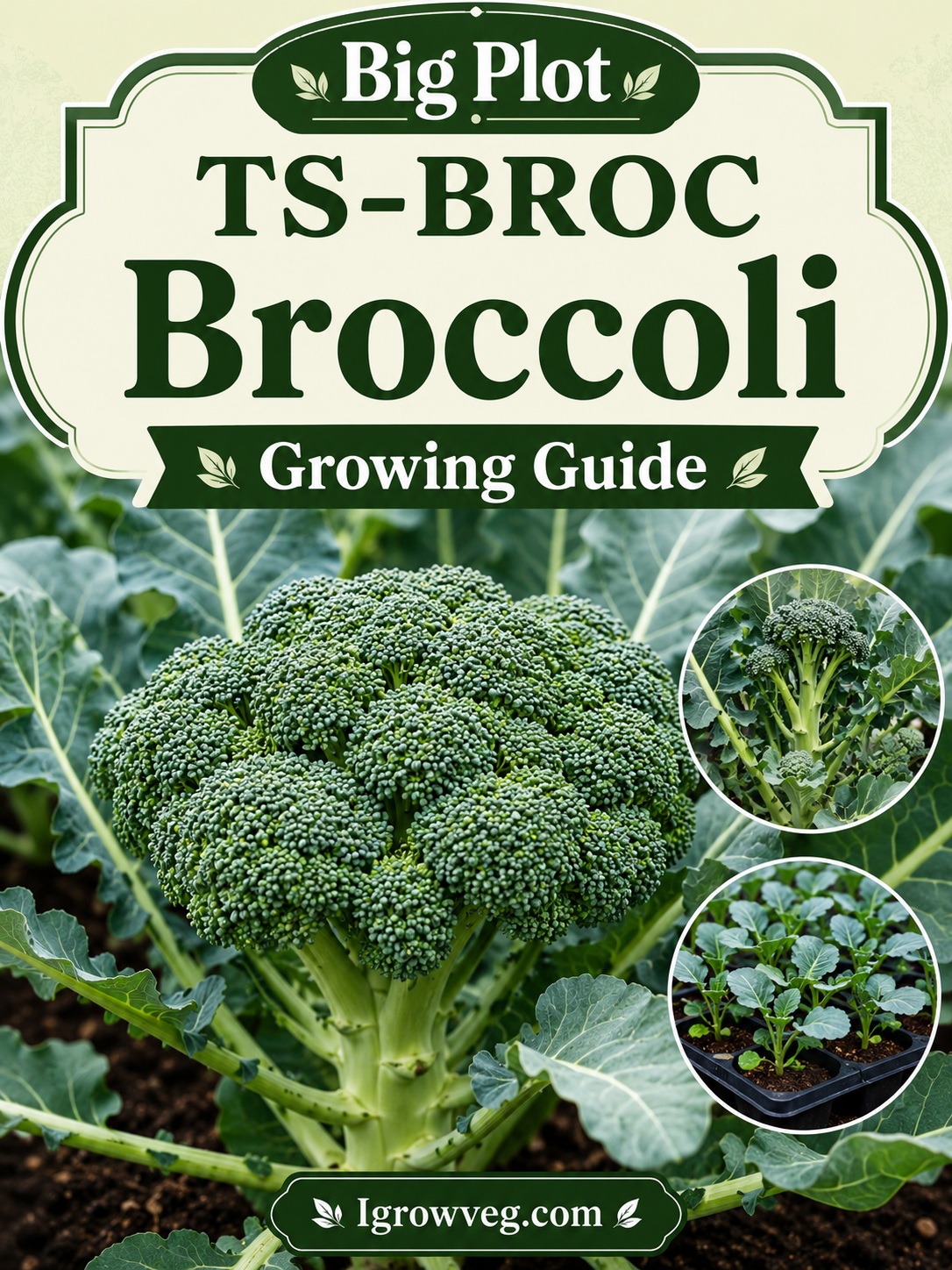
Growing broccoli on a large plot requires planning, timing, and consistent management, but the rewards can be tremendous. TS-BROC broccoli varieties are valued for their strong growth, reliable head formation, uniform maturity, and suitability for both home gardeners and larger market growers. Whether you are planting a backyard field, a market garden section, or a commercial vegetable plot, understanding the correct sowing and harvesting techniques is essential for maximizing yields and maintaining crop quality.
Broccoli is a cool-season crop that thrives under moderate temperatures and fertile soil conditions. Large-scale production demands more attention to spacing, irrigation, pest management, and harvest timing than small garden beds. When managed correctly, broccoli can produce dense heads, healthy side shoots, and excellent marketable quality over an extended season.
This guide explains everything you need to know about sowing and harvesting TS-BROC broccoli on a large plot, including soil preparation, seed starting, transplanting, crop care, pest management, harvesting techniques, and storage practices.
Understanding TS-BROC Broccoli
TS-BROC broccoli refers to a productive broccoli type bred for strong field performance, uniformity, and quality head production. These varieties are commonly chosen for:
- Large-scale cultivation
- Uniform head development
- Disease resistance
- Reliable harvest timing
- Good cold tolerance
- Strong side-shoot production
Broccoli belongs to the brassica family, which also includes:
- Cabbage
- Cauliflower
- Kale
- Brussels sprouts
The edible part is the immature flower head harvested before yellow flowers begin opening.
Why Grow Broccoli on a Large Plot?
Large-plot broccoli cultivation offers several advantages.
Higher Overall Yield
A properly managed broccoli plot can produce large amounts of fresh vegetables from relatively small acreage.
Extended Harvest Opportunities
Different sowing dates can create staggered harvests over many weeks.
Market Potential
Broccoli remains one of the most popular fresh vegetables in local markets and home kitchens.
Nutritional Value
Broccoli is rich in:
- Vitamin C
- Vitamin K
- Fiber
- Calcium
- Antioxidants
Side Shoot Production
After harvesting the main head, many plants continue producing smaller side shoots.
Climate Requirements for Broccoli
Broccoli performs best in cool growing conditions.
Ideal Temperatures
Best growth occurs between:
- 60°F to 75°F (15°C to 24°C)
Heat Sensitivity
High temperatures may cause:
- Loose heads
- Premature flowering
- Bitter flavor
- Small head formation
Frost Tolerance
Broccoli tolerates light frost and often develops sweeter flavor after cool weather.
Choosing the Right Site for a Big Plot
Selecting the proper field location is critical for success.
Sunlight Requirements
Broccoli needs:
- Full sun
- At least 6 to 8 hours daily
Soil Conditions
Ideal soil should be:
- Fertile
- Well-draining
- Rich in organic matter
- Moisture retentive
Soil pH
Broccoli prefers:
- pH 6.0 to 7.0
Very acidic soil can contribute to nutrient deficiencies and poor plant growth.
Preparing the Soil Before Sowing
Large-scale broccoli production depends heavily on good soil preparation.
Remove Weeds Thoroughly
Weeds compete aggressively with young broccoli plants.
Before planting:
- Remove perennial weeds
- Clear debris
- Cultivate the soil evenly
Add Organic Matter
Incorporate:
- Compost
- Well-rotted manure
- Organic amendments
This improves:
- Soil structure
- Water retention
- Nutrient availability
Deep Cultivation
Broccoli develops extensive root systems.
Loosen soil to:
- 8 to 12 inches deep
Fertilizer Preparation
Before planting, apply balanced fertilizer rich in:
- Nitrogen
- Phosphorus
- Potassium
Nitrogen is especially important for leafy growth and head development.
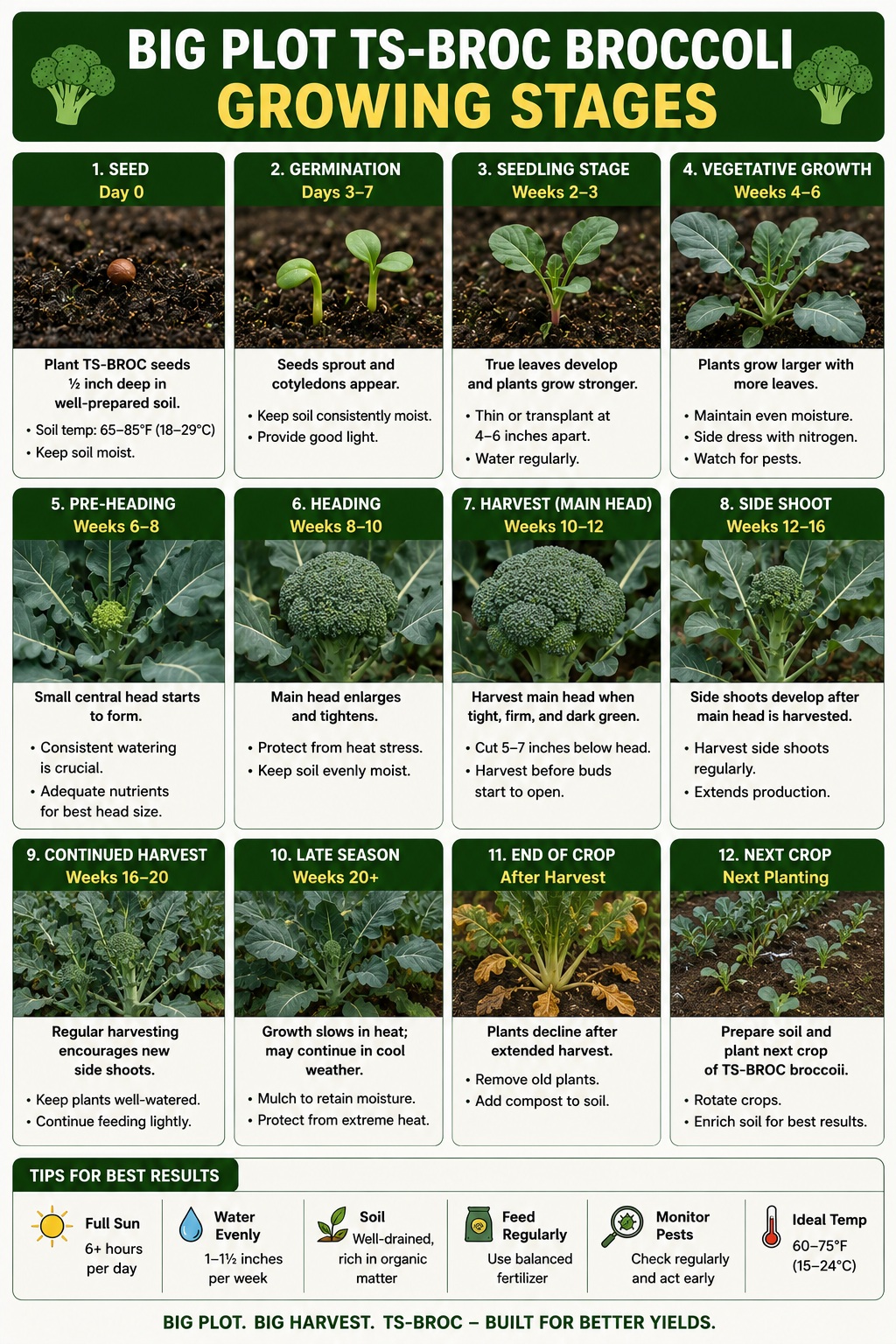
Sowing TS-BROC Broccoli Seeds
Broccoli may be started:
- Indoors in trays
- Directly in the field
- In nursery beds for transplanting later
Large plots usually perform best using transplants.
Starting Seeds Indoors or in Nursery Beds
Benefits of Transplant Production
Starting seedlings separately allows:
- Better germination control
- Stronger young plants
- Earlier harvests
- Reduced field losses
Seed Sowing Depth
Plant seeds:
- About ¼ to ½ inch deep
Germination Conditions
Ideal germination temperature:
- 65°F to 75°F (18°C to 24°C)
Seeds usually germinate within:
- 5 to 10 days
Watering Seedlings
Keep seed-starting medium:
- Evenly moist
- Never waterlogged
Hardening Off Seedlings
Before transplanting into a large plot, seedlings need hardening off.
Hardening Process
Over 7 to 10 days:
- Gradually expose seedlings to outdoor conditions
- Reduce watering slightly
- Increase sunlight exposure daily
This helps prevent transplant shock.
Transplanting Broccoli Into a Big Plot
Healthy transplants are usually ready when they have:
- 4 to 6 true leaves
- Thick stems
- Strong root systems
Best Transplant Timing
Transplant during:
- Cool cloudy weather
- Late afternoon
- Early evening
Avoid transplanting during extreme heat.
Plant Spacing for Large Plots
Proper spacing is essential for airflow and head development.
Recommended Spacing
Plants:
- 18 to 24 inches apart
Rows:
- 24 to 36 inches apart
Large spacing allows:
- Better airflow
- Easier harvesting
- Reduced disease risk
Direct Sowing in Large Fields
Some growers sow directly into the field.
Advantages
- Less transplant labor
- Reduced root disturbance
Disadvantages
- Higher weed competition
- More thinning required
- Slower early growth
Direct seeding works best in mild stable climates.
Irrigation for Large Broccoli Plots
Broccoli requires consistent moisture for quality head production.
Water Requirements
Plants generally need:
- 1 to 1.5 inches of water weekly
Importance of Consistent Moisture
Irregular watering may cause:
- Split stems
- Poor head formation
- Stress growth
Best Irrigation Methods
For large plots, common methods include:
- Drip irrigation
- Soaker hoses
- Furrow irrigation
- Overhead sprinklers
Drip systems reduce disease risk by keeping foliage dry.
Mulching Large Broccoli Fields
Mulch helps improve crop health and reduce maintenance.
Benefits of Mulching
Mulch:
- Conserves moisture
- Suppresses weeds
- Regulates soil temperature
- Prevents soil erosion
Common Mulch Materials
- Straw
- Grass clippings
- Compost
- Agricultural fabric
Fertilizing Broccoli During Growth
Broccoli is considered a heavy feeder.
Nitrogen Needs
Nitrogen supports:
- Leaf growth
- Stem strength
- Large head formation
Side Dressing Fertilizer
Apply extra fertilizer:
- 3 to 4 weeks after transplanting
- Again during rapid growth
Organic Feeding Options
Good organic choices include:
- Fish emulsion
- Compost tea
- Blood meal
- Aged manure
Weed Control in Big Broccoli Plots
Weeds significantly reduce broccoli yields.
Manual Weed Removal
Useful for smaller large plots or market gardens.
Mechanical Cultivation
Between rows, shallow cultivation helps control weeds efficiently.
Mulch Suppression
Organic mulch greatly reduces weed pressure.
Common Pests in Broccoli Fields
Broccoli attracts several insect pests.
Cabbage Worms
These green caterpillars chew large holes in leaves.
Signs
- Ragged foliage
- Green droppings
- Damaged heads
Control Methods
- Hand picking
- Row covers
- Bacillus thuringiensis (Bt)
Aphids
Tiny sap-sucking insects that cluster on stems and leaves.
Symptoms
- Curling leaves
- Sticky honeydew
- Stunted growth
Prevention
- Encourage ladybugs
- Spray with water
- Use insecticidal soap
Flea Beetles
Small jumping beetles that create tiny holes in leaves.
Prevention
- Row covers
- Mulching
- Crop rotation
Young seedlings are especially vulnerable.
Cutworms
Cutworms attack young transplants near the soil line.
Prevention
- Protective collars
- Clean field preparation
- Evening inspections
Common Broccoli Diseases
Disease prevention is essential in large-scale plantings.
Clubroot
A soil-borne disease causing swollen roots and weak growth.
Symptoms
- Wilting
- Stunting
- Deformed roots
Prevention
- Crop rotation
- Proper pH management
- Avoid infected fields
Downy Mildew
Favored by cool wet weather.
Signs
- Yellow patches
- Gray fungal growth
Prevention
- Good airflow
- Proper spacing
- Avoid overhead watering
Black Rot
A bacterial disease affecting brassicas.
Symptoms
- Yellow V-shaped lesions
- Blackened veins
Prevention
- Disease-free seeds
- Crop rotation
- Sanitation
Importance of Crop Rotation
Never plant broccoli repeatedly in the same location.
Rotation Benefits
Crop rotation reduces:
- Disease buildup
- Soil pests
- Nutrient depletion
Wait:
- 3 to 4 years
before planting brassicas in the same area again.
Monitoring Head Development
As broccoli matures, monitor plants frequently.
Signs of Maturity
Heads should be:
- Tight
- Dense
- Dark green
- Compact
Avoid waiting too long.
Heads quickly lose quality once buds begin opening.
Harvesting TS-BROC Broccoli
Harvest timing greatly affects quality and flavor.
When to Harvest
Harvest before:
- Flower buds open
- Yellow flowers appear
The head should feel:
- Firm
- Dense
- Compact
How to Harvest Broccoli
Cutting the Main Head
Use a sharp knife to cut:
- 5 to 8 inches below the head
Make angled cuts to reduce water accumulation.
Avoid Pulling Plants
Pulling damages roots and surrounding plants.
Side Shoot Harvesting
Many broccoli varieties continue producing side shoots after the main head is removed.
Benefits of Side Shoots
- Extended harvest season
- Additional yield
- Smaller tender heads
Harvest side shoots regularly to encourage further production.
Harvest Timing for Large Plots
Large fields require organized harvesting schedules.
Frequent Inspections
Check plots:
- Daily during peak maturity
Broccoli heads mature rapidly.
Harvest During Cool Hours
Best harvest times:
- Early morning
- Late evening
This improves storage quality.
Post-Harvest Handling
Proper handling preserves freshness.
Cooling Immediately
Broccoli loses quality quickly in heat.
Cool harvested heads promptly.
Washing
Wash gently to remove:
- Dirt
- Insects
- Debris
Drying
Allow excess moisture to drain before packing.
Storing Fresh Broccoli
Fresh broccoli stores best under cool humid conditions.
Refrigerator Storage
Broccoli typically stays fresh:
- 1 to 2 weeks
Ideal Storage Conditions
- High humidity
- Near-freezing temperatures
Freezing Broccoli
Broccoli freezes extremely well.
Freezing Steps
- Wash thoroughly
- Cut into florets
- Blanch briefly
- Cool in ice water
- Drain and freeze
Frozen broccoli maintains good flavor and nutrition.
Yield Expectations for Large Plots
Yields vary depending on:
- Variety
- Climate
- Soil fertility
- Irrigation
- Pest control
Healthy broccoli fields can produce substantial harvests over a relatively compact area.
Seasonal Planting Strategies
Spring Crops
Start early for cool-weather maturity.
Fall Crops
Often produce the best-quality heads because of cooler temperatures.
Succession Planting
Planting every few weeks creates continuous harvest windows.
Organic Broccoli Production Tips
Organic broccoli production relies heavily on prevention and soil health.
Improve Soil Biology
Use:
- Compost
- Cover crops
- Organic amendments
Encourage Beneficial Insects
Flowering plants nearby attract natural predators.
Use Row Covers
Covers protect against:
- Cabbage moths
- Flea beetles
- Aphids
Common Mistakes in Large-Scale Broccoli Growing
Overcrowding Plants
Poor spacing increases disease and reduces head size.
Inconsistent Watering
Moisture stress causes poor-quality heads.
Delayed Harvesting
Overmature broccoli becomes loose and flowers quickly.
Ignoring Soil Fertility
Broccoli requires nutrient-rich soil for maximum productivity.
Best Companion Plants for Broccoli
Helpful companion plants include:
- Onions
- Garlic
- Dill
- Lettuce
- Beets
These may help deter pests or improve space efficiency.
Plants to Avoid Near Broccoli
Avoid planting broccoli near:
- Strawberries
- Pole beans
These combinations may compete poorly or attract additional pests.
Can Broccoli Be Grown in Raised Beds on Large Plots?
Yes. Raised beds offer advantages including:
- Better drainage
- Easier weed control
- Improved soil management
However, traditional row systems are usually more practical for very large plantings.
Frequently Asked Questions About TS-BROC Broccoli
How long does broccoli take to mature?
Most broccoli varieties mature within 70 to 100 days depending on conditions and transplant age.
Why are my broccoli heads small?
Small heads may result from:
- Heat stress
- Poor nutrition
- Crowding
- Inconsistent watering
Can broccoli regrow after harvest?
Yes. Many varieties produce side shoots after the main head is harvested.
Does broccoli tolerate frost?
Light frost usually improves flavor and does not damage mature plants significantly.
How often should broccoli be watered?
Aim for deep consistent watering about once or twice weekly depending on rainfall and soil type.
Final Thoughts
Growing TS-BROC broccoli on a large plot can be highly rewarding when proper sowing, spacing, irrigation, and harvesting techniques are followed. Broccoli thrives in cool fertile conditions and rewards growers with nutritious, marketable harvests throughout the season.
Careful planning before sowing, combined with regular monitoring during growth, helps prevent many common problems. Timely harvesting ensures tight flavorful heads and encourages additional side-shoot production for extended yields.
Whether you are managing a home market garden, a small farm, or a larger vegetable field, understanding the fundamentals of large-scale broccoli cultivation will help you produce healthier plants, higher yields, and better-quality harvests year after year.