
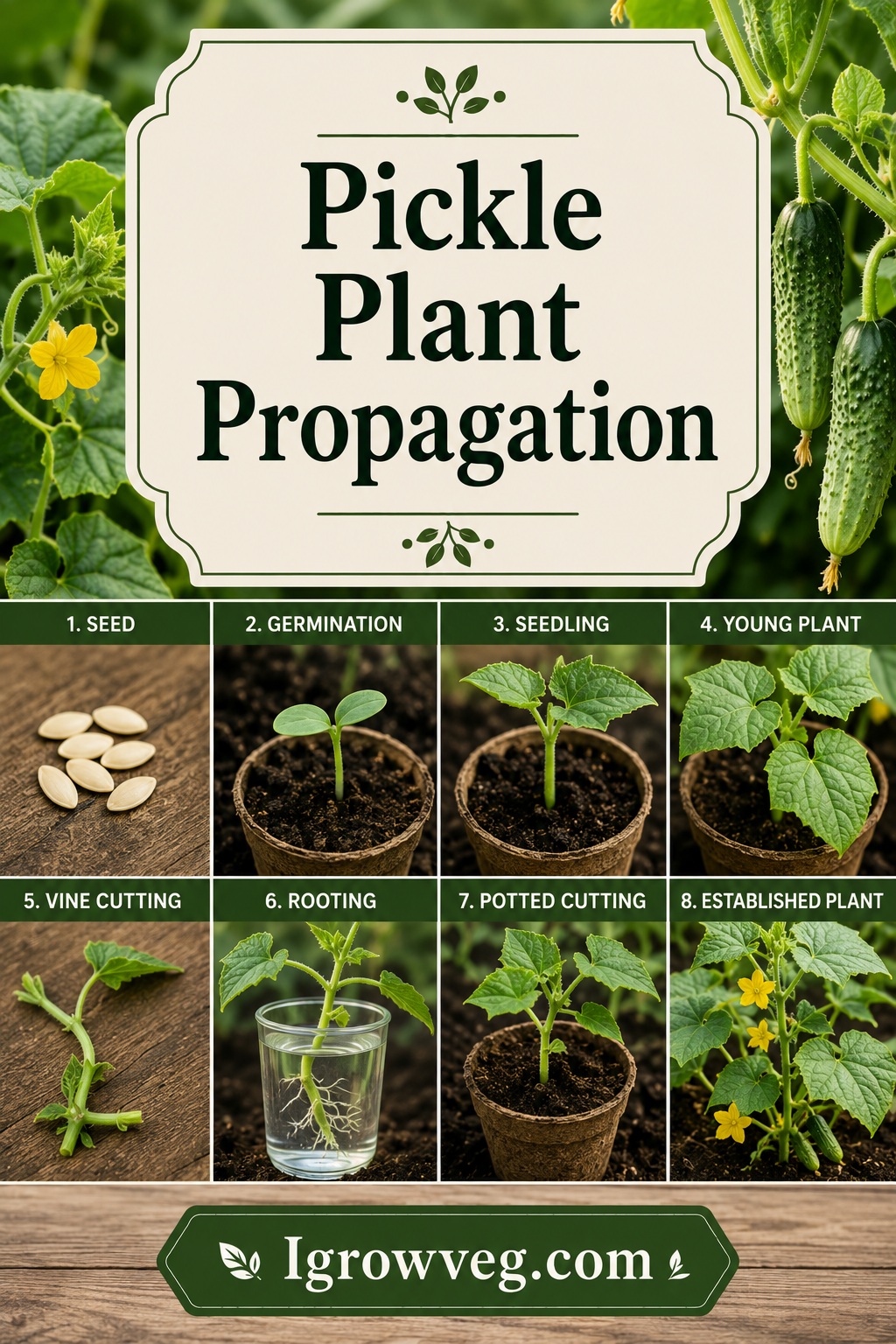
The pickle plant propagation process is one of the most satisfying projects for succulent enthusiasts. Delosperma echinatum, a member of the Aizoaceae family, is prized for its unique, barrel-shaped leaves covered in soft, white bristles known as trichomes. These bristles give the plant a “prickly” appearance without the sharp sting of a cactus.
Because it is a vigorous grower in the right conditions, it is an ideal candidate for propagation. Whether you want to gift a new plant to a friend or fill out a sparse container, understanding the biological requirements of this South African native ensures a high success rate. This guide explores the most effective methods for propagating the pickle plant, focusing on stem cuttings and seed cultivation.
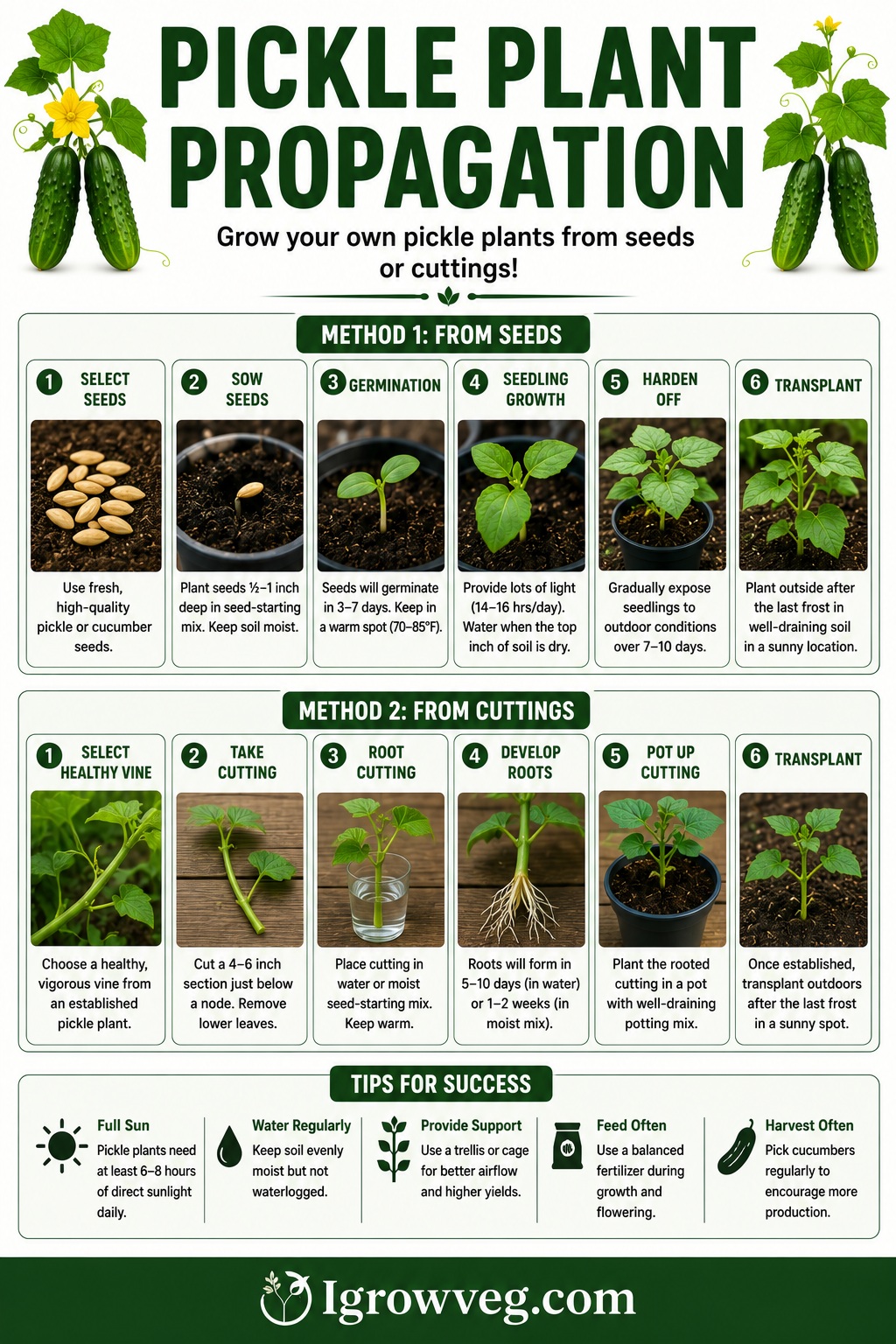
🌿 Pickle Plant Propagation Methods
- Stem Cuttings (Most Common)
- Take 5–10 cm cuttings from healthy stems.
- Allow cuttings to callus for 1–2 days.
- Plant in sandy, well-drained soil.
- Water lightly until roots establish (2–4 weeks).
- Leaf Cuttings (Less Reliable)
- Detach a healthy leaf with a bit of stem tissue.
- Let it dry and callus for 1–2 days.
- Place on moist succulent mix; roots may form slowly.
- Division of Clumps
- Gently separate rooted clusters from the mother plant.
- Replant divisions in individual pots.
- Best done during active growing season (spring/summer).
- Propagation in Water (Optional)
- Place stem cuttings in a jar of water until roots appear.
- Transfer to soil once roots are 2–3 cm long.
- Less common, but works for some growers.
🌱 Care Tips After Propagation
- Use succulent/cactus soil mix for drainage.
- Provide bright, indirect sunlight.
- Avoid overwatering—pickle plants are drought-tolerant.
- Fertilize lightly during active growth.
1. Stem Cuttings: The Fastest Path to Success
Stem cuttings are the preferred method for pickle plant propagation because they establish quickly and maintain the exact characteristics of the parent plant.
Taking the Cutting
Using a clean, sterilized pair of shears or a sharp knife, select a healthy stem that is at least 3 to 4 inches long. Ensure the stem has several sets of leaves and no signs of pests or rot. Make a clean cut just below a leaf node (the point where a leaf joins the stem).
The Callusing Period
Unlike traditional houseplants, succulent cuttings cannot go directly into water or soil immediately after being cut. The “wound” must callus over to prevent pathogens from entering the stem. Place the cutting in a dry, shaded area for 2 to 4 days. You will know it is ready when the cut end feels firm and dry to the touch.
Planting and Initial Care
Once callused, plant the cutting in a well-draining succulent or cactus mix. Insert the stem about an inch into the soil. Do not water immediately; wait about a week to allow the plant to settle. After a week, begin watering sparingly, only when the soil is completely dry. For technical data on soil porosity and drainage for Aizoaceae species, The Royal Horticultural Society offers excellent guidelines on succulent substrates.
2. Environmental Requirements for New Growth
Successful pickle plant propagation depends heavily on the “Goldilocks” zone of light and temperature during the rooting phase.
Light Intensity
While mature pickle plants love bright, direct sunlight, newly planted cuttings are vulnerable to sunscald. Place your propagations in bright, indirect light. Once you see new green growth at the tips—a sign that a root system has successfully formed—you can gradually move the plant into more direct sun.
Temperature and Humidity
Delosperma echinatum thrives in temperatures between 18°C and 27°C. High humidity is the enemy of succulent propagation, as it encourages fungal growth and rot. Ensure your propagation area has good airflow. If you are propagating indoors, a simple oscillating fan can help keep the air moving. To learn more about the ecological adaptations of South African succulents, Kew Royal Botanic Gardens provides extensive botanical profiles on the Delosperma genus.
3. Seed Propagation: The Patient Approach
While less common for home gardeners, growing from seed is a viable part of the pickle plant propagation spectrum, offering a way to observe the entire lifecycle of the species.
Sowing the Seeds
Pickle plant seeds are tiny and require light to germinate. Sow them on the surface of a moist, sandy seed-starting mix. Do not cover them with soil; instead, press them gently into the surface to ensure good contact.
Germination Timeline
Cover the tray with a clear plastic lid or a plastic bag to maintain high humidity just until the seeds sprout. Germination typically occurs within 7 to 21 days at a constant temperature of 21°C. Once the tiny, bristled seedlings appear, remove the cover and move them to a bright location. Seed-grown plants take significantly longer to reach a “pickle-like” appearance compared to stem cuttings.
4. Summary of Pickle Plant Propagation Milestones
| Stage | Method | Timeline | Key Care Requirement |
| Cutting | Stem | Day 1 | Use sterilized tools; cut at a node. |
| Callusing | Stem | Days 2–4 | Keep in a dry, shaded area. |
| Rooting | Stem | Weeks 2–4 | Bright indirect light; no initial water. |
| Germination | Seed | Days 7–21 | Surface sow; do not cover with soil. |
| Establishment | Both | Months 3+ | Transition to direct sun and cactus fert. |
Conclusion
Mastering pickle plant propagation allows you to multiply your collection of these charming, bristled succulents with very little equipment. The key is patience—allowing the cuttings to callus properly and resisting the urge to overwater during the delicate rooting phase. Whether you choose the rapid results of stem cuttings or the botanical journey of starting from seed, Delosperma echinatum is a resilient and rewarding species. By mimicking its native arid environment and providing ample light as it matures, you can ensure your new plants grow into the thick, “cucumber-covered” bushes that make this succulent a standout in any collection.
FAQ: Frequently Asked Questions
1. Can I propagate a pickle plant from a single leaf?
While theoretically possible, leaf propagation for Delosperma echinatum has a very low success rate compared to stem cuttings. Stem cuttings are much more reliable.
2. Why is my pickle plant cutting shriveling?
A small amount of shriveling is normal as the cutting uses its stored water to grow roots. However, if it turns mushy or black, it is likely rotting due to excess moisture.
3. How long does it take for roots to form?
In ideal conditions, you should see root development within 2 to 4 weeks. You can check by gently tugging on the plant; if you feel resistance, roots are present.
4. Do I need rooting hormone for pickle plant propagation?
It is not strictly necessary, as pickle plants root quite easily on their own. However, a light dusting of rooting powder can speed up the process and provide some anti-fungal protection.
5. When is the best time of year to propagate?
Spring and early summer are the best times, as the plant is in its active growth phase and will recover more quickly from the cutting.
6. My cutting has been in the soil for a month but hasn’t grown. What’s wrong?
It may be too cold, or it may not be getting enough light. Ensure the temperature is above 18°C and move it to a brighter spot.
7. Can I propagate a pickle plant in water?
Succulents generally do better when rooted in soil, as water propagation can often lead to stem rot. Soil propagation produces “soil roots” which are better adapted for the plant’s long-term health.