
Few things disrupt a peaceful early morning like a sudden, jarring racket coming from your pipes the moment your automatic sprinkler system clicks on. Whether it is a machine-gun shudder, a high-pitched scream, a deep thumping, or a metallic rattling against your drywall, a noisy irrigation system is a cry for help from your plumbing.
Ignoring these sounds will not make them go away. In fact, the physical vibrations causing that noise can gradually loosen pipe fittings, crack joints, damage expensive valves, and ultimately lead to hidden water leaks behind your walls or underground.
If you are currently running downstairs to shut off your water main every time your lawn gets watered, do not panic. This comprehensive 1500-word troubleshooting guide breaks down the physics behind sprinkler system noise, the five primary culprits responsible for the racket, and the actionable steps you can take to restore peace and quiet to your home.
1. The Primary Culprit: Water Hammer (Hydraulic Shock)
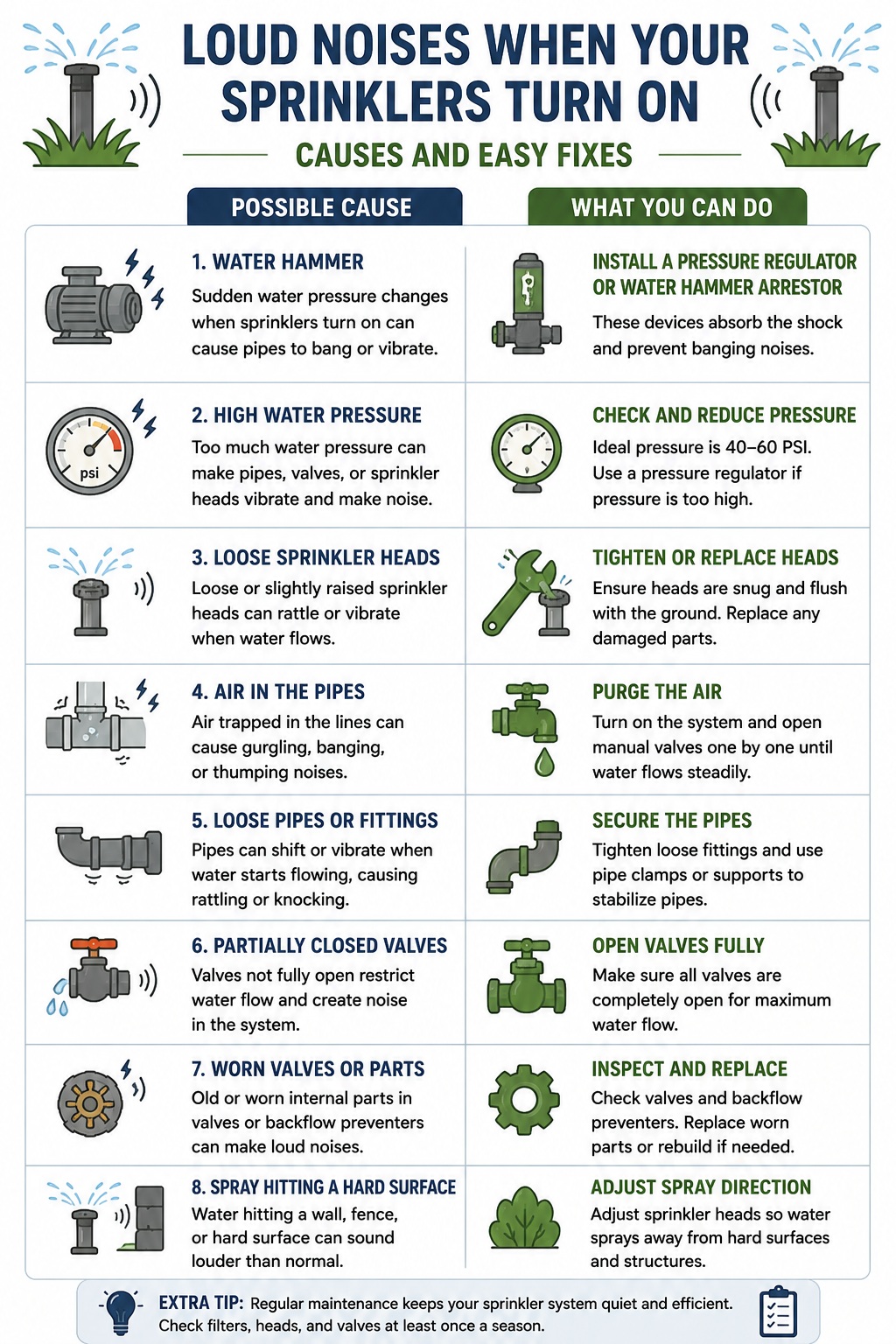
By far, the most common cause of a loud banging or thumping sound when your sprinklers turn on—or transition between zones—is a phenomenon known as water hammer, or hydraulic shock.
The Physics of Water Hammer
Water is incredibly dense and virtually incompressible. When your main irrigation valve opens or closes, a massive volume of water is rushing through your pipes at high speed.
If a fast-acting automatic solenoid valve shuts off instantly, that rushing water crashes into a dead end. The kinetic energy has nowhere to go, generating a high-pressure shockwave that travels backward through the plumbing system at over 4,000 feet per second. This shockwave physically shakes the pipes, causing them to slam violently against your home’s wooden framing, studs, or floor joists.
[ Water Flowing Rapidly ] ➔ ➔ ➔ ➔ ➔ [ Solenoid Valve Closes Instantly ]
                                                     ⬇
[ Sharp Metallic Bang! ] ⬅ ⬅ ⬅ ⬅ ⬅ [ Shockwave Rattles Pipes Backward ]
The Signs of Water Hammer
- A single, incredibly loud “bang” or “thunk” the exact millisecond a sprinkler zone turns off or switches to the next zone.
- A rhythmic rattling or shuddering inside the walls closest to your water main or backflow preventer.
2. The Five Main Reasons Your Sprinklers Are Screaming, Chattering, or Banging
While water hammer is the overarching mechanical cause of pipe banging, several other system failures can introduce distinct, aggravating noises into your home.
Reason 1: High Water Pressure (The Velocity Problem)
Residential plumbing systems are engineered to handle water pressures between 40 and 60 PSI (Pounds per Square Inch). Because irrigation systems require significant force to pop up heavy sprinkler heads and throw water across a lawn, it is common for outdoor lines to push the limits of safety.
If your home’s static water pressure exceeds 80 PSI, the water inside your pipes travels at an unsafely high velocity. When water moves too fast, turning on a zone valve causes a massive, instantaneous pressure drop, followed by an equally violent pressure spike. High pressure not only amplifies water hammer but also forces water through small valve orifices at speeds that create a loud, high-pitched whistling or screaming noise.
Reason 2: Air Trapped in the Irrigation Lines
If the loud banging or machine-gun sputtering occurs only when a zone first turns on and then gradually fades away after a few minutes, you are dealing with trapped air.
When an irrigation system sits idle—or after it has been shut down for winterization—water drains out of the pipes, leaving pockets of empty air. When the zone valve opens, a wall of high-pressure water slams into these air pockets. Because air compresses easily while water does not, the air pockets act like violent springs, compressing and expanding rapidly. This causes the sprinkler heads to violently spit, hiss, and sputter while the underground pipes vibrate loudly.
Reason 3: Loose or Unsecured Piping
Sometimes, a sprinkler system produces a deafening rattle inside the house even if the water pressure is perfectly normal. If the copper or PEX supply lines running from your water main out to your exterior backflow preventer were installed without enough pipe hangers, straps, or structural support, they are free to move. Even the minor, standard pressure shifts of a valve opening will cause an unsecured pipe to whip back and forth, drumming loudly against your drywall or wooden joists.
Reason 4: A Failing Backflow Preventer
Your backflow preventer (typically a Pressure Vacuum Breaker, or PVB) is a mandatory safety device installed outside your home. It prevents dirty lawn water from siphoning backward into your clean drinking water supply.
Inside the backflow preventer are spring-loaded check valves and a floating canopy. Over time, mineral deposits, sand, or old age can cause these internal springs to lose their tension, or the rubber seals to warp. When water flows through a compromised backflow device, the internal parts can rapidly vibrate, oscillate, or flutter up to dozens of times per second. This produces a loud, continuous chattering, buzzing, or humming sound that echoes clearly through your indoor pipes.
Reason 5: Restricted Water Flow or Undersized Pipes
If a plumbing system forces a high volume of water through a pipe or valve that is too small, it creates extreme friction and turbulence.
- The Culprit: Using a 1-inch main irrigation line but connecting it to a restrictive 1/2-inch shut-off valve inside the basement.
- The Result: The water is forced into a bottleneck, generating a roaring or whistling sound as it struggles to push through the restriction when the sprinklers demand high flow rates.
3. Diagnostic Noise Matrix: What Is Your System Telling You?
| The Specific Sound | When It Happens | Most Likely Root Cause | Severity Level |
| Single Loud “Bang” | The exact moment a zone turns off. | Classic Water Hammer (Hydraulic Shock). | Moderate: Can damage pipe joints over time. |
| Rapid “Machine-Gun” Chattering | Continuous while a specific zone runs. | Failing Backflow Preventer or loose valve diaphragm. | High: Indicates failing internal mechanical parts. |
| High-Pitch Whistling/Screaming | Entire time the sprinklers are active. | Excessive water pressure (Over 80 PSI) or restricted valve. | High: High pressure causes catastrophic pipe bursts. |
| Sputtering, Hissing, & Sputtering | For 60 seconds after a zone starts up. | Air pockets escaping through the sprinkler heads. | Low: Normal during spring startup; check for leaks if chronic. |
| Deep, Low Roaring/Humming | While the system is actively running. | Turbulent water flow due to undersized piping or bottlenecks. | Low: Annoying, but rarely structurally dangerous. |
4. Step-by-Step Solutions to Silence Your System
Fixing a noisy sprinkler system requires a systematic approach, starting with the easiest adjustments and moving toward physical hardware installations.
1.Test and Adjust Your Total Water Pressure:Estimated Time: 10 mins.
Purchase a cheap water pressure gauge that screws onto an outdoor hose spigot. Check your home’s static pressure. If it reads over 75-80 PSI, locate your home’s main Pressure Reducing Valve (PRV)—usually situated near your indoor water meter—and use a wrench to turn the adjustment bolt counterclockwise to drop your home’s pressure down to a safe 50 to 60 PSI.
2.Anchor Loose Indoor Piping:Estimated Time: 30 mins.
Have someone turn the sprinkler system on while you walk your basement, crawlspace, or utility closet. Listen and feel for pipes that are visibly vibrating or knocking against wood. Install heavy-duty plastic pipe straps or copper brackets every 3 feet, and wrap the pipes in foam insulation sleeves where they pass through wooden studs to absorb physical vibrations.
3.Slow Down Your Main Shut-Off Valves:Estimated Time: 15 mins.
If you use a manual gate valve or a fast-action ball valve to turn on your irrigation main supply, never yank or flip it open instantly. Slowly turn the valve handle over a span of 10 to 15 seconds. This gradual opening allows the plumbing system to pressurize slowly, preventing an initial wall of water from creating a massive hydraulic shockwave.
4.Install a Water Hammer Arrestor:Estimated Time: 1 Hour.
If the loud banging persists when your automatic zones cycle, buy an inline water hammer arrestor. This device contains a sealed, pressurized air chamber separated by a rubber piston. Install it on the main copper water line right before it exits your home to the outdoor sprinklers. When the automatic valves snap shut, the shockwave hits the arrestor’s air cushion, safely absorbing the energy before it can shake your pipes.
5.Rebuild or Replace the Backflow Preventer:Estimated Time: 45 mins.
If the system is making a rapid buzzing or chattering sound, turn off the water, unscrew the canopy of your outdoor backflow preventer, and check the internal springs and rubber poppets. Purchase a cheap, variety-specific bonnet and poppet repair kit to replace the worn-out internal plastic and spring components that are fluttering under pressure.
5. Underground Air Management: The Bleeding Protocol
If your diagnostic pointed directly to chronic air trapped in the lines (frequent sputtering and coughing at the heads), you need to properly bleed the system. This is especially vital during spring startup.
- [Open Highest Zone Manual Valve]
- [Slowly Turn On Main Water Supply]
- [Force Air Out of System Safely]
- Locate Your Valve Box: Open the green plastic underground rectangular boxes in your lawn where your zone solenoid valves are housed.
- Manually Open the Furthest/Highest Zone: Locate the valve that controls the highest elevation or furthest physical point of your yard. Turn the manual bleed screw (a small plastic knob on top of the valve) counterclockwise half a turn until water starts to seep out slightly. This opens the valve mechanically without using electricity.
- Introduce Water Slowly: Walk back to your main indoor water shut-off valve. Very slowly crack the valve open to let a gentle stream of water enter the system. You will hear air hissing loudly out of the open sprinkler heads down the line.
- Flush Until Smooth: Once a solid, steady stream of water flows out of the sprinkler heads without coughing or spitting air, close the manual bleed screw on that valve. Repeat this exact process for each subsequent zone, moving from the furthest zone back toward the water source.
Conclusion: Protecting Your Plumbing Long-Term
A loud noise when your sprinkler system fires up is more than just an annoyance—it is a clear warning sign that your plumbing is under structural stress. By taking the time to regulate your water pressure, anchor loose pipes, and install a dedicated water hammer arrestor if necessary, you protect your home from devastating, hidden water leaks. A quiet sprinkler system is a healthy, efficient system that ensures both your lawn stays green and your house stays structurally dry.
Quick FAQ
1. Can a dirty sprinkler valve cause a loud humming noise?
Yes. If small grains of sand, silt, or algae get trapped inside an automatic solenoid zone valve, the rubber diaphragm inside cannot open completely. The water squeezing through the remaining tiny gap will cause the diaphragm to vibrate rapidly, creating a loud humming or whistling sound while that specific zone is running.
2. Why does my sprinkler system only bang when switching between zone 2 and zone 3?
This points to a settings issue or a sticky valve. If your controller turns off zone 2 a fraction of a second before zone 3 has a chance to crack open, the water is hitting a brief dead end, causing a water hammer bang. Ensure your irrigation controller does not have a programmed “delay between zones” unless your system is specifically equipped with a master valve to mitigate the pressure spike.
3. Will a water hammer arrestor lose its effectiveness over time?
Older style, homemade air chambers (vertical stubs of pipe capped at the top) eventually fill up with water and lose their air cushion. Modern, engineered water hammer arrestors utilize a sealed rubber piston that keeps the pressurized gas permanently separated from the water water stream, allowing them to last for many years without maintenance.
4. Can excessive noise mean my underground sprinkler pipes are broken?
Usually, no. A broken underground pipe lowers your overall water pressure, which actually reduces water hammer and screaming noises. If you hear loud noises inside, the issue is almost always located where the high-pressure water interacts with the rigid, indoor metal piping or backflow hardware.
5. Is water hammer covered by standard home insurance?
While insurance may cover the sudden, catastrophic water damage resulting from a burst pipe, they rarely cover the cost of plumbing repairs required to fix the underlying maintenance issues—like installing a PRV or water hammer arrestor—that caused the pipe to break in the first place.