Salting the earth so nothing will ever grow? Well, The ancient phrase salting the earth historically refers to a severe practice of military destruction where conquering armies spread raw sodium chloride over conquered territories. They executed this tactic to render the land barren and symbolically demonstrate total victory. In contemporary times, individuals sometimes seek out this concept when trying to clear stubborn vegetation from gravel driveways, stone patios, or sidewalk cracks permanently.
However, applying massive quantities of raw rock salt or table salt to kill vegetation induces permanent chemical damage to the soil substrate. This comprehensive guide explains the exact biological and chemical mechanisms that occur when you introduce extreme salinity to a plot of land. Furthermore, it details the long term environmental risks and provides highly effective, sustainable alternatives that achieve complete vegetation control without destroying the underlying ecosystem.
How High Salinity Destroys Plant Life
When you saturate a specific patch of land with high concentrations of sodium chloride, you initiate a rapid destructive process inside the soil matrix. This action permanently alters the subterranean environment through two primary biological pathways.
The Phenomenon of Osmotic Desiccation
Plants absorb moisture through their roots using a natural process called osmosis. Under normal conditions, water moves from an area of low solute concentration in the damp earth to an area of higher solute concentration inside the root cells.
When you apply a heavy layer of salt to the ground, you reverse this entire gradient. The solute concentration outside the roots becomes drastically higher than the concentration inside the plant. Consequently, the salt pulls moisture out of the root tissue and back into the surrounding dirt. This sudden shift triggers severe osmotic shock, which causes the plant to dehydrate and wither from the bottom up, even if you water the ground thoroughly.
Permanent Ruin of Soil Architecture
Beyond dehydrating the active root zones, sodium chloride chemically alters the physical composition of the ground. Sodium ions actively attach to clay particles within the substrate, displacing essential nourishing minerals such as calcium, potassium, and magnesium.
This chemical displacement causes the fine particles to disperse and lose their natural cohesive binding properties. The earth loses its capacity to drain moisture, packing down over time into a dense, cement like crust. This impenetrable barrier effectively blocks oxygen, rainwater, and new root systems from penetrating the surface, ensuring that future seeds cannot establish a foothold.
The Ecological Risks of Extreme Soil Salinity
While spreading abundant amounts of salt might seem like an easy way to clear an area, the ecological consequences often spread far past your intended boundary lines.
Toxic Leaching and Runoff
Sodium chloride is exceptionally water soluble. Whenever a heavy rainstorm occurs, the rainwater dissolves the surface salt and carries it downward into the water table or outward across the landscape.
This chemical runoff easily travels into neighboring lawns, prize flowerbeds, or vegetable gardens. Mature trees and delicate shrubs located several yards away can suddenly absorb this toxic water, which results in leaf scorch, branch dieback, and eventual plant death.
Long Term Environmental Persistence
Unlike modern organic herbicides or natural weed treatments that break down over time through the action of soil microorganisms, raw salt does not decompose. It remains trapped within the dirt matrix indefinitely.
The only way to clear a heavily salted plot of land is through massive, continuous rainfall over a span of several years or decades, which slowly flushes the sodium ions out of the local upper root zone. Until that flushing process finishes, the land remains a barren wasteland.
Complete Destruction of the Microbiome
Healthy dirt relies on a complex, thriving ecosystem of beneficial organisms. High concentrations of sodium kill off earthworms, mycorrhizal fungi, and essential nitrogen fixing bacteria. Eliminating these organisms ruins the natural biological cycle, which degrades the quality of the surrounding environment and leaves the remaining ground prone to severe erosion.
Sustainable Tactics for Total Vegetation Control
If your primary objective is to eliminate weeds and grass from driveways or walkways where you do not want any plants to emerge, you can use several superior methods. These modern strategies deliver identical results without causing permanent chemical pollution or endangering nearby vegetation.
Industrial Strength Horticultural Vinegar
Standard household white vinegar contains roughly five percent acetic acid, which can burn the leaves of small weeds but rarely destroys the root system. In contrast, horticultural vinegar contains an intensive twenty to thirty percent acetic acid concentration.
This powerful substance acts as a potent contact herbicide. When you spray it on a bright, sunny day, the acid immediately strips away the protective waxy cuticle layer from the leaves. This action leads to rapid desiccation and plant death within a few hours.
The primary benefit of this treatment centers on its environmental safety. Acetic acid breaks down quickly when it contacts the ground, which means it leaves no toxic long term residue and does not ruin the underlying dirt structure for future generations.
The Thermal Shock of Boiling Water
For clearing unwanted greenery from brick patios, pavers, or sidewalk seams, pouring boiling water directly onto the crowns of the plants represents an incredibly effective solution.
The intense heat delivers immediate thermal shock, which instantly cooks the internal plant cells and destroys the root crowns. This method costs nothing, remains entirely non toxic, and leaves zero chemical trace behind in your yard.
Flame Weeding Devices
Utilizing a specialized propane torch designed specifically for agricultural weed management allows you to clear large areas quickly.
You do not need to burn the target plants down to ashes to achieve success. Instead, you simply pass the high heat flame over the foliage for a brief second. This intense heat causes the water inside the cells to expand rapidly, which disrupts the plant food transport tissues. Within days, the weeds dry out completely and die down to the roots. This approach works exceptionally well for expansive gravel pathways.
Soil Solarization
If you intend to clear a substantial plot of land for a future hardscaping project, you can harness the natural energy of the sun.
First, you cut down the existing vegetation to the ground level and soak the area thoroughly with water. Next, you tightly cover the entire zone with a heavy, UV stabilized clear plastic sheeting, anchoring the edges firmly with heavy stones or dirt.
Leaving this plastic cover in place for four to six weeks during the peak of summer bakes the underlying earth. The trapped solar energy raises the temperature to levels that neutralize active weeds, destroy deep roots, and sterilize dormant weed seeds. This technique cleans the space perfectly while fully preserving the underlying soil chemistry.
How to Use Salt to Kill Weeds Safely (Why Be Careful)
If you want to use salt as a natural weed killer, you must apply it with extreme precision. Because salt is a non-selective herbicide, it will kill any plant it touches—including your lawn, prize flowers, and nearby shrubs.
The Safe Application Method
The safest way to use salt in your garden is to mix it into a liquid solution and apply it directly to the foliage of target weeds in isolated areas, like sidewalk cracks, brick patios, or gravel driveways.
- The Recipe: Mix 1 part salt with 3 parts warm water until the salt completely dissolves. Add a few drops of liquid dish soap to help the solution stick to the waxy surface of the weed leaves.
- The Technique: Pour the mixture into a spray bottle or use a funnel to pour a small amount directly onto the center of the weed. Do this on a calm, dry day to prevent wind from drifting the spray onto your desirable plants.
Frequently Asked Questions About Salted Earth
What does salt do to soil?
Salt completely ruins the chemical and physical structure of soil. When you apply salt to the ground, the sodium ions bind to clay particles, displacing essential nutrients like calcium and magnesium. This causes the soil to “deflocculate,” meaning it loses its natural texture and packs down into a hard, cement-like crust. The soil loses its ability to drain water, blocking oxygen from reaching the underground ecosystem.
Will salt damage plants?
Yes, salt causes severe and often irreversible damage to plants. When salt makes contact with leaves, it burns the tissue and turns it brown. If salt enters the root zone, it prevents the plant from absorbing water, leading to leaf scorch, branch dieback, and eventual plant death.
Does salt stunt growth?
Yes. Even in low concentrations that don’t immediately kill a plant, salt stunts growth by causing salinity stress. The plant is forced to expend its vital energy trying to filter out toxic sodium ions rather than pushing out new leaves, flowers, or fruit. This results in dwarfed plants, yellowing leaves (chlorosis), and poor root development.
Will salt stop things from growing?
Yes, high concentrations of salt will completely stop vegetation from growing. It creates a toxic, high-salinity environment where seeds cannot germinate and existing root systems cannot survive.
Can anything grow in salted earth?
In heavily salted earth, normal garden plants, vegetables, and grass cannot survive. However, nature has a specialized group of plants called halophytes (salt-tolerant plants). Wild varieties of sea kale, saltgrass, and certain coastal weeds have evolved internal filters to pump out excess salt, allowing them to eventually colonize salted ground long before normal plants can return.
What salt to use to salt the earth?
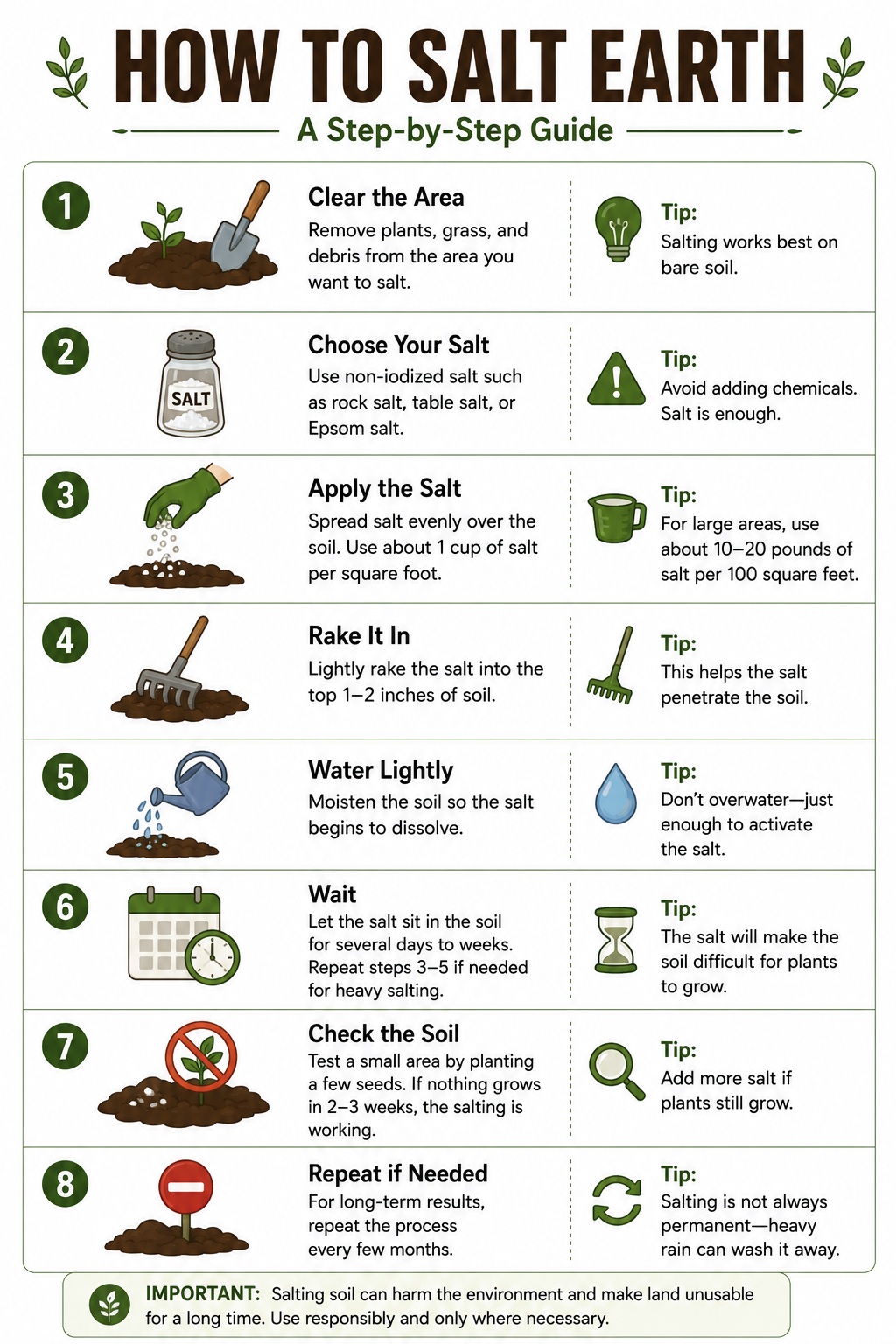
Historically and practically, any cheap, raw salt containing sodium chloride ($NaCl$) will sterilize the earth if applied in massive quantities. This includes:
- Rock salt (used for melting ice on winter driveways)
- Standard table salt
- Water softener salt crystals
A Serious Warning for Gardeners: Spreading raw, dry rock salt over a garden plot to clear weeds is highly discouraged. Salt is incredibly water-soluble. When it rains, the dissolved salt hitches a ride with the water table, leaching sideways through your yard. It can easily travel several feet or yards away, killing your lawn or a neighbor’s mature tree. Because salt does not break down over time, it will keep that patch of earth barren for years until massive amounts of rain gradually flush the sodium out of the root zone.
Safer, Smarter Alternatives to Salt
If you want to clear weeds permanently from walkways or driveways without destroying your soil chemistry for years, skip the salt and try these non-toxic methods instead:
- Boiling Water: Pouring a kettle of boiling water over sidewalk weeds delivers immediate thermal shock, cooking the roots and killing the plant within days without leaving any chemical residue behind.
- Horticultural Vinegar (20-30% Acetic Acid): This industrial-strength vinegar strips the protective waxy coating off weed leaves under direct sunlight, causing rapid desiccation (drying out). Unlike salt, vinegar breaks down rapidly in the soil within a few days.
- Flame Weeding: Passing a small propane garden torch over weeds instantly disrupts their internal water-transport tissues, causing them to wither and die down to the roots without affecting the surrounding dirt.
Summary of Vegetation Control Methods
The following breakdown illustrates how different clearing strategies compare across several key performance indicators.
- Spread Raw Salt: This method causes extreme osmotic dehydration and permanently ruins the dirt structure. The environmental impact is high due to toxic leaching, and the duration of sterility lasts for years or decades.
- Horticultural Vinegar: This option causes rapid leaf desiccation through high acidity. The environmental impact remains exceptionally low, and the ground recovers within days.
- Boiling Water: This approach uses direct thermal shock to destroy plant tissue. The environmental impact is completely zero, and the surrounding ground suffers no long term damage.
- Flame Weeding: This method utilizes extreme heat to disrupt water transport tissue. The environmental impact is very low, and it leaves zero chemical footprint in the ecosystem.
- Solarization: This process bakes the ground using trapped solar heat to kill seeds and roots. The environmental impact stays low, and the soil composition remains completely intact for future use.
Long Term Solutions
When you plan your landscape management, prioritizing the long term health of your property ensures the best results. While old historical terms like salting the earth sound powerful, applying raw chemicals to your land creates costly problems that are difficult to correct. By choosing modern thermal, mechanical, or biodegradable chemical alternatives, you can successfully maintain clean, weed free driveways and walkways while keeping the surrounding ecosystem beautiful and safe.