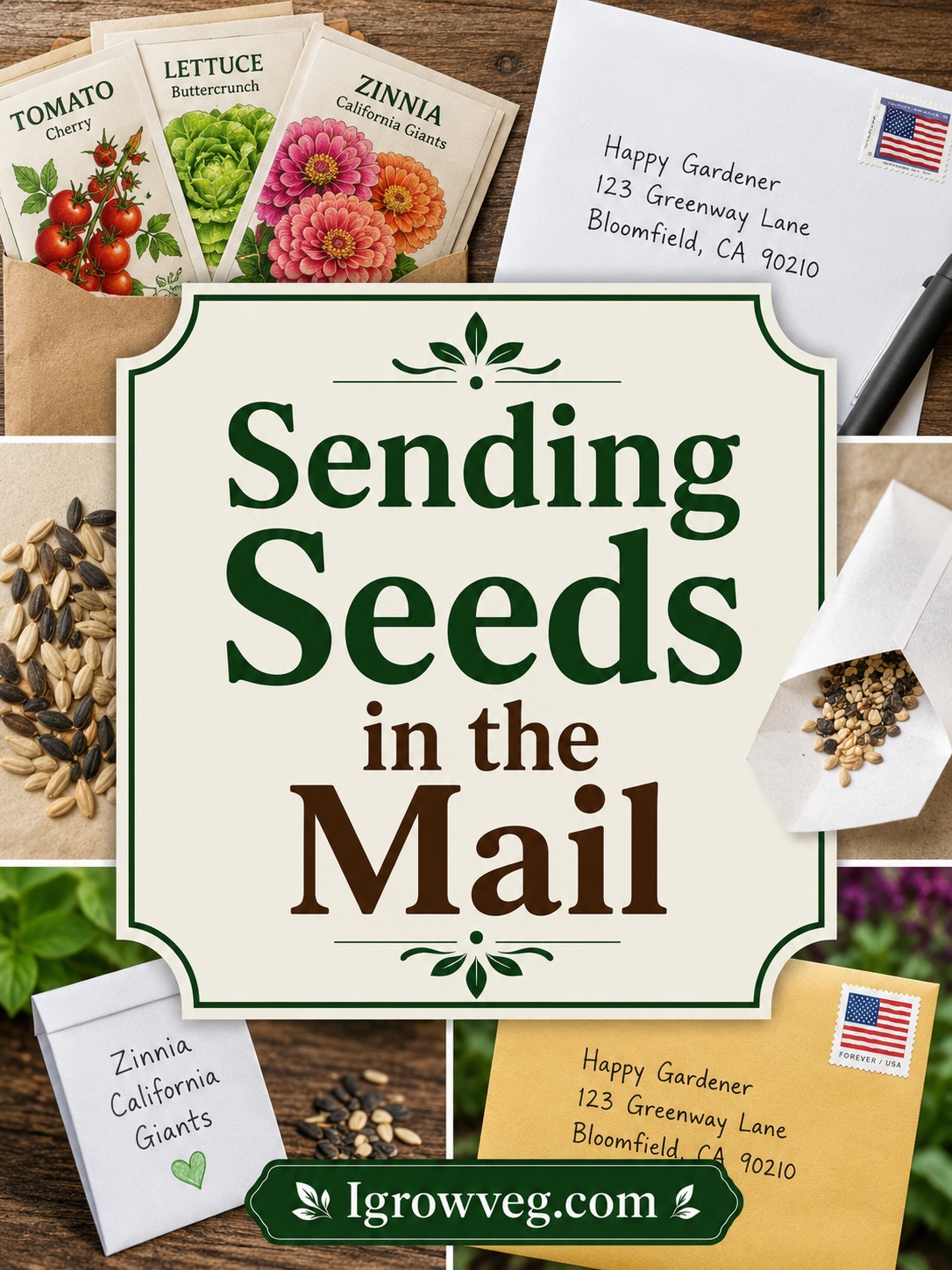
The simple act of slipping a packet of seeds into an envelope and dropping it in a mailbox feels entirely innocent. However, under postal and agricultural laws, mailing seeds crosses into a heavily monitored legal landscape.
Whether sending seeds through the mail is legal or illegal depends on three core vectors: geography (domestic versus international crossings), the biological classification of the seed (endangered, invasive, or agricultural), and commercial truth-in-labeling compliance.
Bypassing these regulations—even accidentally—can transform a simple envelope of seeds into an illegal package subject to seizure, destruction, and heavy civil penalties.
1. Domestic Mailing: Shipping Within the Same Country
For shipments moving strictly within national borders (for example, state-to-state within the United States), mailing seeds is generally legal, but it is bound by strict regional biosecurity rules and labeling laws.
Agricultural Quarantines and “Pest Zones”
The primary reason domestic seed shipping becomes illegal is the violation of state-level or federal agricultural quarantines. Government agencies—such as the USDA Animal and Plant Health Inspection Service (APHIS)—establish strict boundaries to prevent the spread of localized pests and diseases.
- The Violation: Mailing citrus seeds out of Florida or California into other citrus-growing regions is highly restricted or illegal due to the threat of Citrus Greening disease. Similarly, mailing specific agricultural seeds out of areas quarantined for spotted lanternflies or sudden oak death can result in immediate interception and destruction of the package.
- The Rule: It is the mailer’s responsibility to ensure that the origin zip code is not under a dynamic agricultural quarantine for that specific plant species.
The Federal Seed Act (Truth in Labeling)
If you are mailing seeds for commercial sale or trade across state lines, you must comply with truth-in-labeling laws like the Federal Seed Act.
To ship agricultural or vegetable seeds in interstate commerce legally, the packaging must explicitly state:
- The exact seed kind and variety.
- The percentage of seed purity and germination rate.
- The presence of any noxious weed seeds per pound.
- The name and address of the shipper.
Shipping unlabeled, loose seeds in unmarked envelopes for commercial purposes violates federal trade laws and can prompt regulatory investigations.
2. International Mailing: The Global Biosecurity Wall
When a seed shipment crosses an international border, the legal threshold changes drastically. Mailing seeds internationally without advanced legal documentation is strictly illegal.
If you purchase seeds online from a foreign seller or attempt to mail heirloom seeds to a friend in another country via the postal service, you are legally classified as an “Importer of Record.”
[Mailing Seeds Internationally Without Documentation]
                     ⬇
    [Classified as Agricultural Smuggling]
                     ⬇
[Risk of Seizure, Destruction, and Fines up to $1,000+]
The Threats of Unregulated Importation
Customs agencies and border protection forces treat international seed mail with zero tolerance because unregulated seeds present catastrophic ecological risks:
- Invasive Species: Exotic plants can easily escape cultivation and outcompete native flora, devastating local ecosystems and agricultural economies.
- Pathogen Hitchhikers: Seeds can carry microscopic viruses, viroids, fungi, or bacterial blights that local crops have no natural defense against. For example, tomato and pepper seeds require stringent testing for specific destructive viroids before they can cross borders.
The International Legal Toolkit
To mail seeds internationally legally, a package must explicitly clear a multi-tiered regulatory framework:
- The Import Permit: The recipient must obtain an official import permit (such as USDA PPQ Form 587 in the U.S.) ahead of time. This document outlines exactly what species are allowed entry and under what conditions.
- The Phytosanitary Certificate: The sender must obtain an official Phytosanitary Certificate from their country’s national plant protection organization. This document certifies that the specific seed lot has been inspected, tested, and verified entirely free of dangerous pests and diseases.
- Green-and-Yellow Shipping Labels: Legally imported plant mail cannot be sent directly to a residential address. It must bear specialized customs routing labels that direct the package to a designated government Plant Inspection Station, where agricultural specialists physically inspect and test the contents before releasing them to the final mail carrier.
3. The Prohibited and Hazardous List: When Seeds Are Permanently Illegal
Certain seeds are legally banned from entering the mail stream under any circumstances due to environmental protection laws or drug enforcement regulations.
Federal Noxious Weeds and NAPPRA
Governments maintain a definitive list of Federal Noxious Weeds. Seeds belonging to these parasitic or highly invasive species (such as various species of dodder, giant salvinia, or witchweed) are entirely prohibited.
Additionally, many plants are classified under NAPPRA (Not Authorized Pending Pest Risk Analysis). If a seed variety is on the NAPPRA list, it cannot be legally mailed into the country until extensive scientific risk assessments are completed by federal biologists.
Protected and Endangered Species (CITES)
Mailing seeds of rare, endangered, or threatened wild plants across international lines without specialized global permits violates the Convention on International Trade in Endangered Species of Wild Fauna and Flora (CITES).
Cacti, orchids, and certain tropical hardwood trees fall under strict CITES appendices. Mailing their seeds illegally circumvents international conservation treaties and carries severe criminal penalties.
Controlled Substances
Mailing seeds of plants classified as controlled substances is a major federal offense. While the laws regarding industrial hemp seeds have evolved to allow restricted domestic mailing (provided they contain less than 0.3% THC and meet strict agricultural licensing criteria), mailing viable cannabis or Papaver somniferum (opium poppy) seeds across various jurisdictions remains highly illegal and falls under federal drug trafficking statutes.
4. Summary Matrix: Mail Suitability by Seed Type and Destination
| Seed Type / Destination | Domestic Mail (Within Country) | International Mail (Cross-Border) |
| Standard Vegetable/Flower Seeds | Legal (Unless under localized state pest quarantine). | Illegal without an Import Permit, Phytosanitary Certificate, and Customs Declaration. |
| Federal Noxious Weeds | Illegal. Completely banned from interstate transit. | Illegal. Absolute prohibition at all ports of entry. |
| Endangered Species (CITES) | Restricted. Requires proof of ethical cultivation. | Illegal unless accompanied by highly specialized CITES Export/Import permits. |
| Heirloom Tomato/Pepper Seeds | Legal. Free transit across most domestic zones. | Strictly Regulated. Requires mandatory testing/certification for viral diseases. |
5. How to Mail Seeds Legally: Best Practices
If you want to share or trade seeds safely and legally, you must follow a clean, documented protocol to keep your packages compliant with postal and environmental safety inspectors.
For Domestic Trading
- Check Local Quarantine Maps: Ensure your target state doesn’t ban incoming plant matter of that specific family.
- Package to Prevent Spillage: Secure seeds in a sealed plastic or heavy paper packet. Never place loose seeds directly inside a standard paper envelope; automated postal sorting machines apply immense pressure, crushing the seeds and tearing the envelope open.
- Label Truthfully: Clearly write the common and scientific names of the seeds on the internal packaging.
For International Sourcing
- Never Buy “Blind” Online: If purchasing seeds from international e-commerce platforms, ensure the vendor explicitly provides a Phytosanitary Certificate.
- Beware of Mislabeled Mail: If a foreign seller ships seeds but labels the customs declaration as “Beads,” “Jewelry,” or “Toy Parts,” this is agricultural smuggling. Customs inspectors utilize advanced X-ray imaging and canine units to detect organic material; if caught, the package will be seized, destroyed, and you—the importer of record—could face steep civil fines.
Conclusion
Mailing seeds is fundamentally a balancing act between protecting the global agricultural economy and encouraging home horticulture. Within domestic boundaries, the mail stream remains highly accessible for seed exchanges, provided you respect local pest quarantines.
Internationally, however, the legal boundary is clear: without an official permit and a clean bill of health from an agricultural specialist, sending seeds in the mail is an illegal act. By taking the time to verify species listings, declare contents honestly, and secure proper agricultural paperwork, you can ensure your gardening hobby stays firmly on the right side of the law.
Quick FAQ
1. Is it illegal to receive unsolicited seeds in the mail?
You will not face legal penalties for simply receiving a package you didn’t order. However, keeping or planting those seeds is highly dangerous. If you receive unexpected seed packets from a foreign country, do not plant them. Place them in a sealed plastic bag and report them to your local Department of Agriculture or turn them over to a USDA collection point for safe disposal.
2. Can I mail seeds in a standard letter envelope with a regular stamp?
While it is legal domestically, it is highly impractical. Postal sorting machines use heavy rollers that will crush the seeds into dust and tear the paper envelope. Always use a padded bubble mailer or a rigid envelope, and pay the appropriate package or non-machinable mail rate.
3. Do seed regulations apply to flower seeds, or just vegetables?
Regulations apply to all seeds meant for planting, including ornamental flowers, vegetables, trees, shrubs, and weeds. Invasiveness and disease threats are common across all plant families, making botanical classification irrelevant to customs laws.
4. Can I mail seeds across borders if I clean them thoroughly first?
No. While physical cleanliness prevents the spread of contaminated soil, it cannot clear a seed of internal seed-borne viruses or viroids. Only an official phytosanitary inspection and certificate can legally authorize an international crossing.
5. What happens if Customs intercepts my seed package?
If an international seed package lacks the proper permits, Customs and Border Protection will seize it. The recipient typically receives an official “Notice of Arrival” stating that the agricultural material was confiscated and destroyed. Repeat violations or clear attempts to deliberately smuggle seeds under false labels can result in formal investigations and heavy civil fines.