Growing lettuce during winter is an excellent way to enjoy fresh salads when most garden crops stop producing. Although lettuce is usually considered a cool-season vegetable, many varieties tolerate cold weather surprisingly well. With proper planning and protection, gardeners can harvest crisp, flavorful leaves throughout much of the winter season.
Winter lettuce often develops sweeter flavor and tender texture because cool temperatures slow growth and reduce bitterness. Furthermore, winter gardening helps maximize garden space and extends the harvest season long after summer crops disappear.
This guide explains how to grow lettuce successfully during winter, including the best varieties, planting methods, protection techniques, watering tips, and harvesting strategies.
Why Grow Lettuce in Winter?
Winter lettuce offers several advantages for home gardeners.
Fresh Greens During Cold Months
Many vegetables struggle in winter, but lettuce continues producing under cool conditions.
Sweeter Flavor
Cold weather reduces bitterness and improves leaf sweetness.
Fewer Pests
Winter conditions reduce populations of:
- Aphids
- Slugs
- Caterpillars
- Leaf miners
Efficient Garden Use
Winter lettuce keeps raised beds and vegetable plots productive year-round.
Understanding Lettuce Cold Tolerance
Lettuce is naturally a cool-season crop.
Ideal Growing Temperatures
Lettuce grows best between:
- 45°F and 65°F (7°C to 18°C)
Frost Tolerance
Many lettuce varieties survive light frosts without damage.
Some cold-hardy types tolerate temperatures below freezing when protected properly.
Heat vs Cold
Unlike summer heat, which often causes bolting and bitterness, cool temperatures encourage slow and tender growth.
Best Lettuce Varieties for Winter Growing
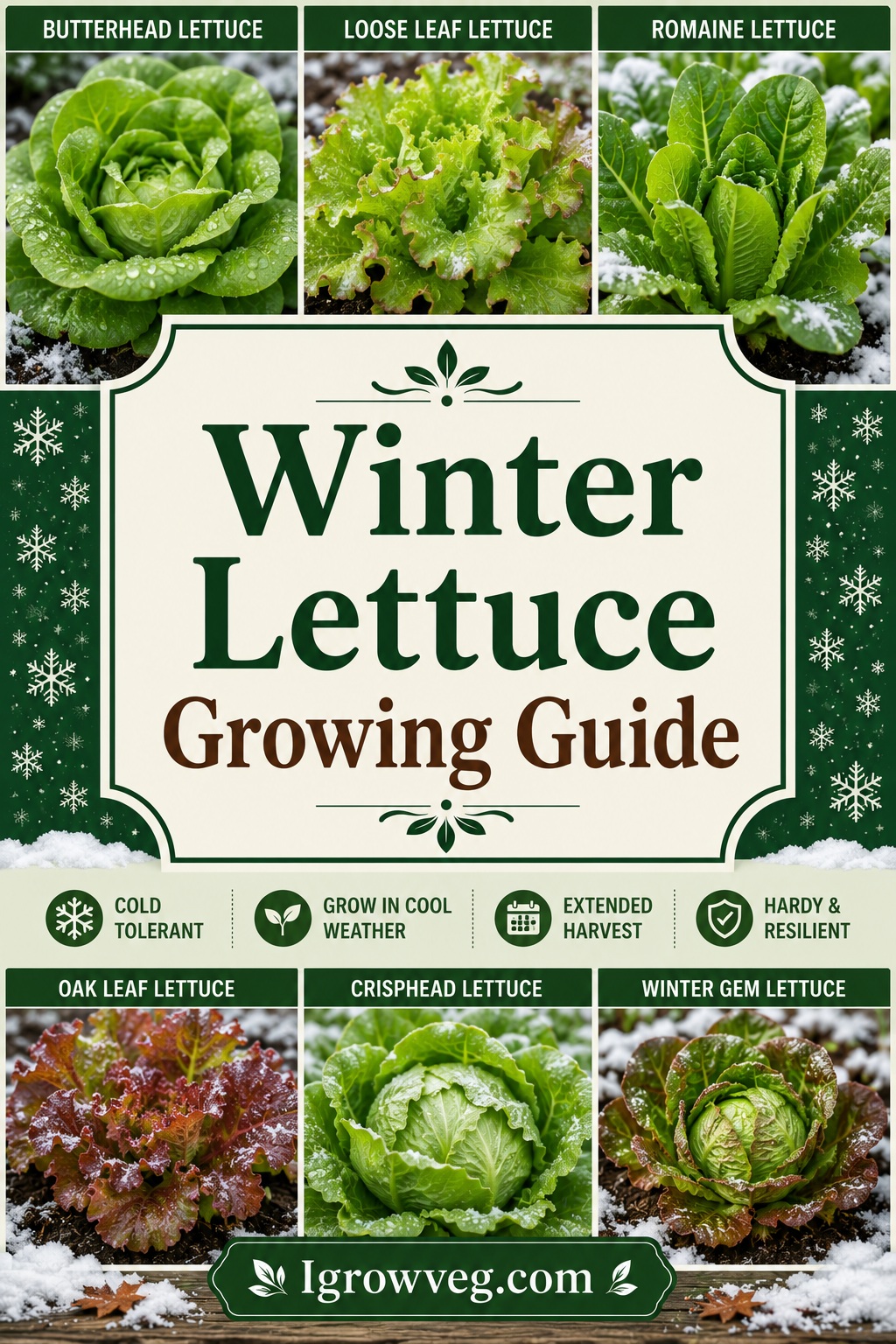
Certain lettuce varieties perform especially well in cold conditions.
Butterhead Lettuce
Butterhead types remain popular for winter gardens because of their soft texture and cold tolerance.
Recommended Varieties
- Winter Density
- Arctic King
- Buttercrunch
Romaine Lettuce
Romaine handles cool weather well while producing upright crunchy leaves.
Recommended Varieties
- Winter Gem
- Rouge d’Hiver
- Little Gem
Loose Leaf Lettuce
Loose leaf varieties grow quickly and allow repeated harvesting.
Recommended Varieties
- Red Sails
- Black Seeded Simpson
- Oakleaf Lettuce
Cold-Hardy Lettuce Varieties
Some lettuce varieties were specifically developed for winter growing.
Excellent Winter Choices
- North Pole
- Valdor
- Marvel of Four Seasons
When to Plant Winter Lettuce
Timing depends on your climate and growing setup.
Mild Winter Climates
Gardeners in mild regions can sow lettuce continuously through autumn and winter.
Cold Winter Regions
In colder climates, lettuce should establish before severe freezing temperatures arrive.
General Planting Guidelines
Outdoor Beds
Plant:
- Late summer through early fall
Cold Frames or Greenhouses
Plant:
- Early fall through mid-winter
Choosing the Right Growing Location
Winter lettuce benefits from careful site selection.
Maximum Sunlight
Choose areas receiving:
- Full sun
- Southern exposure
- Winter sunlight access
Winter days are shorter, so sunlight becomes especially important.
Wind Protection
Cold winter winds may damage tender leaves.
Good wind barriers include:
- Fences
- Garden fabric
- Raised bed covers
Well-Drained Soil
Wet winter soil may cause root rot and fungal disease.
Preparing Soil for Winter Lettuce
Healthy soil supports stronger cold-weather growth.
Rich Organic Matter
Add:
- Compost
- Aged manure
- Leaf mold
Organic matter improves drainage and nutrient availability.
Soil pH
Lettuce prefers slightly acidic to neutral soil with a pH between:
- 6.0 and 7.0
Loose Texture
Loose soil encourages shallow root development and easier harvesting.
How to Plant Winter Lettuce
Proper planting techniques improve germination and survival.
Direct Sowing
Lettuce seeds germinate well in cool soil.
Planting Depth
Sow seeds:
- ¼ inch deep
Spacing
Loose Leaf Types
Space plants:
- 4 to 6 inches apart
Head Lettuce
Space plants:
- 8 to 12 inches apart
Succession Planting
Plant small batches every few weeks for continuous harvests.
Winter Protection Methods
Cold protection greatly improves winter lettuce production.
Cold Frames
Cold frames trap warmth and shield plants from frost.
Benefits
- Extends harvest season
- Protects from snow and wind
- Improves growth rates
Row Covers
Floating row covers provide lightweight insulation.
Advantages
- Easy installation
- Frost protection
- Improved humidity
Hoop Houses
Mini hoop tunnels create warmer growing environments.
These structures work especially well in snowy regions.
Greenhouses
Unheated greenhouses often provide enough protection for winter lettuce.
Even simple plastic-covered structures can significantly improve survival.
Watering Winter Lettuce
Winter lettuce requires less water than summer crops.
Keep Soil Slightly Moist
Avoid allowing soil to dry completely.
Prevent Overwatering
Cold wet soil encourages:
- Root rot
- Fungal diseases
- Slug activity
Morning Watering
Water early in the day so leaves dry before nightfall.
Fertilizing Winter Lettuce
Lettuce grows best with moderate fertility.
Compost Feeding
Compost usually provides enough nutrients for winter crops.
Nitrogen Needs
Small amounts of nitrogen support leafy growth.
However, excessive fertilization may create weak, frost-sensitive plants.
Organic Fertilizers
Good options include:
- Fish emulsion
- Compost tea
- Balanced organic blends
Common Problems with Winter Lettuce
Although winter gardening reduces many pests, some challenges still occur.
Frost Damage
Extreme cold may cause:
- Wilted leaves
- Frozen tissue
- Plant collapse
Proper covering reduces damage significantly.
Slugs and Snails
Moist winter conditions encourage slug activity.
Prevention Tips
- Remove debris
- Water carefully
- Use traps if necessary
Mold and Mildew
Poor airflow increases fungal problems.
Prevention Methods
- Avoid overcrowding
- Ventilate covers
- Water carefully
Slow Growth
Winter lettuce naturally grows more slowly because of reduced daylight and lower temperatures.
Patience becomes important during cold months.
Growing Lettuce Indoors During Winter
Indoor lettuce growing provides another winter option.
Sunny Windowsills
South-facing windows may support small lettuce crops.
Grow Lights
LED grow lights improve winter indoor production.
Containers
Shallow containers work well because lettuce has relatively small root systems.
Companion Plants for Winter Lettuce
Some cool-season crops grow well alongside lettuce.
Good Companion Plants
Spinach
Shares similar growing conditions.
Radishes
Grow quickly and help maximize space.
Green Onions
Help repel certain pests.
Carrots
Use garden space efficiently with lettuce.
Harvesting Winter Lettuce
Winter lettuce can be harvested in several ways.
Cut-and-Come-Again Harvesting
Loose leaf lettuce allows repeated harvesting.
Method
- Cut outer leaves
- Leave center intact
Plants continue producing new growth.
Full Head Harvesting
Head lettuce should be harvested when heads feel firm and full-sized.
Harvest Timing
Pick lettuce during warmer daytime temperatures to avoid frozen leaves.
Storing Winter Lettuce
Freshly harvested lettuce stores well when handled carefully.
Refrigeration
Store in:
- Plastic bags
- Airtight containers
- Damp paper towels
Avoid Excess Moisture
Too much moisture encourages rot.
Best Fresh Use
Winter lettuce tastes best when eaten soon after harvesting.
Benefits of Winter Gardening with Lettuce
Winter lettuce gardening offers more than fresh vegetables.
Extends the Growing Season
You can continue harvesting even during colder months.
Improves Gardening Skills
Winter gardening teaches valuable season-extension techniques.
Supports Healthy Eating
Fresh greens provide vitamins and nutrients throughout winter.
Encourages Sustainable Gardening
Growing winter crops reduces reliance on transported produce.
Tips for Successful Winter Lettuce Growing
Choose Cold-Hardy Varieties
Winter-adapted types survive freezing conditions better.
Use Protective Covers
Even simple covers improve survival dramatically.
Plant Early Enough
Lettuce should establish before severe winter arrives.
Harvest Regularly
Frequent harvesting encourages continued growth.
Avoid Overwatering
Cold wet soil causes many winter problems.
Why Winter Lettuce Is Worth Growing
Winter lettuce proves that vegetable gardening does not need to stop when temperatures drop. With proper variety selection, soil preparation, and simple protection methods, gardeners can enjoy fresh, sweet, and nutritious greens throughout much of the winter season.
Furthermore, winter lettuce often tastes better than summer-grown crops because cool weather improves texture and flavor. Whether grown in raised beds, cold frames, hoop houses, or greenhouses, lettuce remains one of the easiest and most rewarding winter vegetables to cultivate.
As more gardeners explore year-round food production, winter lettuce continues gaining popularity as a practical, healthy, and productive cold-season crop.