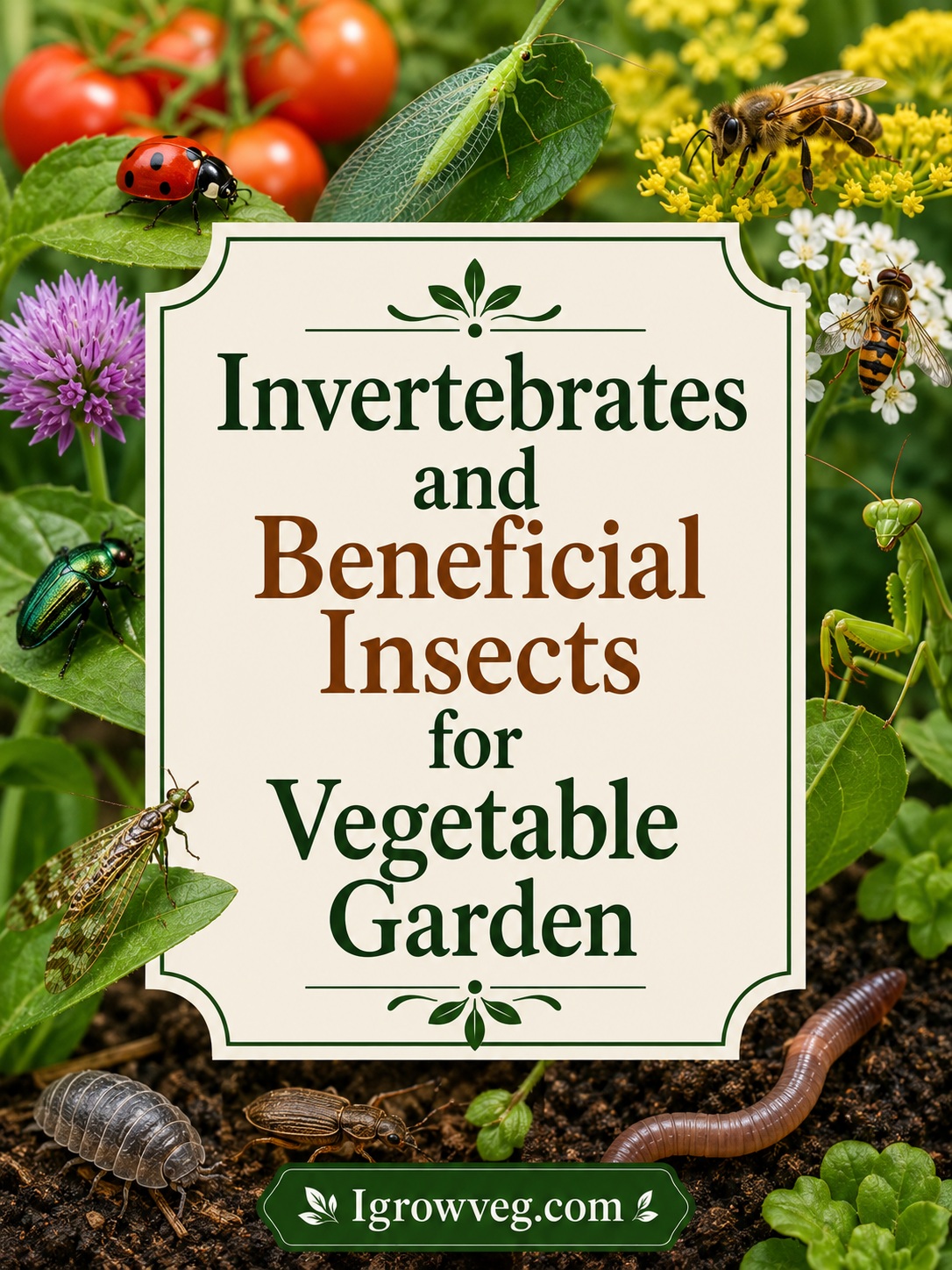
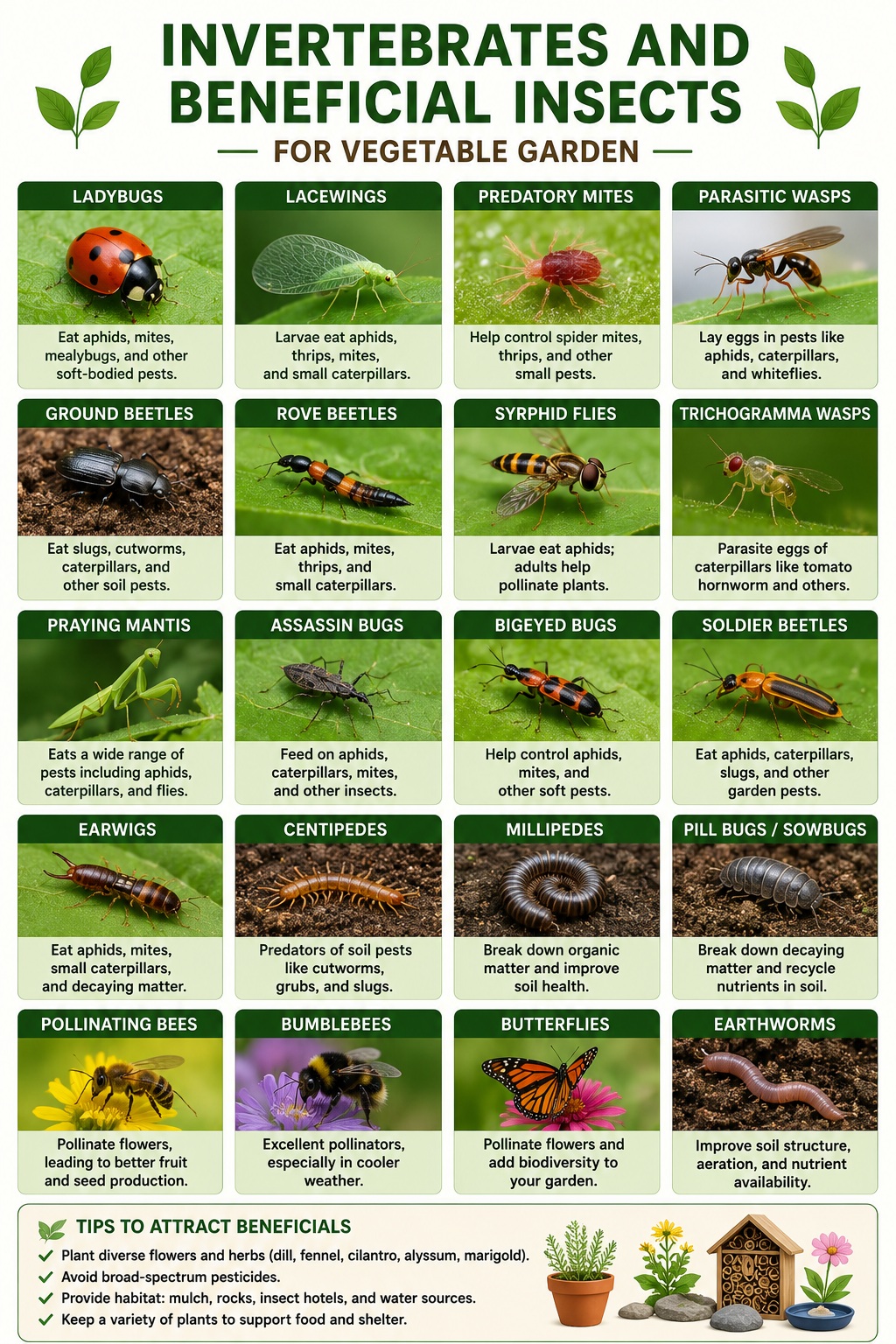
A healthy vegetable garden is full of life. While many gardeners focus on pests that damage crops, countless insects and invertebrates actually help plants grow stronger and healthier. These beneficial creatures pollinate flowers, improve soil quality, recycle organic matter, and control harmful pests naturally.
Instead of relying heavily on chemical pesticides, gardeners can encourage beneficial insects and invertebrates to create a balanced ecosystem. As a result, vegetables often grow better, pest outbreaks become less severe, and the garden becomes more environmentally friendly.
Understanding which insects help your garden is an important step toward successful organic and sustainable gardening.
Why Beneficial Insects Matter in the Garden
Beneficial insects perform several essential jobs in vegetable gardens.
Natural Pest Control
Predatory insects feed on harmful pests such as:
- Aphids
- Caterpillars
- Whiteflies
- Spider mites
- Scale insects
Consequently, they reduce the need for chemical insecticides.
Pollination
Many vegetables depend on pollinators to produce fruits and seeds. Bees and other pollinating insects transfer pollen between flowers, increasing crop production.
Soil Improvement
Certain invertebrates break down organic material and improve soil structure. Healthy soil supports stronger root growth and better water retention.
Biodiversity and Ecosystem Balance
A diverse insect population creates a stable garden ecosystem where pests are less likely to dominate.
Pollinating Insects
Pollinators are among the most valuable garden helpers because they support vegetable production directly.
Bees
Why Bees Are Important
Bees are the most effective pollinators in most vegetable gardens. They transfer pollen while collecting nectar and pollen for food.
Vegetables that benefit from bee pollination include:
- Cucumbers
- Squash
- Pumpkins
- Tomatoes
- Beans
- Melons
Without pollinators, many crops produce fewer fruits or develop poorly shaped vegetables.
Types of Garden Bees
Honey Bees
Western Honey Bee colonies pollinate a wide range of crops and flowers.
Bumblebees
Bumblebee species are excellent pollinators because they work in cooler temperatures and use “buzz pollination” on tomatoes and peppers.
Solitary Bees
Leafcutter bees and mason bees also provide valuable pollination services.
How to Attract Bees
You can encourage bees by:
- Planting native flowers
- Avoiding pesticides
- Providing shallow water sources
- Growing herbs such as basil, dill, and lavender
Butterflies
Butterflies help pollinate flowering vegetables and herbs while adding beauty to the garden.
Common Butterfly-Friendly Plants
Good nectar plants include:
- Zinnias
- Coneflowers
- Marigolds
- Milkweed
Caterpillar Considerations
Although butterfly caterpillars sometimes feed on plants, moderate feeding rarely causes serious garden damage.
Hoverflies
Hoverfly are often mistaken for small bees or wasps.
Benefits of Hoverflies
Adult hoverflies pollinate flowers, while their larvae consume aphids and other soft-bodied pests.
Plants That Attract Hoverflies
Hoverflies especially enjoy:
- Alyssum
- Dill
- Fennel
- Yarrow
Predatory Insects
Predatory insects actively hunt and consume harmful garden pests.
Ladybugs
Ladybug are among the most famous beneficial insects.
What Ladybugs Eat
Both adults and larvae feed on:
- Aphids
- Mealybugs
- Spider mites
- Whiteflies
A single ladybug may consume hundreds of aphids during its lifetime.
Ladybug Larvae
Many gardeners mistakenly identify ladybug larvae as pests because they look very different from adults. However, larvae are actually aggressive predators.
Lacewings
Green Lacewing larvae are highly effective pest hunters.
Pests Controlled by Lacewings
Lacewing larvae feed on:
- Aphids
- Thrips
- Whiteflies
- Small caterpillars
Because of their appetite, people sometimes call them “aphid lions.”
Ground Beetles
Ground Beetle species patrol soil surfaces at night.
Benefits of Ground Beetles
They consume:
- Slugs
- Snails
- Cutworms
- Insect eggs
These beetles help protect young vegetable seedlings from soil-dwelling pests.
How to Encourage Ground Beetles
Mulch, rocks, and undisturbed soil areas provide excellent shelter.
Assassin Bugs
Assassin Bug are skilled insect predators.
What Assassin Bugs Eat
They prey on:
- Caterpillars
- Beetles
- Aphids
- Leafhoppers
Although beneficial, gardeners should handle them carefully because they can bite humans if disturbed.
Praying Mantises
Praying Mantis are large predatory insects found in many gardens.
Hunting Behavior
They ambush pests such as:
- Grasshoppers
- Flies
- Beetles
- Caterpillars
However, mantises may also consume pollinators and other beneficial insects occasionally.
Parasitic Insects
Parasitic insects help control pests by laying eggs inside harmful insects.
Parasitic Wasps
Parasitic Wasp species are extremely valuable natural pest controllers.
How Parasitic Wasps Work
Female wasps lay eggs inside or on pest insects. The developing larvae consume the host, eventually killing it.
Pests Controlled
Parasitic wasps target:
- Tomato hornworms
- Aphids
- Cabbage worms
- Whiteflies
- Caterpillars
Are They Dangerous?
Most parasitic wasps are tiny and harmless to humans.
Plants That Attract Parasitic Wasps
Flowering herbs help attract them, including:
- Dill
- Cilantro
- Parsley
- Fennel
Tachinid Flies
Tachinid Fly resemble houseflies but serve as beneficial parasites.
Pests They Control
Tachinid flies help manage:
- Japanese beetles
- Squash bugs
- Caterpillars
Beneficial Bugs in the Garden
Not all true bugs damage plants. Some are valuable predators.
Minute Pirate Bugs
Minute Pirate Bug are tiny insects with huge pest-control benefits.
What They Eat
They feed on:
- Thrips
- Spider mites
- Aphids
- Small insect eggs
Despite their size, they are highly effective predators.
Damsel Bugs
Damsel Bug hunt small insects and caterpillars throughout vegetable beds.
They help control pests naturally without harming plants.
Beneficial Invertebrates Beyond Insects
Several non-insect invertebrates also contribute to healthy vegetable gardens.
Earthworms
Earthworm are essential soil builders.
Benefits of Earthworms
Earthworms:
- Improve soil aeration
- Break down organic matter
- Increase nutrient availability
- Enhance water infiltration
Healthy worm populations usually indicate fertile soil.
How to Encourage Earthworms
Add compost and avoid excessive tilling.
Spiders
Although many people fear spiders, most garden spiders are beneficial predators.
Pests Controlled by Spiders
Spiders consume:
- Mosquitoes
- Flies
- Aphids
- Moths
Because they hunt continuously, spiders help maintain insect balance.
Predatory Mites
Certain mite species feed on harmful spider mites and other tiny pests.
These beneficial mites are commonly used in greenhouse pest management programs.
Centipedes
Centipede feed on insects, larvae, and soil pests.
Although they appear intimidating, they help reduce pest populations in garden soil.
How to Attract Beneficial Insects
Creating a welcoming habitat greatly increases beneficial insect populations.
Plant Diverse Flowers
Different flowers provide nectar and pollen throughout the growing season.
Excellent choices include:
- Calendula
- Cosmos
- Yarrow
- Alyssum
- Sunflowers
Grow Flowering Herbs
Herbs are especially attractive to beneficial insects.
Good options include:
- Dill
- Thyme
- Mint
- Basil
- Fennel
Avoid Broad-Spectrum Pesticides
Chemical sprays often kill beneficial insects along with pests.
Provide Shelter
Mulch, logs, leaf litter, and dense vegetation create safe hiding places.
Add Water Sources
Shallow dishes with pebbles help insects drink safely.
Gardening Mistakes That Harm Beneficial Insects
Even experienced gardeners sometimes accidentally reduce beneficial insect populations.
Overusing Insecticides
Frequent spraying disrupts natural predator populations.
Removing All “Messy” Areas
Completely tidy gardens often lack shelter for insects and invertebrates.
Planting Limited Flower Types
A lack of floral diversity reduces nectar availability.
Disturbing Soil Excessively
Heavy tilling damages earthworms and ground-dwelling insects.
Companion Planting for Beneficial Insects
Certain plants naturally attract helpful insects.
Best Companion Plants
Marigolds
Help attract pollinators and beneficial predators.
Sweet Alyssum
Excellent for hoverflies and parasitic wasps.
Nasturtiums
Attract pollinators while distracting aphids from vegetables.
Sunflowers
Provide nectar and shelter for numerous beneficial species.
Creating a Balanced Garden Ecosystem
A thriving vegetable garden does not eliminate every insect. Instead, it maintains balance between pests and beneficial species.
Accept Some Pest Activity
Small pest populations provide food for predators.
Encourage Biodiversity
Diverse gardens support healthier insect communities.
Use Organic Gardening Methods
Natural gardening practices help beneficial organisms thrive long-term.
Why Beneficial Insects Are Essential for Sustainable Gardening
Beneficial insects and invertebrates play a critical role in healthy vegetable gardens. From pollinating flowers to controlling pests naturally, these organisms support stronger plants, healthier soil, and more productive harvests.
Instead of viewing all insects as enemies, gardeners should learn to recognize and protect helpful species. By encouraging biodiversity, reducing pesticide use, and planting pollinator-friendly flowers, you can create a balanced garden ecosystem that works with nature rather than against it.
Over time, beneficial insects reduce pest problems naturally while improving the overall health and resilience of the garden. As a result, vegetable gardening becomes more sustainable, productive, and environmentally friendly for future growing seasons.