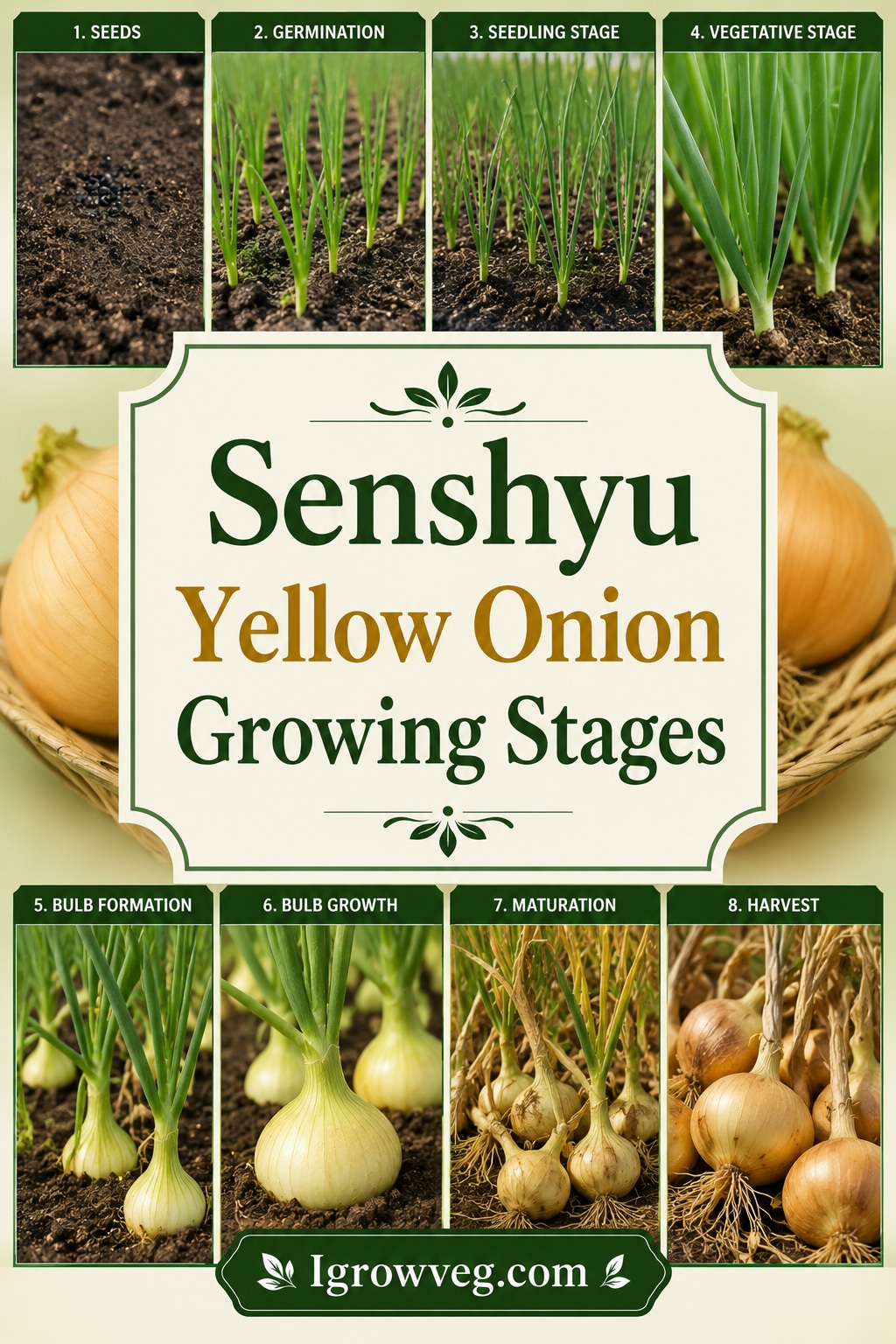
The Senshyu Yellow Onion is a popular Japanese onion variety known for its sweet flavor, excellent storage ability, cold tolerance, and reliable bulb production. Gardeners and commercial growers alike value this onion because it performs well in cooler climates and develops medium-to-large golden bulbs with a mild yet rich taste.
Originally associated with Japanese onion breeding programs, Senshyu onions have become increasingly popular among home gardeners across Asia, Europe, and North America. They are particularly favored for autumn sowing and overwinter cultivation, producing an early harvest the following spring or summer.
This comprehensive guide explores everything you need to know about Senshyu Yellow onions, including their history, characteristics, cultivation methods, soil requirements, watering techniques, pest management, harvesting, storage, culinary uses, nutritional benefits, and more.
Origin and Background
The Senshyu Yellow onion traces its roots to Japan, where growers developed hardy onion strains suitable for cooler weather and overwintering systems. The name “Senshyu” is linked to Japanese agricultural regions and breeding traditions focused on producing dependable onions with superior flavor and adaptability.
Unlike many onions that struggle in cold weather, Senshyu Yellow onions can survive winter temperatures better than numerous standard varieties. This resilience makes them highly valuable for gardeners seeking an early-season crop.
Over time, seed companies around the world introduced Senshyu onions to international markets because of their:
- Reliable yields
- Sweet flavor
- Attractive golden skin
- Good disease resistance
- Strong overwintering capability
Today, they are commonly grown in kitchen gardens, organic farms, and commercial vegetable operations.
Characteristics of Senshyu Yellow Onion
Appearance
Senshyu Yellow onions typically develop:
- Round to slightly flattened bulbs
- Golden-yellow outer skin
- White interior flesh
- Medium to large bulb size
- Firm texture
The foliage is upright and green, helping the plant photosynthesize efficiently during cool seasons.
Flavor Profile
One of the most appreciated qualities of Senshyu Yellow onions is their balanced flavor. They are:
- Mildly sweet
- Less pungent than some storage onions
- Rich when caramelized
- Pleasant for both raw and cooked dishes
Their sweetness becomes more pronounced after cooking.
Growth Habit
This onion variety is generally classified as:
- Intermediate-day or overwintering onion
- Cold-tolerant
- Fast-maturing in spring
- Adaptable to temperate climates
Senshyu onions are often planted in autumn and harvested in late spring to early summer.
Climate Requirements
Ideal Temperature
Senshyu Yellow onions thrive in cool conditions. Ideal temperatures include:
- Germination: 10°C–25°C
- Vegetative growth: 13°C–24°C
- Bulb formation: Moderate spring warmth
Excessive heat may reduce bulb quality.
Frost Tolerance
A major advantage of Senshyu onions is their ability to tolerate frost and cold weather. Once established, they can survive winter in many regions with proper mulching.
This makes them ideal for:
- Temperate climates
- Mild winter regions
- Overwinter gardening systems
Soil Requirements
Best Soil Type
Senshyu Yellow onions perform best in:
- Well-drained soil
- Loose loamy texture
- Sandy loam conditions
- Organic-rich garden beds
Compacted or waterlogged soils can cause bulb rot and poor development.
Soil pH
The ideal pH range is:
- 6.0 to 7.0
Slightly acidic to neutral soils encourage healthy root and bulb growth.
Soil Preparation
Before planting:
- Remove weeds and stones
- Loosen soil deeply
- Add compost or aged manure
- Ensure proper drainage
- Avoid fresh manure
Good soil preparation significantly improves bulb size and quality.
Planting Senshyu Yellow Onions
Planting Time
Autumn Planting
The most common method involves autumn sowing:
- September to November in many climates
This allows seedlings to establish before winter.
Spring Planting
In colder areas, spring sowing may also work, though autumn planting usually gives better results.
Seed Sowing
Seeds can be started:
- Directly in the garden
- In trays or seedbeds for transplanting
Sowing Depth
- Approximately 1 cm deep
Spacing
- 10–15 cm between plants
- 25–30 cm between rows
Proper spacing helps bulbs expand fully.
Transplanting
Seedlings are usually transplanted when:
- Pencil-thick
- 10–15 cm tall
Avoid damaging roots during transplanting.
Watering Requirements
Consistent moisture is important during early growth and bulb formation.
Best Practices
- Water deeply but infrequently
- Keep soil evenly moist
- Avoid waterlogging
- Reduce watering before harvest
Excess moisture near harvest can reduce storage life.
Fertilization
Nutrient Needs
Onions require balanced nutrition, especially:
- Nitrogen during leaf growth
- Phosphorus for roots
- Potassium for bulb development
Fertilizer Schedule
Before Planting
Incorporate:
- Compost
- Balanced organic fertilizer
During Growth
Apply nitrogen lightly during vegetative stages.
Avoid excessive nitrogen later in the season because it may produce large tops but smaller bulbs.
Mulching
Mulching is especially beneficial for overwintering Senshyu onions.
Benefits
- Protects roots from freezing
- Conserves moisture
- Reduces weeds
- Stabilizes soil temperature
Suitable mulch materials include:
- Straw
- Dry leaves
- Grass clippings
Weed Management
Onions compete poorly with weeds due to their shallow roots and narrow leaves.
Weed Control Tips
- Hand weed carefully
- Use mulch
- Avoid deep cultivation near roots
Maintaining a weed-free bed significantly improves yields.
Common Pests
Several pests may affect Senshyu Yellow onions.
Onion Maggots
These larvae attack roots and bulbs.
Prevention
- Rotate crops
- Use row covers
- Remove infected plants
Thrips
Thrips suck sap from leaves, reducing plant vigor.
Control
- Neem oil
- Insecticidal soap
- Proper spacing for airflow
Cutworms
Cutworms may damage young seedlings.
Protection
- Collars around seedlings
- Clean garden beds
Diseases
Downy Mildew
Symptoms include:
- Pale patches
- Fungal growth
- Weak foliage
Prevention
- Good air circulation
- Crop rotation
- Avoid overhead watering
Onion Rot
Excess moisture can trigger bulb rot.
Prevention
- Improve drainage
- Avoid overwatering
- Cure bulbs properly
Pink Root Disease
This fungal disease weakens root systems.
Management
- Rotate crops
- Maintain healthy soil
- Use disease-free seed
Companion Planting
Senshyu onions pair well with many vegetables.
Good Companions
- Carrots
- Lettuce
- Beets
- Tomatoes
- Strawberries
Their scent may help deter some pests.
Poor Companions
Avoid planting near:
- Beans
- Peas
These plants may compete unfavorably.
Harvesting Senshyu Yellow Onions
When to Harvest
Senshyu onions are ready when:
- Tops begin falling over
- Leaves yellow naturally
- Bulbs reach mature size
This typically occurs in late spring or early summer.
Harvesting Method
- Loosen soil gently
- Pull bulbs carefully
- Avoid bruising
- Shake off loose dirt
Do not wash bulbs before curing.
Curing and Storage
Curing Process
Curing helps onions store longer.
Steps
- Place bulbs in a dry, airy location
- Keep out of direct rain
- Allow skins to dry completely
- Cure for 2–3 weeks
Storage Conditions
Store cured onions in:
- Cool areas
- Dry conditions
- Good airflow
Ideal storage temperature:
- 0°C–10°C
Properly cured Senshyu onions may store for several months.
Culinary Uses
Senshyu Yellow onions are versatile in the kitchen.
Raw Applications
Their mild sweetness makes them suitable for:
- Salads
- Sandwiches
- Salsas
- Garnishes
Cooked Dishes
They perform exceptionally well in:
- Soups
- Curries
- Stir-fries
- Roasted vegetable dishes
- Grilled preparations
Caramelization
Senshyu onions caramelize beautifully because of their sugar content.
Slow cooking develops:
- Rich sweetness
- Deep golden color
- Complex savory flavor
Nutritional Benefits
Senshyu Yellow onions provide various nutrients and health-supporting compounds.
Key Nutrients
They contain:
- Vitamin C
- Vitamin B6
- Folate
- Potassium
- Fiber
Antioxidants
Onions contain antioxidants such as flavonoids and sulfur compounds that may support overall health.
Digestive Support
Their fiber content contributes to digestive wellness and gut health.
Growing Senshyu Onions in Containers
Container gardening works well for this variety.
Container Requirements
Choose containers with:
- Good drainage
- At least 20–25 cm depth
Potting Mix
Use:
- Loose fertile soil
- Compost-enriched mix
- Well-draining medium
Container Care
- Water consistently
- Provide full sunlight
- Feed lightly during growth
Container-grown onions may produce slightly smaller bulbs but remain flavorful.
Organic Cultivation Tips
Organic growers often prefer Senshyu onions because they adapt well to natural gardening systems.
Organic Practices
- Use compost
- Apply mulch
- Encourage beneficial insects
- Rotate crops
- Use neem-based pest controls
Healthy soil biology greatly improves onion health.
Crop Rotation
Avoid planting onions repeatedly in the same location.
Recommended Rotation
Wait:
- 3–4 years before replanting onions or related crops in the same bed
This helps reduce:
- Soil diseases
- Pest buildup
- Nutrient depletion
Seed Saving
Experienced gardeners may save Senshyu onion seeds.
Important Notes
Onions are biennial plants:
- Bulbs produce seeds in the second year
Allow selected bulbs to overwinter and flower.
However, cross-pollination may occur if multiple onion varieties grow nearby.
Advantages of Senshyu Yellow Onion
Why Gardeners Love It
1. Excellent Cold Tolerance
Ideal for overwinter cultivation.
2. Early Harvest
Provides onions before many spring-planted varieties mature.
3. Sweet Flavor
Excellent culinary versatility.
4. Attractive Bulbs
Golden skins and uniform shape appeal to growers and consumers alike.
5. Reliable Performance
Consistent yields in suitable climates.
Challenges of Growing Senshyu Onions
Despite many advantages, growers may encounter some issues.
Potential Challenges
- Bulb rot in wet soils
- Weed competition
- Thrips infestations
- Reduced bulb size in poor soil
Most problems can be minimized through proper care and crop management.
Tips for Maximum Yield
To grow the best Senshyu Yellow onions:
- Start with quality seed
- Plant in fertile loose soil
- Ensure full sunlight
- Keep weeds controlled
- Water consistently
- Mulch during winter
- Harvest at proper maturity
- Cure bulbs thoroughly
Attention to these details dramatically improves results.
Conclusion
The Senshyu Yellow Onion is an outstanding onion variety prized for its sweet flavor, winter hardiness, dependable production, and culinary flexibility. Whether grown in backyard gardens, raised beds, containers, or larger farms, this Japanese onion variety rewards growers with attractive golden bulbs and excellent eating quality.
Its ability to thrive in cool weather and overwinter successfully makes it especially valuable for gardeners seeking early harvests and extended growing seasons. With proper soil preparation, watering, pest management, and curing practices, Senshyu Yellow onions can become one of the most productive and satisfying crops in the garden.
From soups and curries to salads and caramelized dishes, Senshyu onions offer remarkable versatility in the kitchen while also providing nutritional benefits and long storage potential. For gardeners interested in reliable cool-season onions, Senshyu Yellow remains one of the finest choices available today.