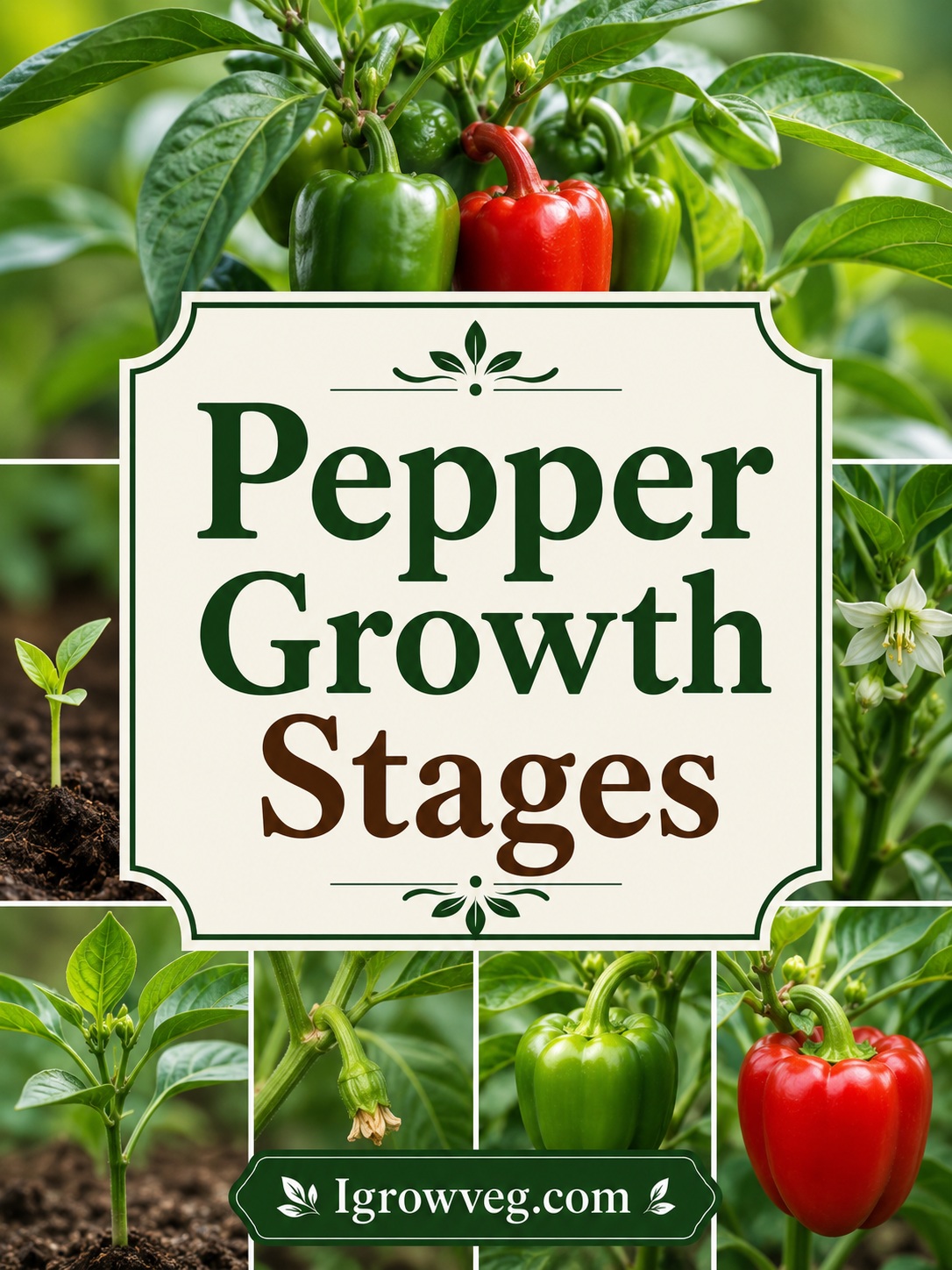
Whether you are cultivating sweet, crunchy bell peppers or coaxing maximum heat out of a superhot habanero, every pepper plant (Capsicum spp.) progresses through a predictable sequence of developmental stages. Understanding these stages allows you to customize your watering, feeding, and environmental controls to match the plant’s changing metabolic demands.
The entire lifecycle from a dormant seed to a fully mature, seed-bearing fruit spans anywhere from 90 to 150+ days, heavily influenced by genetics, soil temperature, and ambient light.
1. The Germination Stage (Days 1–21)
The lifecycle begins with germination, the process by which the plant emerges from its protective seed coat. Pepper seeds are notoriously slow and finicky germinators compared to other nightshades like tomatoes.
- The Mechanism: When exposed to moisture, the seed absorbs water (a process called imbibition), swelling and activating internal enzymes. The primary root, or radicle, breaks through the seed coat first, anchoring into the growing medium to seek out moisture.
- Environmental Requirements:
- Temperature: Pepper seeds demand high heat. The ideal soil temperature range is 24°C to 32°C (75°F to 90°F). Germination at 29°C may take only 7 to 10 days, whereas dropping the temperature below 18°C (65°F) can extend the timeline to 3 weeks or stall the process entirely.
- Moisture: The medium must remain consistently damp but never waterlogged. Excess water cuts off oxygen supplies, causing the seed to rot.
- Light: Seeds do not require light to germinate; they can successfully sprout in total darkness under the soil surface.
2. The Sprout & Seedling Stage (Days 14–56)
Once the hook-shaped stem pushes through the soil surface, the plant enters the sprout and seedling phase.
Cotyledon Emergence
The first two leaves to appear are the cotyledons, often referred to as “seed leaves.” These narrow, smooth leaves were pre-packaged inside the seed itself. They unfold to absorb the plant’s first rays of light, initiating photosynthesis.
True Leaves and Root Expansion
Within a week or two following the cotyledons, the plant develops its first set of true leaves. These leaves look distinctly different—broader, slightly textured, and possessing the characteristic shape of a mature pepper leaf.
During this timeframe, the plant allocates a massive amount of energy underground. It expands its taproot and spins out a network of fine lateral roots to draw up nutrients.
- Care Focus: Light demands skyrocket during this stage. If you are growing indoors, seedlings require 14 to 16 hours of high-intensity light close to the canopy. Insufficient light results in “leggy” seedlings—tall, spindly, weak stems that lean drastically toward the light source and are prone to collapsing.
- Nutrition: Once true leaves appear, the plant exhausts the energy stores built into the seed. Introduce a highly diluted, balanced liquid fertilizer (half or quarter-strength) to support the infant root and leaf structures.
3. The Vegetative Growth Stage (Days 50–80)
During the vegetative stage, the pepper plant transforms from a delicate seedling into a robust, bush-like structure. The primary objective of this phase is to maximize leaf surface area and stem strength, creating a physical scaffolding capable of supporting heavy yields later in the season.
The Growth Patterns
The main stem thickens into a sturdy, woody trunk. Soon, the apical meristem (the main growing tip) naturally splits, causing the plant to “Y” or branch out into multiple secondary stems. Broad leaves canopy outward to capture sunlight, acting as miniature solar panels generating complex sugars.
Horticultural Interventions: Topping vs. Natural Growth
Many growers utilize this stage to alter the plant’s natural growth habit through a technique called topping.
- The Action: Snapping or clipping off the main vertical growing tip once the plant has developed 4 to 6 sets of true leaves.
- The Biological Response: Removing the apical tip disrupts apical dominance—the chemical signal that tells the plant to grow straight up. This forces the plant to redirect auxins (growth hormones) to the lower nodes, stimulating bushy lateral growth.
- The Result: A shorter, sturdier plant with a wider canopy, which can yield more fruit zones and resist breaking under high winds. However, for slow-growing hot varieties, topping can delay final harvest dates by 1 to 2 weeks.
4. The Budding & Flowering Stage (Days 75–100)
As vegetative growth stabilizes, changing internal chemical balances signal the transition into the reproductive phases. The first physical indicator is the appearance of tiny, tight green nodules at the intersections (nodes) of the branches: flower buds.
The Anatomy of a Bloom
The buds swell and open into small, bell-shaped flowers, which are typically white, creamy-yellow, or pale purple depending on the species (Capsicum chinense varieties often feature greenish-white petals, while Capsicum pubescens displays striking purple blooms).
Self-Pollinating Systems: Pepper flowers are perfect and self-pollinating. Each individual blossom contains both male anatomy (anthers producing pollen) and female anatomy (a central stigma designed to receive pollen).
The Mechanics of Pollination
While they do not strictly require insects to set fruit, gentle movement is necessary to drop the pollen from the anthers onto the sticky stigma.
- Outdoors: Natural breezes and the buzzing wings of bumblebees easily achieve pollination.
- Indoors/Greenhouses: Absent air movement, you must manually assist pollination. Gently shaking the main stem or lightly tapping the back of the flower clusters with a cotton swab distributes the pollen internally.
The Threat of Flower Drop
A common frustration during this stage is blossom drop, where the plant prematurely sheds its flowers before they can form fruit. This behavior is typically a defense mechanism triggered by environmental stress:
- Extreme Heat: If ambient temperatures climb above 32°C (90°F) during the day or fail to drop below 24°C (75°F) at night, the pollen becomes sterile, and the flower detaches.
- Nutrient Overload: Excess nitrogen prompts the plant to remain stuck in vegetative mode, causing it to actively reject its own blooms in favor of growing more leaves.
5. Fruit Set & Development Stage (Days 90–120)
Once successful pollination occurs, the petals of the flower wither and fall away, revealing a tiny, lime-green node at the center of the calyx. This is the ovary swelling; the plant has officially achieved fruit set.
Rapid Cell Division and Expansion
Over the next several weeks, the green pepper grows exponentially. This phase requires an entirely different nutritional balance compared to the vegetative stage.
- Potassium and Phosphorus Shift: The demand for nitrogen drops significantly, while requirements for phosphorus and potassium climb. Potassium regulates water movement and enzyme activation within the expanding fruit walls.
- Calcium Dependencies: The plant needs a steady, uninterrupted supply of calcium to construct strong cell walls within the fruit. If watering is erratic (alternating between bone-dry and saturated), root systems cannot uptake calcium smoothly. This architectural failure leads directly to blossom end rot, a condition where the bottom of the developing pepper turns black, leathery, and sunken.
During this stage, peppers are structurally fragile. Heavy rains or improper handling can snap fruiting branches. Utilizing stakes, cages, or soft plant ties to support weighted limbs prevents structural collapse.
6. The Ripening & Maturity Stage (Days 110–150+)
The final milestone of the lifecycle is ripening. At this point, the pepper fruit has reached its maximum structural size, but it is still biochemically immature.
The Pigment Shift
Inside the walls of a green pepper, chloroplasts are rich in chlorophyll. As seeds reach full viability inside the core, the plant shuts down chlorophyll production and begins breaking down complex starches into fructose and glucose. Simultaneously, it synthesizes new pigments:
- Carotenoids: Produce bright yellow, orange, and deep red hues.
- Anthocyanins: Create dark purple, chocolate-brown, or near-black skin tones.
The Flavor and Heat Profile
As the color shifts, the culinary properties transform dramatically. Sweet varieties lose their sharp, bitter, grassy undertones and take on a rich, sugary flavor profile. For hot pepper varieties, this stage marks the peak concentration of capsaicin—the chemical compound responsible for the heat sensation—which is concentrated primarily along the internal placental tissue surrounding the seeds.
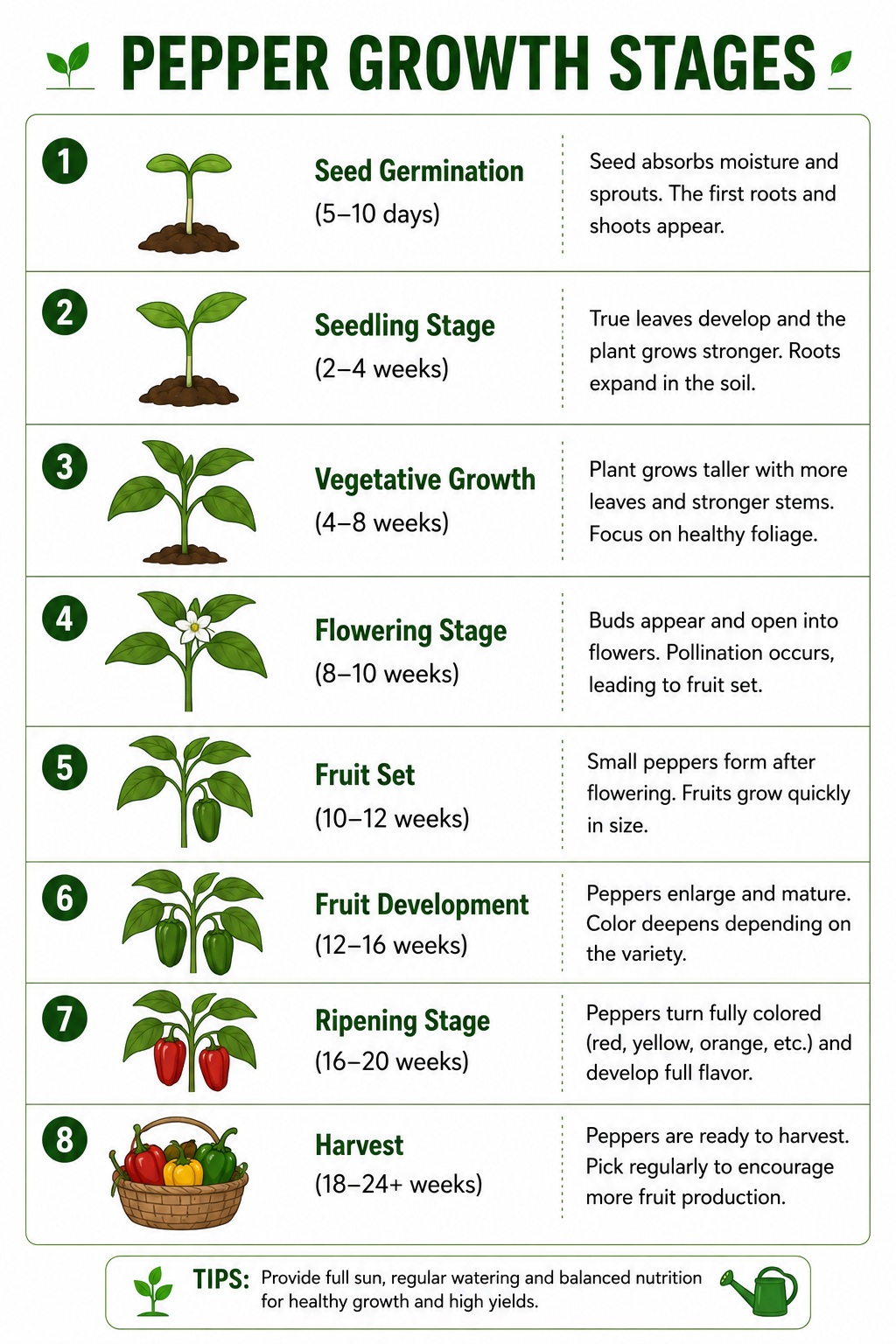
Summary Reference Table of Pepper Growth Stages
| Stage | Duration | Primary Plant Focus | Critical Nutrient Need | Common Risks |
| 1. Germination | 1 – 21 Days | Root radicle emergence | None (Seed-stored energy) | Rotting from overwatering; low temperatures stalling growth |
| 2. Seedling | 14 – 56 Days | True leaf expansion; taproot build | Mild, balanced N-P-K | Legginess from low light; damping-off fungal disease |
| 3. Vegetative | 50 – 80 Days | Canopy branching; stem thickening | High Nitrogen (N) | Snapping from lack of support; pest pressure (aphids) |
| 4. Flowering | 75 – 100 Days | Bloom production; pollination | Phosphorus (P), Trace minerals | Blossom drop from extreme heat or over-fertilization |
| 5. Fruit Set | 90 – 120 Days | Rapid fruit sizing and cell wall build | Potassium (K), Calcium (Ca) | Blossom end rot; branch breakage from fruit weight |
| 6. Ripening | 110 – 150+ Days | Chlorophyll breakdown; sugar rise | Low Nitrogen, High Potassium | Sunscald; pest boring; pre-harvest rot from frost |
Conclusion
By treating your pepper patch not as a single static crop, but as an evolving system moving through distinct biological markers, you can optimize your yields and flavors. Keep your soils warm early on, transition your fertilizers away from nitrogen as the first white blossoms unfurl, keep your watering steady during fruit expansion, and exercise patience when waiting for that final color change.
Quick FAQ
1. How long does it take for a pepper plant to go from seed to harvest?
Depending on the variety, it takes anywhere from 90 to 150+ days. Sweet bell peppers and thin-walled hot peppers (like Cayennes) ripen much faster than superhot varieties like the Ghost Pepper or Carolina Reaper, which require extended seasons of high heat to fully mature.
2. Should I pluck the first flowers off my pepper plants?
Yes, many growers prune away the very first flower buds if they appear while the plant is still small or root-bound in a starter pot. Removing these early blooms forces the plant to spend its initial energy growing larger leaves and stronger roots, resulting in a much larger harvest overall later in the season.
3. Why are my peppers small but already changing color?
This is usually a sign of environmental or root stress. If the plant feels its survival is threatened—due to restricted root space, extreme drought, or pest damage—it will halt physical growth and prematurely ripen its existing fruit to ensure it can drop viable seeds before dying.
4. Can pepper plants survive for more than one year?
Yes! In their native tropical environments, pepper plants are actually perennials, meaning they can live for several years. In cold climates, they are grown as annuals because frost kills them. However, you can bring them indoors over the winter, cut them back, and let them overwinter to get a massive head start on the next growing season.
5. How often should I water my pepper plants during the fruiting stage?
Peppers prefer deep, infrequent waterings rather than shallow daily splashes. Wait until the top 1 to 2 inches of soil dries out completely, then soak the root zone thoroughly. Consistent moisture delivery during fruit set is vital to prevent blossom end rot.